First-Year NFL Coaches ATS, Tested

First-year NFL head coaches do not beat the spread. From 2001 through 2025, coaches in their first full season with a team went 1,251-1,265-69 against the closing line, a 49.7 percent cover rate across 161 hires. Weeks 5 through 8 were the weakest stretch at 46.8 percent, and first-year coaches at home covered 46.7 percent, but both splits came from many cuts.
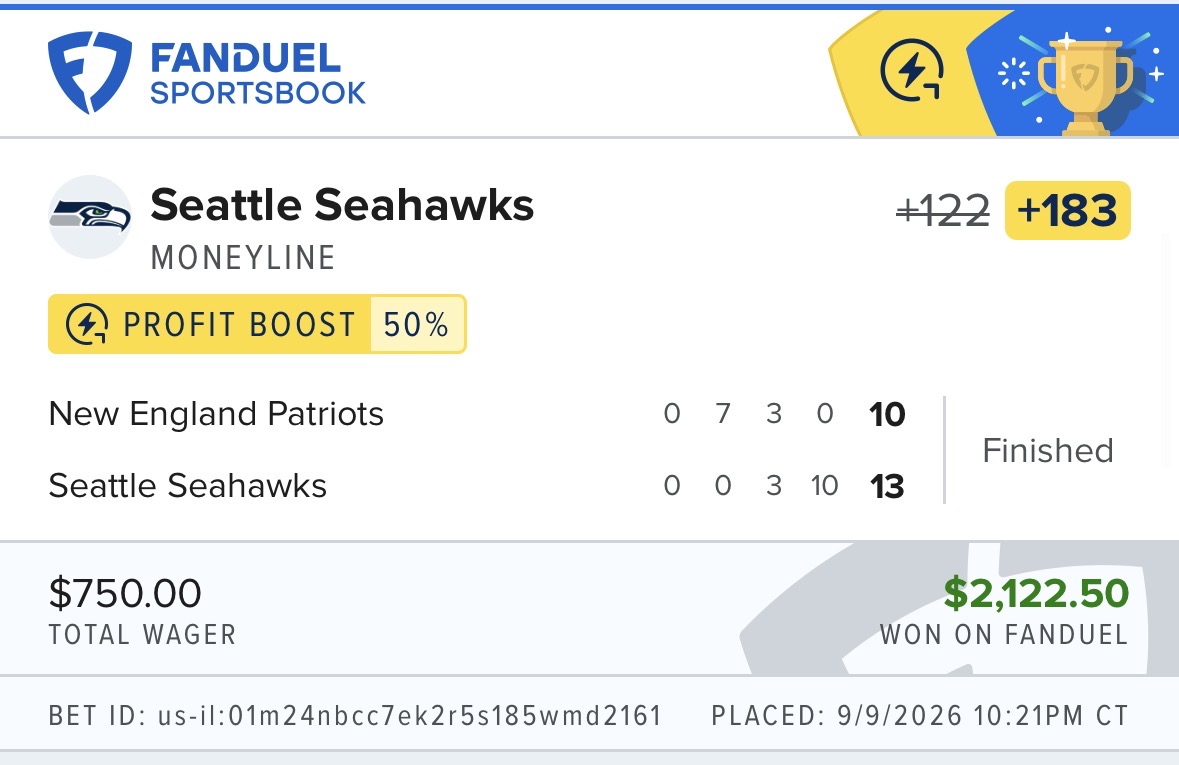
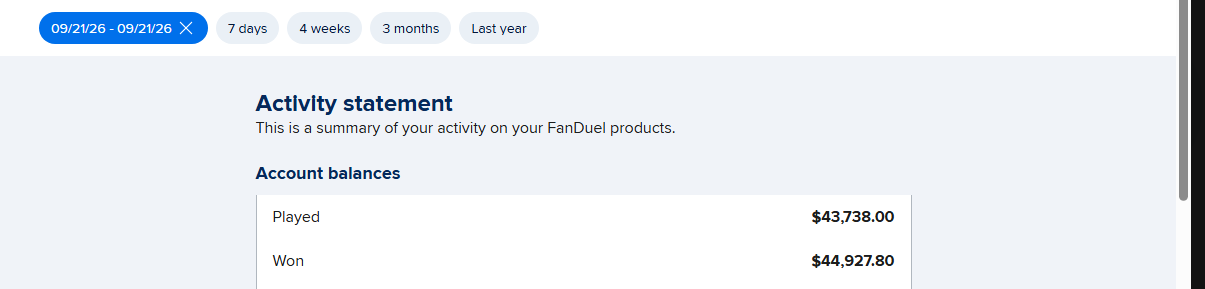
First-year NFL head coaches are one of the most popular stories in football betting, and one of the least profitable. From 2001 through 2025, coaches in their first full season with a franchise went 1,251-1,265-69 against the closing spread, a 49.7 percent cover rate across 161 hires. Second-year coaches covered 50.6 percent and veterans 49.8 percent. The new-coach bump and the new-coach fade are both priced in. The Best Bet on Sports has built a verified $367,520+ in profit across all sportsbooks over more than twenty years by testing stories like this before betting them.
Every season brings a fresh class of head coaches, and every class arrives with a narrative attached. One coach is going to fix a broken culture. Another is a retread who will run it back. A third is an offensive mind who will unlock a quarterback. Bettors and handicapping services turn those narratives into angles: back the new coach early while the market catches up, or fade the new coach until the system clicks.
The 2026 class is unusually large. Ten teams started this season with a new head coach. Seven weeks in, it is a fair time to ask whether either angle has ever worked. We graded every regular-season game from 2001 through 2025 against the closing spread to find out.
How Did We Identify First-Year Coaches?
We used the nflverse game dataset, which records the head coach for both teams in every game since 1999 along with closing spreads. A coach counts as first-year if it is that coach's first season with that franchise and the coach was on the sideline for the team's opening game. That captures full-season hires and excludes interim coaches who took over midseason. We studied interim coaches separately.
Tenure is counted from 2000 forward, so the study begins in 2001 to avoid mislabeling coaches who were already in place. Relocated franchises are treated as continuous: the Raiders, Rams and Chargers keep their history through their moves. Games are graded against the closing spread, and a push is neither a win nor a loss.
That gives 161 first-year hires across 25 seasons and 2,585 graded games.
Do First-Year Head Coaches Cover the Spread?
No more or less than anyone else. Here is the full picture by tenure.
| Coach tenure (2001-2025) | ATS record | Cover rate | Plausible range |
|---|---|---|---|
| First full season | 1,251-1,265-69 | 49.72% | 47.8-51.7% |
| Second season | 1,198-1,170-62 | 50.59% | 48.6-52.6% |
| Third season or later | 3,718-3,750-213 | 49.79% | 48.7-50.9% |
| Interim (took over midseason) | 131-113-2 | 53.69% | 47.4-59.8% |
First-year coaches covered 49.72 percent of the time. At standard -110 pricing, you need 52.38 percent to break even, so backing every new coach would have lost money. Fading every new coach would have covered 50.28 percent, which also loses money once you pay the juice.
The average first-year team finished 0.29 points worse than its closing spread. Straight up, those teams won 43.8 percent of their games, which is no surprise, since most coaching changes happen at teams that were losing. The market expected them to lose by 2.09 points on average, and they lost by 2.38. That is about as close as a market gets.
Interim coaches look better, at 53.69 percent, but that is only 246 games. The plausible range runs from 47.4 to 59.8 percent, wide enough that we cannot tell a real effect from noise. It is a curiosity, not an angle.
Is There a Window Where New Coaches Struggle?
This is where the popular story finds some support, and where you have to be most careful. We split first-year coaches' games by point in the season.
| First-year coach, by week | ATS record | Cover rate |
|---|---|---|
| Week 1 only | 79-77-5 | 50.64% |
| Weeks 1-4 | 305-307-16 | 49.84% |
| Weeks 5-8 | 259-295-9 | 46.75% |
| Weeks 9 and later | 687-663-44 | 50.89% |
Weeks 5 through 8 stand out. First-year coaches went 259-295-9 in that window, a 46.75 percent cover rate, and the average team finished 1.38 points worse than its spread. Fading them in that window would have covered 53.25 percent. The plausible range on the cover rate runs from 42.6 to 50.9 percent, just touching a coin flip.
The story people tell for this is intuitive. In the first month, the market has little data on a new staff, so lines lean on preseason ratings that may be too optimistic. By midseason, the scheme has been scouted, the schedule has gotten tougher, and the market may still be pricing hope. Then by Week 9, the market has caught up.
It is a nice story. We would not bet it blindly, for three reasons.
It is one cut among many. We tested more than 20 splits of first-year coaches in this study: by week, by era, by favorite and underdog, by home and road, by experience. When you run that many cuts, one or two will look strong by chance. A 46.75 percent result found in a search like that deserves a discount.
The effect lives mostly in recent seasons. From 2001 through 2012, first-year coaches covered 51.62 percent overall. From 2013 through 2025, they covered 48.15 percent, and 45.79 percent in Weeks 1 through 8. That could be a real shift in how markets price new staffs, or it could be the same noise split a different way.
The sample is still small per season. Roughly six or seven new coaches a year means about 25 games per season in the Weeks 5-8 window. A couple of bad classes can create a pattern by themselves.
Do New Coaches Do Worse at Home or as Favorites?
Two more splits looked notable.
| First-year coach split | ATS record | Cover rate |
|---|---|---|
| At home | 581-664-34 | 46.67% |
| On the road | 654-587-35 | 52.70% |
| As a favorite | 433-486-25 | 47.12% |
| As an underdog | 816-775-44 | 51.29% |
First-year coaches at home covered only 46.67 percent, with a plausible range of 43.9 to 49.4 percent. On the road, they covered 52.70 percent. As favorites they covered 47.12 percent. Neutral-site and international games are excluded from the home and road rows.
A plausible explanation is that markets give home teams with a new coach a little extra credit for a fresh start and a hopeful crowd. That would show up exactly this way: overpriced at home, fairly priced or underpriced on the road.
But this is the same multiple-comparisons problem. The home split and the favorite split overlap heavily, since home teams are favored more often. They are not two independent confirmations of one idea. Treat them as one possible signal found among many.
Do Retread Coaches Do Better Than First-Timers?
No. Coaches who had a previous head-coaching job in the dataset covered 48.44 percent in their first season with a new team. Coaches with no prior head-coaching job in the dataset, from 2005 on, covered 49.97 percent. Experience did not show up against the spread. The market appears to price a familiar name the same way it prices an unknown one.
Individual hires vary widely, as you would expect. Of the 161 first-year coaches, 34 covered 60 percent or more of their games and 37 covered 40 percent or less. That spread is about what randomness alone would produce over a 16- or 17-game season.
How Are 2026's First-Year Coaches Doing?
Better than the history would suggest. Ten teams began 2026 with a new head coach.
| Team | First-year coach | ATS through Week 7 Sunday | Straight up |
|---|---|---|---|
| Arizona | Mike LaFleur | 3-4 | 2-5 |
| Atlanta | Kevin Stefanski | 3-4 | 3-4 |
| Baltimore | Jesse Minter | 2-4-1 | 4-3 |
| Buffalo | Joe Brady | 4-2 | 5-1 |
| Cleveland | Todd Monken | 5-2 | 5-2 |
| Las Vegas | Klint Kubiak | 5-2 | 3-4 |
| Miami | Jeff Hafley | 2-3-1 | 1-5 |
| New York Giants | John Harbaugh | 5-2 | 4-2 |
| Pittsburgh | Mike McCarthy | 5-2 | 5-2 |
| Tennessee | Robert Saleh | 3-4 | 1-6 |
Combined, those teams are 37-29-2 against the spread, a 56.06 percent cover rate. That counts each team's games separately, so any game between two of these teams counts once for each side.
Sixty-eight games is too few to mean much. The plausible range on that rate runs from the mid-40s to the high-60s. Most of the damage to the fade story came early: in Weeks 5 through 7, this class is 14-13-1, close to a coin flip. At home in that window, though, the ten teams are 4-9 against the spread. That fits the historical home split, and it is also just 13 games.
Week 8 has two head-to-head games between first-year coaches. Early lines in the dataset show Buffalo -3.5 hosting Baltimore with a 53.5 total, and Pittsburgh -3.5 hosting Cleveland with a 38.5 total. Both are first-year coaches at home as favorites, the split that has historically underperformed, facing first-year coaches on the road. Both of those lines will move before Sunday. We are not taking a side on either game here.
What Should You Expect From NFL Expert Picks?
If a service pitches you on an angle like "fade new coaches until midseason," ask what the record looks like across every season, not just the ones that fit. Over 25 seasons, the honest answer for first-year coaches is a cover rate of 49.72 percent, with a weaker window that came from a search through many cuts and is not holding up this year.
That is the test we apply to every situational trend, whether it is rest and bye weeks, rookie quarterbacks, or new coaching staffs. Most of them turn out to be stories the market has already priced. The NFL picks against the spread that hold up come from reading specific matchups, injuries and game flow, not from a label attached to a team in August.
How Do Football Handicappers Use Coaching Changes?
The best football handicappers treat a coaching change as information about specific matchups, not a reason to bet a team every week. A new offensive coordinator calling plays for a young quarterback matters in a game against an aggressive blitz defense. A new defensive staff's coverage scheme matters against a particular receiver group. Those are game-level reads, and they can be worth more than any trend.
That is how our sports handicapping service approaches football. If you are deciding whether a subscription is worth it, our NFL expert picks page explains what members get, and our football betting picks page covers the weekly approach. For how the 2026 coaching class was priced before the season, see our earlier look at new head coaches and win totals. And with the NBA season under way, our basketball handicappers page covers how the same discipline applies on the court.
Get Tonight's Live Picks
Want tonight's live in-game picks, built on how teams and coaches are actually playing rather than on preseason narratives, delivered to your phone during the game?
The Best Bet on Sports is the only live betting handicapping service limited on all six major U.S. sportsbooks (FanDuel, DraftKings, Caesars, BetMGM, Fanatics, ESPN BET) for winning too much during in-game action. Verified profit: $367,520+. Picks delivered via Email and Discord during games.
→ Get tonight's live picks: $199 first month — 1-Unit package, full live betting access → Try a live pick first — reserve your spot for tonight's pick
You can also review our verified results, see how members pay for sports picks, or browse our NFL picks.

Frequently Asked Questions
Do first-year NFL head coaches cover the spread?
Not reliably. From 2001 through 2025, coaches in their first full season with a franchise went 1,251-1,265-69 against the closing spread, a 49.72 percent cover rate across 161 hires. That is below the 52.38 percent needed to profit at -110, and fading them would have covered only 50.28 percent, which also loses after juice.
When do first-year NFL coaches struggle most against the spread?
Weeks 5 through 8 were the weakest window, with first-year coaches going 259-295-9, a 46.75 percent cover rate, from 2001 through 2025. Weeks 1 through 4 were 49.84 percent and Week 9 onward was 50.89 percent. The Weeks 5-8 result came from more than 20 splits tested, so it deserves skepticism.
Should you fade first-year coaches at home?
Be cautious. First-year coaches at home covered 46.67 percent from 2001 through 2025, while on the road they covered 52.70 percent. That split overlaps with the favorite split, since home teams are favored more often, and it was one of many cuts tested. It is a possible signal, not a proven system.
Do interim NFL coaches cover the spread?
Interim coaches who took over midseason went 131-113-2 against the spread from 2001 through 2025, a 53.69 percent cover rate. With only 246 games, the plausible range runs from 47.4 to 59.8 percent, so the result cannot be separated from chance. It is interesting but too small a sample to bet on.
Do experienced retread coaches do better in their first year?
No. Coaches with a previous head-coaching job in the dataset covered 48.44 percent in their first season with a new team. Coaches with no prior head-coaching job in the dataset covered 49.97 percent from 2005 on. The market appears to price coaching experience accurately, leaving no edge either way.
How are the 2026 first-year NFL coaches doing against the spread?
The ten teams with new head coaches in 2026 are a combined 37-29-2 against the spread through Sunday of Week 7, a 56.06 percent cover rate. Cleveland, Las Vegas, the Giants and Pittsburgh are each 5-2. Sixty-eight team-games is too small a sample to draw conclusions, and head-to-head games count once for each side.
Is betting on new coaching staffs a good NFL strategy?
Not as a blanket approach. Over 25 seasons, first-year coaches covered at almost exactly the same rate as everyone else, which means the market prices coaching changes well. Coaching changes are more useful as matchup-specific information, such as a new play-caller facing a certain defense, than as a reason to back or fade a team every week.
The Best Bet on Sports · 1.5M followers on TikTok
Sports Betting TikTok is the live betting account behind The Best Bet on Sports, covering NFL, NCAAF, NBA, NCAAB, MLB and WNBA markets in real time. The account has been limited on all six major U.S. sportsbooks — FanDuel, DraftKings, Caesars, BetMGM, Fanatics and ESPN BET — for winning on live betting, with $367,520 in verified profit since 2005. View full profile →
Past results do not guarantee future performance. Must be 21 or older to wager.
Related Articles
4-0 Against the Spread: What a Hot Start Predicts
The Bye-Week Edge, Tested on 11 NFL Seasons
West Coast Teams at 1 PM ET: ATS Tested
Fade the Second Road Game? ATS Test
Buy Teams After a Turnover Disaster? ATS Tested
Should You Fade Rookie QBs Against the Spread? Tested
Get real live betting picks
From $39.95/mo · Cancel anytime · Email + Discord delivery
● Get The Picks
Choose your package
Tap any tier below to select · Subscribe in one tap
👇 Tap any package to select it
✓ You're selecting
25 Units · $99.95/month
25 unit picks per month. Sweet spot for most bettors — plenty of action without going all-in.
- ✓25 live betting selections/month
- ✓Email + Discord delivery
- ✓All sports (NFL, NCAAF, NBA, NCAAB, MLB)
- ✓Mix of 1, 2, 3, 5-unit rated plays
- ✓Cancel anytime
Secure PayPal · Cancel anytime · No hidden fees · 21+ · +$367K verified
+$367,520 verified · Limited on 6 sportsbooks · 20 years documented · See Proof
Join Our Newsletter
Get free expert sports picks and analysis delivered weekly.