Two Top-12 Upsets, Two Opposite Signals

Two ranked college football teams lost to unranked opponents on Saturday, September 12, and the box scores point in opposite directions. No. 6 Oregon lost by eight at Oklahoma State while being outgained 554-281. Michigan beat No. 11 Oklahoma by seven while being outgained 289-263. One result understates what happened, the other overstates it, and the market tends to reprice both the same way.
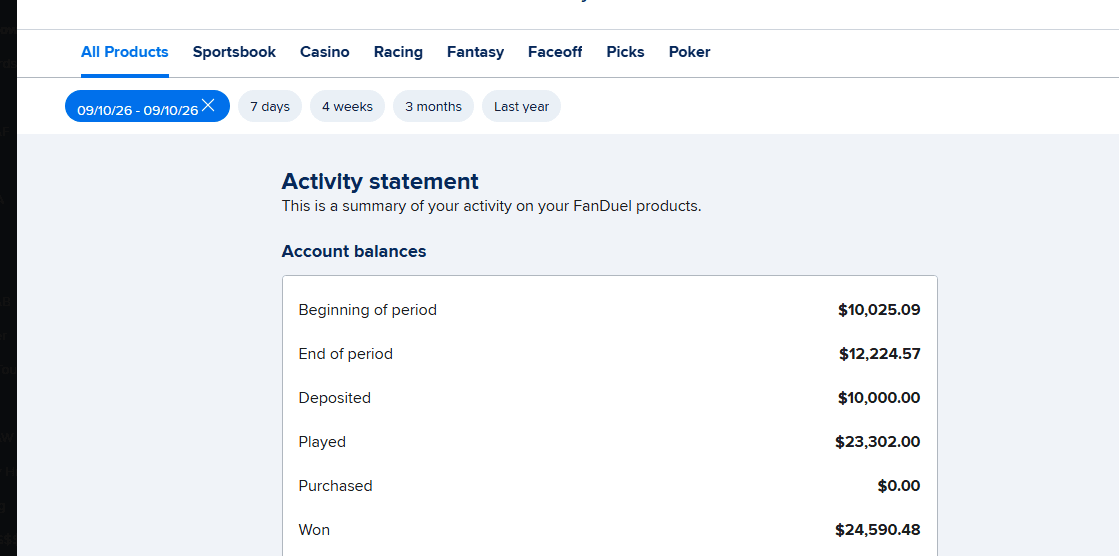
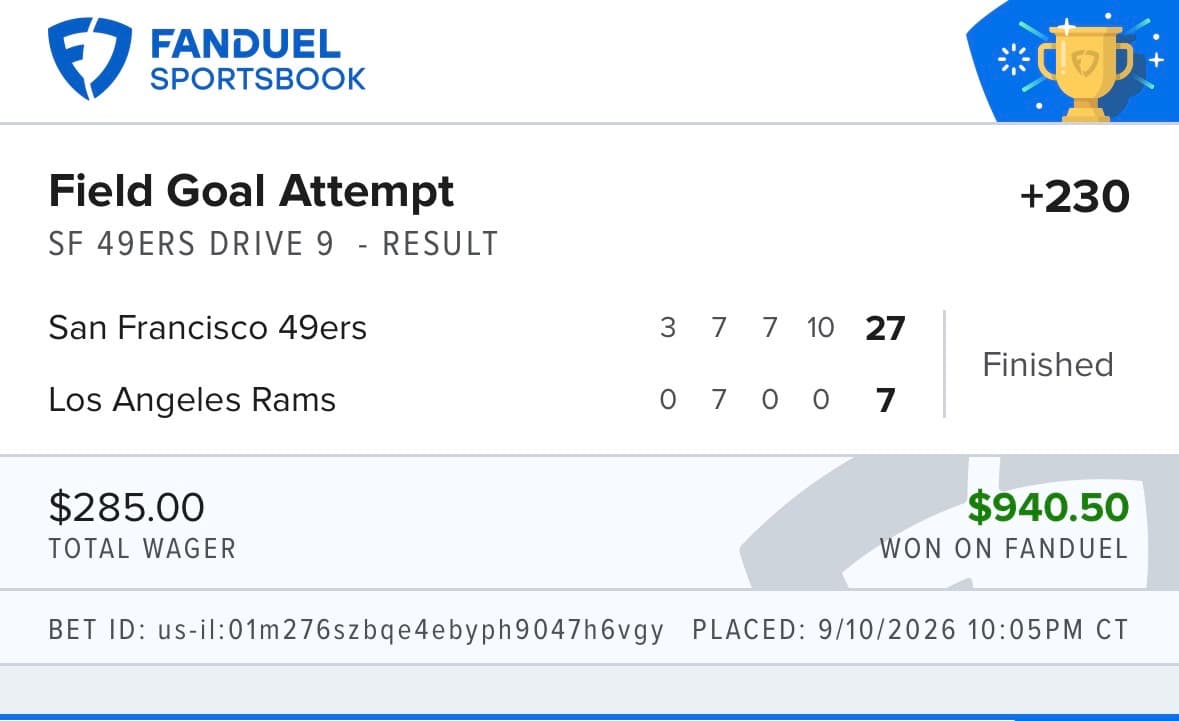
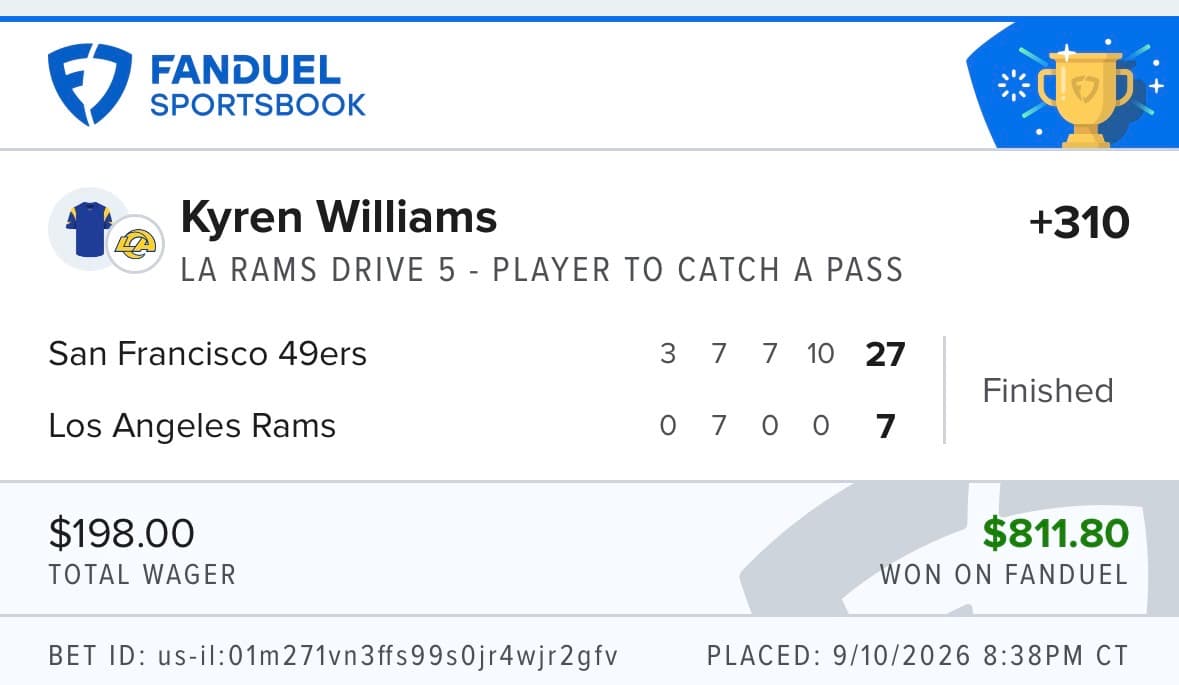
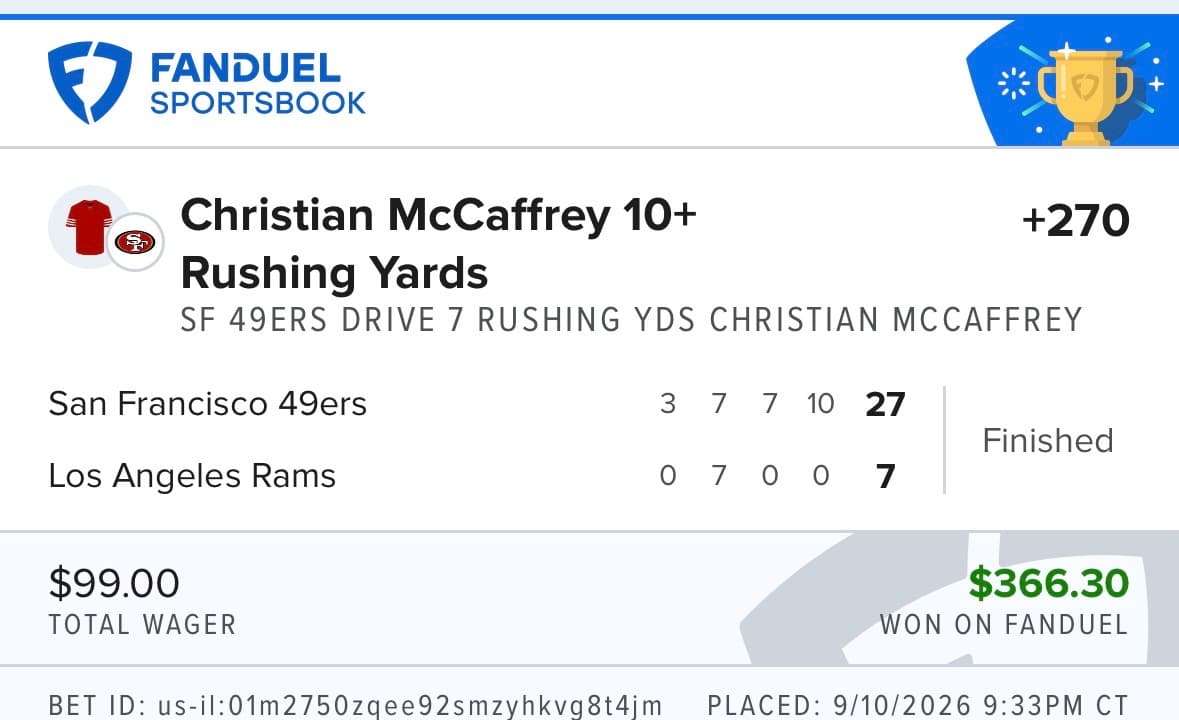
Saturday, September 12 produced two upsets of top-12 college football teams, and they were not the same kind of event. Oklahoma State beat No. 6 Oregon 39-31 in Stillwater while outgaining the Ducks 554 yards to 281 and 25 first downs to 12 — a loss that was considerably worse than its eight-point margin. Michigan beat No. 11 Oklahoma 17-10 in Ann Arbor while being outgained 289-263, with 75 yards of offense in the entire second half and a go-ahead touchdown set up by a fourth-quarter interception — a win considerably thinner than its seven-point margin. Power ratings move off results. The results here are the least informative part of both games. The Best Bet on Sports has worked in-game markets for more than twenty years with a verified $367,520+ in profit across all sportsbooks, and weekends like this one are where the gap between a scoreline and a performance gets priced wrong.
Both games were over by Saturday evening. What is still tradeable is the number each of these four teams gets next week, and the month after that.
What Happened Saturday
| Game | Final | Pregame market | Total yards | First downs |
|---|---|---|---|---|
| Oklahoma State vs. No. 6 Oregon | Oklahoma State 39, Oregon 31 | Oregon laid roughly 23.5, total near 54.5 | Oklahoma State 554, Oregon 281 | Oklahoma State 25, Oregon 12 |
| No. 11 Oklahoma at Michigan | Michigan 17, Oklahoma 10 | Not a large number either way | Oklahoma 289, Michigan 263 | — |
The Oregon result carried the heavier historical weight. Oklahoma State entered having lost twelve straight games and became the first FBS team to end a losing streak of ten or more by beating a top-10 opponent. First-year head coach Eric Morris got his first win with the program in the process. Quarterback Drew Mestemaker threw for 317 yards with two passing touchdowns and added a rushing score. Oregon, 35-0 against unranked opponents under Dan Lanning before Saturday, also had a 12-game road winning streak ended — against a team it beat 69-3 a season ago.
In Ann Arbor, Bryce Underwood completed 9 of 17 passes for 111 yards and carried 18 times for 87 yards, including a 38-yard touchdown in the second quarter. Jordan Marshall scored the go-ahead touchdown from a yard out midway through the fourth, on a drive set up by an interception.
An Eight-Point Loss That Was Worse Than Eight Points
Start with the number that does not appear in any headline: 554 to 281.
A team that gains 281 yards and converts 12 first downs did not lose a close game. It lost a game in which its offense essentially did not function, and it stayed within eight points because Oregon scored enough in the second half to make the scoreboard presentable. Dante Moore was 5-of-15 for 45 yards in the first half and threw two touchdowns after halftime. Those second-half touchdowns are what turned a rout into a scoreline that a power rating will treat as a narrow road loss.
This matters because of how early-season ratings are actually built. Most rating systems lean on scoring margin, adjusted for opponent and sometimes for garbage time, because margin is the cleanest single number available and it correlates well with future results across a full season. But margin is also the noisiest thing on a box score in September. A blocked kick, a fourth-quarter onside, a defensive score — each of those moves margin by a touchdown without telling you anything about which team was better for three hours. Yardage and first downs are slower to move and harder to fake.
When margin and efficiency disagree this sharply, the efficiency number has historically been the more durable of the two. We walked through why in how power ratings work in sports betting. The short version: a rating built on margin will under-penalize Oregon here, because an eight-point road loss is a modest deduction and getting outgained by 273 yards is not a modest event.
There is also a pattern worth naming rather than treating as an isolated Saturday. In Week 1, Oregon was laid roughly 24.5 points against Boise State and won 34-27. In Week 2, laid roughly 23.5 on the road, it lost outright. Two consecutive games in which this team was priced as three-plus touchdowns better than its opponent, and two consecutive games in which it was nowhere near that. That is a spread-market observation, not a national-title observation, and it is the more useful of the two for anyone betting college football picks against the spread.
A Seven-Point Win That Was Thinner Than Seven Points
Michigan's afternoon runs the other way, and it is the half of the weekend that will get misread the most.
Michigan won. It beat a top-12 opponent at home in a rematch, and the reaction to that — rankings, playoff conversation, next week's number — will be built on the word "beat." But Oklahoma outgained Michigan 289-263, Michigan produced 75 yards of offense across the entire second half, and the winning points came from a short field created by a turnover.
None of that makes the win illegitimate. Turnovers are earned as often as they are stumbled into, and a defense that holds a ranked opponent to 10 points has done something real. What it makes the win is low-information. A game decided by a single leverage event, between two teams that gained a nearly identical number of yards, tells you very little about which team is better and almost nothing about what either will do in three weeks.
Michigan's Week 1 was already a shaky home win over Western Michigan — a game whose finish we used as a live-betting example in the Michigan-Western Michigan Hail Mary. Two games in, this is a team with one narrow win over a MAC opponent and one narrow win in which it was outgained. The record says 2-0 against a decent schedule. The underlying numbers say something much more ordinary.
Why the Market Will Move Both Numbers the Same Direction
Here is the mechanical part. Result-driven repricing will push Oregon's number down and Michigan's number up. That is the correct direction for both — a loss is a loss and a win over a ranked team is a win.
The question is not direction. It is magnitude, and this is where the two games should be treated as opposites:
- Oregon's loss deserves a larger adjustment than its eight-point margin implies, because the efficiency gap was far wider than the scoreboard.
- Michigan's win deserves a smaller adjustment than a victory over a No. 11 team implies, because the efficiency gap ran against them.
A market built primarily on results will do neither. It will apply a moderate deduction to Oregon and a generous credit to Michigan, which sets up the two most common early-season mispricings in college football: a fallen contender that is still priced on reputation, and a surprise winner priced on a result it did not really earn.
Note that this argument cuts against the popular play in both cases. The instinct after a shocking loss is to buy the fallen favorite at a discount next week — "they'll be angry, they're better than that." The instinct after a statement win is to ride the winner. Saturday's box scores suggest both instincts are backwards here.
The same reasoning applies in the NFL, where we ran a full early-season version of it in the Week 1 overreaction index. The three-test framework there — sample, persistence, price — transfers directly to a college Saturday.
What Changes in the Futures Market, and What Does Not
Futures react to losses more violently than they should in September, for a structural reason: there is almost no information yet, so each game is a large fraction of everything known. Two games into a twelve-game regular season, Saturday was one-half of Oregon's entire body of evidence. That is why numbers move so far this early, and it is also why they overshoot.
Three things are worth separating.
Conference and playoff paths change less than title odds do. A September loss to an unranked non-conference opponent damages a résumé, but with an expanded playoff field the path is usually still intact. The odds move as if the season ended; the schedule says otherwise.
Reputation decays slowly. Oregon will remain priced above where a strict efficiency read would put it for several weeks, because preseason expectations are sticky and because the betting public's memory of a program is measured in seasons, not Saturdays. That stickiness is the actual opportunity, and it lives on the weekly spread far more than in a futures price.
One game is one game. Everything above is a reading of two box scores. Oregon may well look like a top-10 team next Saturday, and Michigan's defense may be the real thing. The point is not that the efficiency numbers are destiny — it is that they are better evidence than the final score, and the market weights the final score more heavily.
If you are evaluating this kind of claim from anyone, the standard we hold ourselves to is on results — the full ledger, losing days included — and the reasoning behind our approach is on expert sports picks and the sports handicapping service page.
The Part a Live Bettor Saw First
There is one more layer to Saturday, and it is the one we actually work in.
A pregame market had Oregon laid around 23.5 based on everything known before kickoff. By the middle of the first half, Dante Moore was 5-of-15 for 45 yards and Oklahoma State was moving the ball at will. Anyone watching had information the pregame number could not have had — not a hunch about the outcome, but a concrete read on which of two offenses was functioning.
That is the entire structural argument for in-game betting. A pregame college football number has had a week of sharp money aimed at it. A live number is generated in seconds off a game state that is still unfolding, and it has to be regenerated after every drive. The gap between those two conditions is where an edge can exist, which we take apart in live betting vs pregame picks.
It is also why our football work runs in-game rather than as a Saturday-morning card. A 23.5-point favorite going 5-of-15 in the first half is not a prediction anybody made on Friday. It is a fact that became available at 12:40 p.m. and stopped being available shortly after.
What to Watch Next
Four things, in order of usefulness:
- Oregon's next spread versus what a yardage-based rating would set. The gap between those two numbers is close to a direct price on how much the market is still paying for reputation.
- Whether Michigan's number gets the full "beat a ranked team" credit. If it does, it is being paid for a turnover.
- Oklahoma State's line movement in its next two games. A team that snapped a 12-game skid against a top-10 opponent is the definition of a small sample, and the overcorrection risk runs both ways.
- Whether Oregon's offensive line issues persist. Twelve first downs is a symptom, not a diagnosis, and the next game says which it was.
None of those require guessing a number today. They require watching what the market posts and comparing it to what Saturday actually showed.
Get Tonight's Live Picks
Want tonight's live in-game college football and NFL picks delivered during the game via Email and Discord?
The Best Bet on Sports is the only live betting handicapping service limited on all six major U.S. sportsbooks (FanDuel, DraftKings, Caesars, BetMGM, Fanatics, ESPN BET) for winning too much during in-game action. Verified profit: $367,520+. Picks delivered via Email and Discord during games.
→ Try a free live pick first — reserve your spot for tonight's pick → Get tonight's live picks: $199 first month — 1-Unit package, full live betting access
If you came here from a search for football handicappers or football betting picks, those pages explain what gets sent and when. Packages are compared on buy sports picks, buyer questions are answered on pay for sports picks, and the daily board is described on daily sports betting picks. Weekly coverage lives on NFL picks, football picks and live betting picks, and the full archive is on the blog.


Frequently Asked Questions
What happened in the Oregon vs. Oklahoma State game?
Oklahoma State beat No. 6 Oregon 39-31 in Stillwater on Saturday, September 12, 2026. Oklahoma State outgained Oregon 554 yards to 281 and held a 25-12 edge in first downs. Quarterback Drew Mestemaker threw for 317 yards with two touchdown passes and ran for another. The win ended a 12-game Oklahoma State losing streak and was the first time an FBS team snapped a losing streak of ten or more games by beating a top-10 opponent.
Why does the yardage matter more than the final score?
Because scoring margin is the noisiest number on an early-season box score. A single turnover, blocked kick or defensive score moves margin by a touchdown without telling you which team controlled the game. Total yards and first downs move more slowly and are harder to distort. When the two disagree as sharply as they did on Saturday, the efficiency numbers have historically been the more durable signal, and most rating systems lean on margin.
Did Michigan's win over Oklahoma prove Michigan is a contender?
The result says more than the performance did. Michigan won 17-10 but was outgained 289-263, produced 75 yards of offense in the second half, and scored the go-ahead touchdown on a short field created by a fourth-quarter interception. That is a real win over a ranked opponent and it is also a low-information game — one decided by a single leverage event between two teams that gained nearly the same yardage.
How much should a September loss move a team's futures price?
Less than it usually does. Two games into a twelve-game regular season, a single result is a large fraction of everything known, which is why early-season futures move violently. With an expanded playoff field, a September non-conference loss damages a résumé without necessarily closing a path. Title odds tend to reprice as though the season is decided, while the schedule still says otherwise.
Is it better to bet a fallen favorite the following week?
Not automatically, and Saturday is a good example of why. The instinct is to buy a ranked team at a discount after a shocking loss, on the theory that the market overreacted. That works when the loss was driven by variance — a close game lost on a bounce. It works much less well when the loss came with a 273-yard efficiency gap, because in that case the market may not have reacted enough.
What was the pregame spread on Oregon vs. Oklahoma State?
Pregame previews had Oregon laid in the neighborhood of 23.5 points with a total around 54.5. Oregon was also a heavy moneyline favorite. The week before, Oregon was laid roughly 24.5 points against Boise State and won 34-27, so Saturday was the second consecutive game in which the Ducks were priced as more than three touchdowns better than an opponent and did not come close to that number.
How does an in-game bettor use a game like this?
By reacting to the game state rather than the preview. A pregame college football number has absorbed a full week of sharp money, while a live number is regenerated in seconds after every drive off information that did not exist on Friday. When a heavy favorite is 5-of-15 passing for 45 yards in the first half, that is a concrete, observable condition — not a prediction — and it is the kind of window in-game markets are repriced around.
Senior Sports Analyst, The Best Bet on Sports
Jake Sullivan is a senior sports analyst at The Best Bet on Sports with over 20 years of experience covering NFL, NCAAF, NBA, NCAAB, MLB, and WNBA betting markets. He provides in-depth analysis, betting strategy guides, and expert commentary for the sports betting community. View full profile →
Past results do not guarantee future performance. Must be 21 or older to wager.
Related Articles
Week 0 Is the Hardest Saturday of the Year to Price
College Football Coaching Carousel 2026: All 34 New Coaches Ranked by Betting Impact
College Football Conference Odds 2026: Power Four Board
College Football 2026 Season Preview - Best Futures Bets and Conference Picks
College Football Picks and Predictions - NCAAF Best Bets Guide for 2026
College Football Betting Guide - How to Find Value in NCAAF Lines
Get real live betting picks
From $39.95/mo · Cancel anytime · Email + Discord delivery
● Get The Picks
Choose your package
Tap any tier below to select · Subscribe in one tap
👇 Tap any package to select it
✓ You're selecting
25 Units · $99.95/month
25 unit picks per month. Sweet spot for most bettors — plenty of action without going all-in.
- ✓25 live betting selections/month
- ✓Email + Discord delivery
- ✓All sports (NFL, NCAAF, NBA, NCAAB, MLB)
- ✓Mix of 1, 2, 3, 5-unit rated plays
- ✓Cancel anytime
Secure PayPal · Cancel anytime · No hidden fees · 21+ · +$367K verified
+$367,520 verified · Limited on 6 sportsbooks · 20 years documented · See Proof
Join Our Newsletter
Get free expert sports picks and analysis delivered weekly.