Parlay Betting Strategy: When Parlays Are Worth It (And When They're Not)

Parlay betting strategy in sports combines multiple wager selections into a single bet where all legs must win for the ticket to cash, offering potentially large payouts on small stakes but building in a significant house edge that makes most parlays negative expected value. The exceptions are correlated parlays and same-game parlays where genuine win correlation between legs reduces the mathematical disadvantage — understanding when correlation exists and when it does not is the key skill that separates profitable parlay bettors from those donating to the sportsbook.
Parlay betting in sports combines multiple wager selections into a single bet where all legs must win for the ticket to cash. Parlays offer potentially large payouts on small stakes, but standard sportsbook parlay pricing builds in a significant house edge — meaning most parlays are negative expected value bets that benefit the book more than the bettor. The exception is correlated parlays and same-game parlays where genuine win correlation between legs reduces the mathematical disadvantage.
Why I Have a Love-Hate Relationship With Parlays
I'll be the first to admit that parlays are the most entertaining, most dangerous, and most misunderstood wager type in sports betting. Watching a four-team parlay come down to the final possession of a Sunday night game is one of the genuine thrills of following sports professionally. I've been there more times than I can count.
But I've also watched bettors systematically destroy their bankrolls by treating parlays as their primary betting vehicle — chasing the dream of turning $20 into $800 while ignoring the mathematical reality that 80%+ of parlay tickets lose. The house edge on a standard 2-team parlay is nearly 10%, compared to roughly 4.5% on a single spread bet at -110.
Here's the thing: parlays aren't inherently bad strategy. They're just often deployed badly. Understanding when parlay math works for you instead of against you is what separates recreational parlay players from bettors who use parlays strategically as part of a complete wagering approach. The Best Bet on Sports handicapping team uses specific parlay criteria — primarily correlated outcomes and justified same-game parlays — that I'll break down throughout this article.
The Math Behind Standard Parlays: Why They're Negative EV
A standard parlay at -110 per leg mathematically should pay out at the following odds:
| Parlay Legs | True Odds (Fair) | Sportsbook Pays | House Edge |
|---|---|---|---|
| 2-team | +260 | +260 | ~4.4% |
| 3-team | +595 | +600 | ~4.7% |
| 4-team | +1228 | +1100 | ~9.7% |
| 5-team | +2435 | +2000 | ~11.5% |
| 6-team | +4759 | +4000 | ~13.7% |
Wait — some of those numbers actually look favorable for 2 and 3-team parlays. And you're right: in most modern sportsbooks, 2-3 team parlays at true -110 per leg are actually priced fairly or even slightly in the bettor's favor. It's the larger parlays where the book's built-in margin becomes punishing.
The critical caveat: the above calculation assumes every leg is a true -110 bet. Once any leg is at higher juice (-115, -120), the parlay math deteriorates rapidly. A 3-team parlay where each leg is -115 is significantly worse EV than the same parlay where legs are all -110. Most casual parlay bettors don't account for this juice compound effect.
What Is a Correlated Parlay and Why Does It Change the Equation?
A correlated parlay combines legs that are statistically connected — where one outcome winning makes another outcome more likely to win. Standard parlay pricing assumes independence between legs (each leg's result doesn't affect others). When legs are actually positively correlated, the true win probability is higher than the mathematical independence assumption — meaning the parlay is underpriced by the book.
Classic sports correlated parlay examples:
NFL same-game correlation: - Team A wins the game + Team A covers the spread (these are correlated — blowout wins cover more often) - Quarterback passes for 300+ yards + Team total goes over (QB's yards contribute to team scoring) - First half total over + Full game total over (high-scoring first halves tend to stay high-scoring)
NBA same-game correlation: - Player scores 30+ points + His team wins (elite scorers on winning teams go hand-in-hand) - Both teams score 115+ points + Full game total over (by definition these are mathematically linked) - A team's leading scorer goes over his points prop + The team wins big (often the same outcome)
MLB same-game correlation: - Starting pitcher totals strikeouts prop + First five innings under (dominant SPs mean fewer hits/runs early) - Team moneyline + Team first five innings (heavily correlated)
Sportsbooks explicitly prohibit some obvious correlations (they'll reject a bet that's essentially the same outcome twice). But many subtle correlations exist in same-game parlay builders that books allow because the correlation isn't total — it's partial, probabilistic, and often priced without full correlation adjustment.
Same-Game Parlays: How to Identify Genuine Value
Same-game parlays (SGPs) are the primary parlay vehicle where bettors can find genuine edge. Most major sportsbooks offer SGP builders for major sports, and the pricing ranges from reasonable to exploitable depending on the book and the correlation you're building.
How to approach SGP analysis:
Step 1 — Start with your highest-conviction single bet. If you strongly believe a running back will have a big game, build from that conviction rather than starting with a random combination of legs.
Step 2 — Identify natural correlations. Ask: if my primary bet wins, what else is more likely to happen? A running back with 100+ rushing yards probably means his team won or held the lead. That team winning is positively correlated with the rushing yards.
Step 3 — Check the SGP price against expected correlation value. A 2-leg SGP that combines positively correlated outcomes should pay MORE than the independent parlay price — because the book theoretically reduces payout to account for correlation. If it's paying the same as an independent parlay, you may have found underpriced correlation.
Step 4 — Limit to 2-4 legs. Each additional leg compounds the variance and exposes you to unrelated outcomes. An SGP with 7 legs might offer a tempting payout, but the probability of all 7 winning — even with correlations — is extremely low.
The Best Bet on Sports provides SGP analysis as part of their daily NFL and NBA picks packages, identifying specific correlated combinations when the analysis justifies it.
Round Robins: The Risk-Management Parlay Alternative
Round robin betting is a structured parlay approach that builds multiple overlapping parlays from a larger selection of teams. A 3-team round robin "2-of-3" creates three separate 2-team parlays from your three selections — you win as long as any two of your three picks win.
The advantage: you can profit from 2-of-3 winners rather than requiring all three to win. The cost: you're paying for three separate parlay bets, which increases the required stake.
Round robin math example (3 teams, 2-of-3): - Three separate 2-team parlays: A+B, A+C, B+C - Each 2-team parlay at -110 per leg pays +260 - If you bet $10 per parlay ($30 total) and two picks win, two parlays cash and one loses - Net profit: two parlay wins ($36 profit each) minus one loss ($10) = $62 net on $30 stake
Compared to a straight 3-team parlay where all three must win, the round robin significantly improves survival rate at the cost of lower maximum payout. For bettors who hate "sweating" parlays down to the wire, round robins reduce but don't eliminate that anxiety.
When Professional Handicappers Use Parlays
Professional handicappers at The Best Bet on Sports don't use parlays as their primary vehicle — single-game analysis remains the foundation. But there are specific situations where parlay recommendations come with justified reasoning:
High-conviction game totals with correlated player props: When the analysis strongly suggests a high-scoring game, combining the game total over with player scoring props can create correlated value that single bets don't offer.
Divisional game run lines: When two teams match up with historically predictable patterns (blowout history, home/away trends) and both are on the same side of run lines in a two-game slate, a correlated same-division run line parlay may be recommended.
Futures parlay builds: Combining multiple futures outcomes (e.g., two division winners) when the same underlying factor (weather conditions, key injury recovery) suggests both are undervalued.
In each case, the reasoning is specific to correlation or identified shared value — not "I like both teams so let's combine them." The best parlay picks come from identifying a genuine shared analytical thesis, not from hoping multiple independent picks all hit.
The Bankroll Reality of Parlay Betting
The most dangerous thing about parlays is how they interact with bankroll management. A bettor using proper 2-3% bankroll stakes on individual bets might feel comfortable putting the same dollar amount on a parlay — but the variance profile is completely different.
A single bet at 2% of bankroll with -110 odds has a relatively tight expected outcome distribution. A 4-team parlay at 2% of bankroll has a dramatically wider variance — most tickets lose everything, and the wins are large but rare.
This variance disparity means parlay-heavy betting approaches require much smaller individual bet sizing to maintain the same bankroll risk profile. The rule of thumb most professional bettors follow: parlay stakes should be 0.5-1% of bankroll, not the 2-3% used for single bets.
If your single bet standard is $50, your parlay stake should probably be $15-25 maximum. This feels like it defeats the purpose of the big parlay payout — but it protects your bankroll from the inevitable losing streaks that parlay variance produces.
Our detailed bankroll management guide for football betting covers the math behind proper sizing across bet types.
Avoiding Common Parlay Mistakes
The most common parlay mistakes cost bettors significant money over time:
Mistake 1: Combining correlated negative outcomes. Just as positive correlation creates value, negative correlation destroys it. Combining a team to win with their opponent's star player to score a lot creates a parlay where the legs work against each other.
Mistake 2: Adding "sure thing" legs to boost the payout. Adding a heavy favorite (-300) to a parlay barely improves the payout (the leg adds about 25% to the parlay price) but contributes full failure risk. Heavy favorites do lose. The incremental payout rarely justifies the incremental risk.
Mistake 3: Using parlays to recover losses. After losing several single bets, the psychological pull toward "getting it back in one parlay" is strong and nearly universally destructive. Parlays are not recovery vehicles.
Mistake 4: Ignoring the juice on individual legs. As shown in the math table earlier, parlay juice compounds. A parlay of all -115 legs is significantly worse than the same parlay at -110. Always calculate actual parlay math before committing.
Mistake 5: Treating parlay wins as skill validation. A 5-team parlay win on a $20 ticket is exciting. It's also the outcome you'd expect roughly 2-3% of the time even with random picks. Don't adjust your strategy based on parlay variance.
That same logic carries over to bonus bet parlay strategy, which covers the adjacent setup in detail. It also applies to the services selling these tickets: a handicapper whose product is built on parlays is making a marketing decision as much as a handicapping one, which we break down in should you buy parlay picks.
Frequently Asked Questions
Are parlays ever smart bets?
Yes, in specific circumstances. Same-game parlays with genuine positive correlations, round robins for risk management, and small-stake recreational parlays for entertainment value can all be reasonable. What's never smart is treating parlays as your primary profit-making vehicle or as a bankroll recovery tool.
How do sportsbooks calculate parlay payouts?
Standard parlay payouts multiply the decimal odds of each leg together. At -110, the decimal odds are 1.909. Two legs: 1.909 × 1.909 = 3.64, or approximately +264. Books then pay slightly less than this true value at larger leg counts, creating their edge.
What's the difference between a parlay and a teaser?
Teasers are a specific parlay type where you move point spreads in your favor (typically 6 points in NFL, 4 points in NBA) in exchange for lower payout. Standard 6-point NFL teasers on 2-3 teams can be positive expected value bets because they allow crossing key numbers like 3 and 7. Our NFL teasers guide covers teaser strategy in detail.
Do professional sports bettors use parlays?
Professional bettors use specific, targeted parlays — primarily correlated same-game parlays in NFL and NBA, and carefully selected round robins. They do not use parlays as their primary bet type. Professionals make money through volume of single bets with identified edge, not through parlay variance.
Can you win consistently betting parlays?
"Consistently" is the wrong word for parlay outcomes — by definition, parlays produce high variance. But bettors who limit parlays to correlated legs, manage stake sizing correctly, and combine parlays with a strong single-game foundation can make parlays a net-positive component of their overall approach.
How does The Best Bet on Sports approach parlay picks?
The Best Bet on Sports handicapping team provides parlay recommendations when specific correlation or simultaneous value justifies the combination. They note the correlation reasoning behind any parlay recommendation rather than simply combining independently strong picks. Check their picks service and documented results for track record evaluation.
What's the maximum number of legs that makes sense in a parlay?
Most professional parlay analysis suggests 2-4 legs as the value range. Beyond four legs, the house edge becomes so significant that even positive correlation between legs struggles to overcome the mathematical disadvantage. Five-plus leg parlays are entertainment products, not analytical value tools.
Building a Balanced Parlay Approach
Parlays deserve a place in a complete sports betting approach — but a defined, limited place. The framework: use single bets as your primary profit vehicle, use correlated same-game parlays when analysis justifies them, and limit parlay stake sizing to half or less of your single-bet sizing.
When done correctly, parlays add entertainment value and occasionally produce outsized returns on justified correlation plays. When done incorrectly, they're the fastest route to watching your bankroll disappear on the illusion of easy money.
The Best Bet on Sports provides daily picks and analysis across NFL, NBA, MLB, and college sports — giving you the single-bet foundation to build from while identifying the specific parlay opportunities worth considering. Browse our full sports picks lineup and our team of vetted sports handicappers for the daily single-bet edges that anchor any parlay approach. Check the results page to see documented performance, and read our sports betting mistakes to avoid guide to ensure parlay over-reliance isn't undermining your overall strategy.
The Best Bet on Sports · 1.5M followers on TikTok
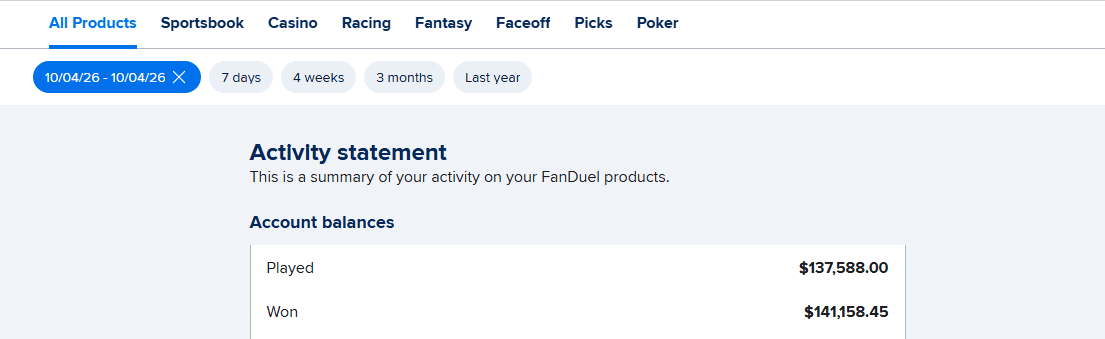
Sports Betting TikTok is the live betting account behind The Best Bet on Sports, covering NFL, NCAAF, NBA, NCAAB, MLB and WNBA markets in real time. The account has been limited on all six major U.S. sportsbooks — FanDuel, DraftKings, Caesars, BetMGM, Fanatics and ESPN BET — for winning on live betting, with $367,520 in verified profit since 2005. View full profile →
Past results do not guarantee future performance. Must be 21 or older to wager.
Related Articles
How to Build a Winning MLB Parlay: 3-Leg Daily Structures That Beat the Sportsbook Hold Rate
The 2026 NFL Rule Changes That Move Live Betting Numbers
Why Being Good at Fantasy Football Doesn't Make You Good at Betting
Player Prop Parlay Strategy: The Volume Ceiling Problem
Best NFL Parlays for Sunday: How to Attack the Slate
How to Build a Parlay Around an Anchor Leg
Get real live betting picks
From $39.95/mo · Cancel anytime · Email + Discord delivery
● Get The Picks
Choose your package
Tap any tier below to select · Subscribe in one tap
👇 Tap any package to select it
✓ You're selecting
25 Units · $99.95/month
25 unit picks per month. Sweet spot for most bettors — plenty of action without going all-in.
- ✓25 live betting selections/month
- ✓Email + Discord delivery
- ✓All sports (NFL, NCAAF, NBA, NCAAB, MLB)
- ✓Mix of 1, 2, 3, 5-unit rated plays
- ✓Cancel anytime
Secure PayPal · Cancel anytime · No hidden fees · 21+ · +$367K verified
+$367,520 verified · Limited on 6 sportsbooks · 20 years documented · See Proof
Join Our Newsletter
Get free expert sports picks and analysis delivered weekly.