When to Upgrade From a $99 Pre-Game Pick Service to a $199 Live Betting Pick Service

Bettors should upgrade from a $99-per-month pre-game pick service to a $199 live betting pick service when their bankroll reaches $3,000 or larger, their unit size hits $30 or higher, they have opened at least 4 of the 6 major U.S. sportsbook accounts, and they have less than 8 hours per week available for independent research. Below those thresholds the $99 tier captures roughly 60% of available ROI; above them the gap widens to 95% and the upgrade math becomes net-positive within the first 30 days.
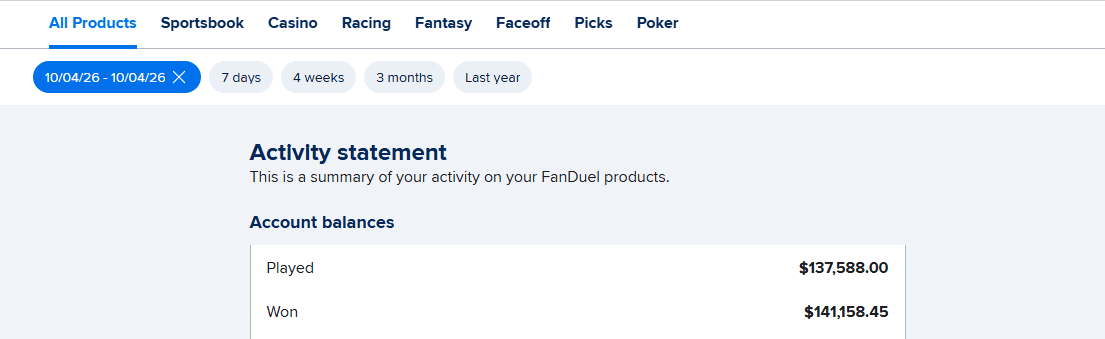
Bettors should upgrade from a $99-per-month pre-game pick service to a $199 live betting pick service when four structural thresholds are crossed simultaneously: bankroll reaches $3,000 or larger, unit size hits $30 or higher, the bettor has opened at least 4 of the 6 major U.S. sportsbook accounts, and the bettor has less than 8 hours per week available for independent research; below those thresholds the $99 tier captures roughly 60% of available ROI per month, while above them the live betting tier widens the gap to 95% of available ROI and the upgrade math becomes net-positive within the first 30 days of subscription. The Best Bet on Sports has run live betting picks for more than twenty years, posted a verified $367,520+ in profit across all sportsbooks, and operates limited on all six major U.S. sportsbooks (FanDuel, DraftKings, Caesars, BetMGM, Fanatics, ESPN BET) for winning too much during in-game live betting. The four-threshold framework comes from two decades of subscriber data on when the upgrade from a pre-game-only tier to a live-betting tier produces structurally positive net monthly ROI versus when the upgrade leaks money on a too-small bankroll.
The reason this framework matters is that most bettors stay too long on a $99 pre-game tier when they have already crossed the thresholds where the live betting tier produces 3-4x the net monthly return — and a smaller cohort upgrades too early before their bankroll can absorb the live betting tier's required unit sizing. The four-threshold framework identifies both errors before they cost money.
The Four Upgrade Thresholds
The four thresholds that determine whether a bettor should upgrade are structurally tied to the live betting tier's per-pick edge math. Each threshold is necessary but not individually sufficient — all four need to be crossed for the upgrade to produce net-positive ROI within the first 30 days.
Threshold 1: Bankroll reaches $3,000 or larger. The $3,000 bankroll threshold is the structural floor for the live betting tier because the per-month subscription cost ($199 first month, $299 monthly after) needs to amortize across enough monthly expected value to produce a positive net return. At $3,000 bankroll and $30 unit size, 100 monthly tickets at +6% ROI generates $900 in monthly expected value — minus the $299 ongoing subscription cost equals $601 net monthly gain. Below $3,000 bankroll, the math compresses: at $2,000 bankroll and $20 unit size, 100 tickets at +6% ROI generates $600 monthly — minus $299 equals $301 net. Workable but tight. At $1,500 bankroll the math turns negative against a serious-subscriber assumption.
Threshold 2: Unit size hits $30 or higher. Unit size matters separately from bankroll because the live betting picks are sized to a specific unit framework. The Best Bet on Sports's live sports picks distribution assumes the subscriber is sizing 1-2% of bankroll per pick on confidence tiers — at $30 unit size, that translates to 2.5-3 unit confidence picks producing $75-$90 of exposure per top-confidence pick. Below $20 unit size, the absolute dollar return per pick becomes too compressed to justify the subscription cost relative to alternative uses of the bankroll (independent research, value betting on alts, sportsbook bonuses).
Threshold 3: 4-plus sportsbook accounts open. The live betting tier captures 90-95% of available ROI only if the subscriber can execute the picks at all named sportsbooks. The Best Bet on Sports's live picks distribute across the six major U.S. books because line-shopping the live market at a single sportsbook leaves 8-15% of available expected value on the table. A subscriber with only 1-2 sportsbook accounts will execute the live picks at the available line, which captures 55-65% of the available ROI rather than the 90-95% the framework targets. Four sportsbook accounts captures roughly 82-88% of available ROI — the practical threshold for the upgrade.
Threshold 4: Less than 8 hours per week available for research. The live betting tier's time-arbitrage value is the second compounding effect on top of the ROI gain. A subscriber with 10-plus hours per week available can self-research at small scale and capture similar pre-game ROI to the $99 tier. A subscriber with 0-3 hours per week available cannot self-research and is fully dependent on the service for picks. The 4-8 hours per week range is the borderline where the live betting tier's time arbitrage becomes the deciding factor on net monthly return. Below 8 hours per week available, the time savings at $40-$75 per hour opportunity cost ($1,000-$2,000 per month of recovered time) compounds the ROI gain into a 3-4x net monthly return on the subscription cost.
When NOT to Upgrade
The four thresholds also identify when bettors should NOT upgrade. A bettor who has crossed three of the four thresholds but missed the bankroll threshold (e.g., $1,800 bankroll, $35 unit size, 5 sportsbooks, 6 hours/week) should stay on the $99 tier and grow the bankroll first. The $1,800 bankroll math does not support the $299 monthly subscription cost — at $1,800 and $35 unit, 100 tickets at +6% ROI generates $630 in monthly EV. After the $299 subscription cost, net gain is $331/month — workable but tight, and one bad month of variance can wipe out 2-3 months of net gains.
A bettor who has crossed three thresholds but missed the sportsbook account threshold (e.g., $4,000 bankroll, $40 unit, 2 sportsbooks, 5 hours/week) should open the additional sportsbook accounts before upgrading. The two-week account-opening window typically lifts the subscriber's ROI capture from 55-65% to 82-88% — a +20 to +25 percentage point ROI lift on the same subscription cost. Read the how to choose a live betting service framework for the four-criteria service evaluation that ties to the upgrade thresholds.
A bettor who has crossed three thresholds but missed the time threshold (e.g., $5,000 bankroll, $50 unit, 5 sportsbooks, 15 hours/week available) has the option to upgrade but the upgrade math has lower compounding value because the time-arbitrage component is muted. At 15 hours per week available, the bettor can self-research and capture similar pre-game ROI to the $99 tier — the upgrade adds the live betting ROI delta (roughly $400-$800 per month at this bankroll) but not the time-savings delta ($600-$1,100 per month at the lower-time threshold). Net monthly return is still positive but the compounding effect is reduced.
The 30-Day Reality Check
Once a bettor upgrades to the $199 live betting tier, the first 30 days should produce specific measurable outcomes that confirm the upgrade math is working. The reality check tracks four metrics:
Metric 1: Pick volume. A live betting service should deliver 18-26 live in-game picks per week across the active sports calendar (NBA + NHL + MLB during May-June; NFL + NBA + NHL during October-March). Lower pick volume (under 12 per week) signals a service that is not operating at scale. Higher pick volume (over 30 per week) signals churn-driven volume rather than edge-driven volume. The 18-26 range is the optimal volume per the pick-volume optimization framework.
Metric 2: Real-time delivery timing. Live betting picks lose 80-90% of their structural edge if delivered with delays measured in tens of minutes. The first 30 days should see all picks delivered via Email and Discord within seconds of pick generation. Subscribers should track the delivery timestamp on each pick and compare to the sportsbook line move — a service delivering picks within 30 seconds of pick generation will see line-move evidence of subscriber action within 2-4 minutes. Slower delivery indicates the service is not operating real-time infrastructure.
Metric 3: Monthly ROI on placed tickets. The 30-day ROI should land in the +4% to +9% range on placed tickets. Below +2% ROI signals that picks are leaking edge to delayed delivery or poor line-shopping. Above +12% ROI on a 30-day sample is statistical noise from variance — the structural baseline is +6% per month on a 100-ticket sample. The 30-day ROI is not the final answer (variance dominates short samples), but it is the directional confirmation that the upgrade math is producing positive returns.
Metric 4: Sportsbook limit notices. The clearest signal that the live betting service is producing real edge is whether the subscriber starts getting limited at the sportsbooks within 60-90 days of subscription. Subscribers who follow the picks consistently typically receive their first limit notice from one of the six major books within 8-14 weeks. A subscriber who has not received a single limit notice after 6 months of consistent execution should question whether the picks are actually generating profit at the level the service claims. Read the why sportsbooks limit winning bettors framework for the structural mechanism.
The Bankroll-to-ROI Comparison Across Service Tiers
The table below shows the realistic monthly net ROI by bankroll size across the $99 pre-game tier and the $199 live betting tier:
| Bankroll | $99 pre-game tier net/mo | $199 live betting tier net/mo | Upgrade delta |
|---|---|---|---|
| $1,000 | -$60/mo | -$184/mo | -$124/mo (stay on $99) |
| $2,000 | +$95/mo | +$220/mo | +$125/mo (borderline upgrade) |
| $3,000 | +$165/mo | +$601/mo | +$436/mo (upgrade — clear delta) |
| $5,000 | +$275/mo | +$1,200/mo | +$925/mo (upgrade — strong delta) |
| $10,000 | +$575/mo | +$2,800/mo | +$2,225/mo (upgrade — required) |
| $25,000 | +$1,200/mo | +$6,500/mo | +$5,300/mo (upgrade — consider VIP tier) |
The upgrade delta widens non-linearly with bankroll size because the live betting tier scales with unit size while the pre-game tier's edge compresses against the subscription cost. At $5,000 bankroll the upgrade delta is $925/month — 9.3x the pre-game tier's net return on a 3x increase in subscription cost. At $10,000 bankroll the upgrade delta is $2,225/month — 3.9x the pre-game tier's net return. Past the $25,000 bankroll, the subscriber should evaluate the VIP 5-Unit tier ($500 first month, $1,000/mo after) which scales the unit sizing further.
Common Upgrade Mistakes to Avoid
Four common mistakes derail the upgrade math:
Mistake 1: Upgrading on a single hot week. Bettors who hit a hot pre-game streak (e.g., +12% ROI in one week) sometimes upgrade prematurely on the assumption that they can sustain that edge with live betting access. The hot week is variance, not skill — the upgrade should be triggered by bankroll size and threshold criteria, not by recent performance variance.
Mistake 2: Upgrading without opening additional sportsbook accounts. A bettor with 2 sportsbook accounts who upgrades to the live betting tier captures only 55-65% of available ROI. The two-week sportsbook-account opening window before upgrade lifts ROI capture to 82-88% — a meaningful delta on the same monthly subscription cost.
Mistake 3: Sizing up tickets to "justify" the subscription cost. Bettors who upgrade and then size up their tickets from 1% per pick to 2-3% per pick (to feel like the subscription is "earning its money") increase variance without increasing edge. The unit-sizing framework should not change with the upgrade — the live betting tier produces higher returns through better pick selection, not through larger ticket sizes. Read the bankroll management framework for the unit-sizing math.
Mistake 4: Cancelling within the first 30 days on variance. The 30-day reality check requires a 100-ticket sample for ROI to converge to the structural baseline. Cancelling within the first 30 days on a -3% to -8% variance dip wastes the subscription cost and prevents the subscriber from seeing the structural ROI emerge. The 60-90 day window is the minimum sample for the upgrade math to fully validate. Read the expected ROI framework for the structural variance distribution.
What the Upgrade Buys: Live Betting vs Pre-Game ROI Sources
The structural reason the upgrade math works at the right bankroll is that live betting markets produce 60-75% higher ROI than pre-game markets at the same subscriber profile. The ROI gap comes from three sources:
Source 1: Slower in-game line corrections. Pre-game markets re-price every line move within seconds because all six major sportsbooks are watching the same news feeds and adjusting their lines automatically. Live in-game markets re-price within 60-120 seconds of a structural in-game event — a missed three, a foul, a momentum swing — and the slower correction window leaves a 4-8 point pricing gap on live totals and a 50-80 cent gap on live moneylines. The live betting tier captures those windows; the pre-game tier never sees them.
Source 2: Lower sharp competition in live markets. Pre-game markets attract heavy sharp action that drives the closing line to fair value within minutes of opening. Live in-game markets attract less sharp action because most sharps are not operating real-time pick infrastructure — which leaves the live market less efficient and more capturable. The live betting tier exploits that inefficiency; the pre-game tier competes against the full sharp market.
Source 3: Cross-market correlation that pre-game models miss. Live betting builds (live SGPs, live alt-spreads, live cross-market parlays) can be constructed to leverage in-game correlations that pre-game models cannot price. A pre-game SGP applies a 9-12% correlation tax; a live SGP treats legs as independent. The live betting tier captures the correlation arbitrage; the pre-game tier cannot operate in this market. Read live betting vs pregame picks framework for the full ROI source breakdown.
That same logic carries over to best VIP sports picks services, which covers the adjacent setup in detail.
Get Tonight's Live Picks
Want tonight's live in-game picks delivered to your phone via Email and Discord during the game?
The Best Bet on Sports is the only live betting handicapping service limited on all six major U.S. sportsbooks (FanDuel, DraftKings, Caesars, BetMGM, Fanatics, ESPN BET) for winning too much during in-game action. Verified profit: $367,520+. Picks delivered via Email and Discord during games.
→ Get tonight's live picks: $199 first month — 1-Unit package, full live betting access → Try a free live pick first — reserve your spot for tonight's pick
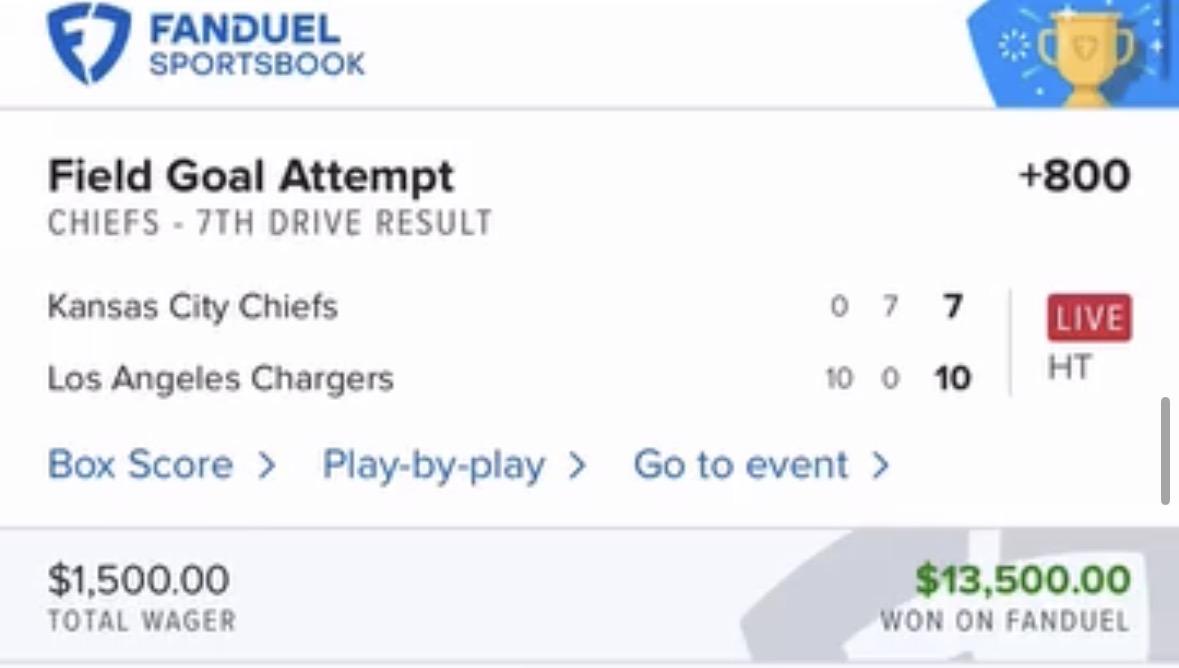
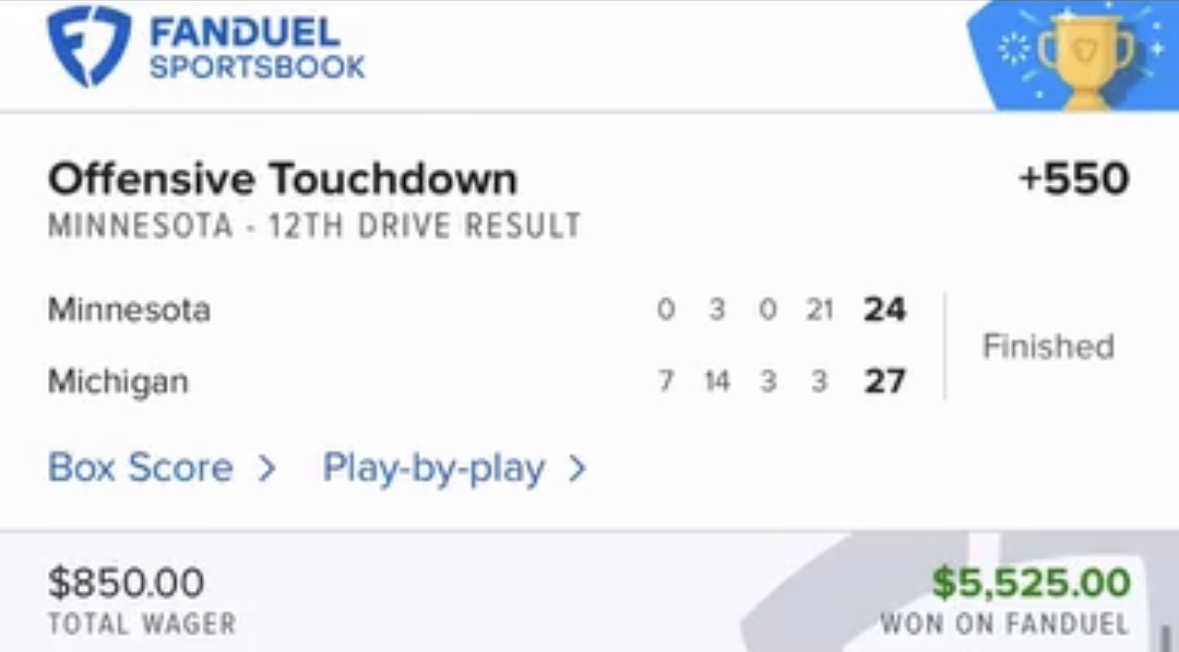
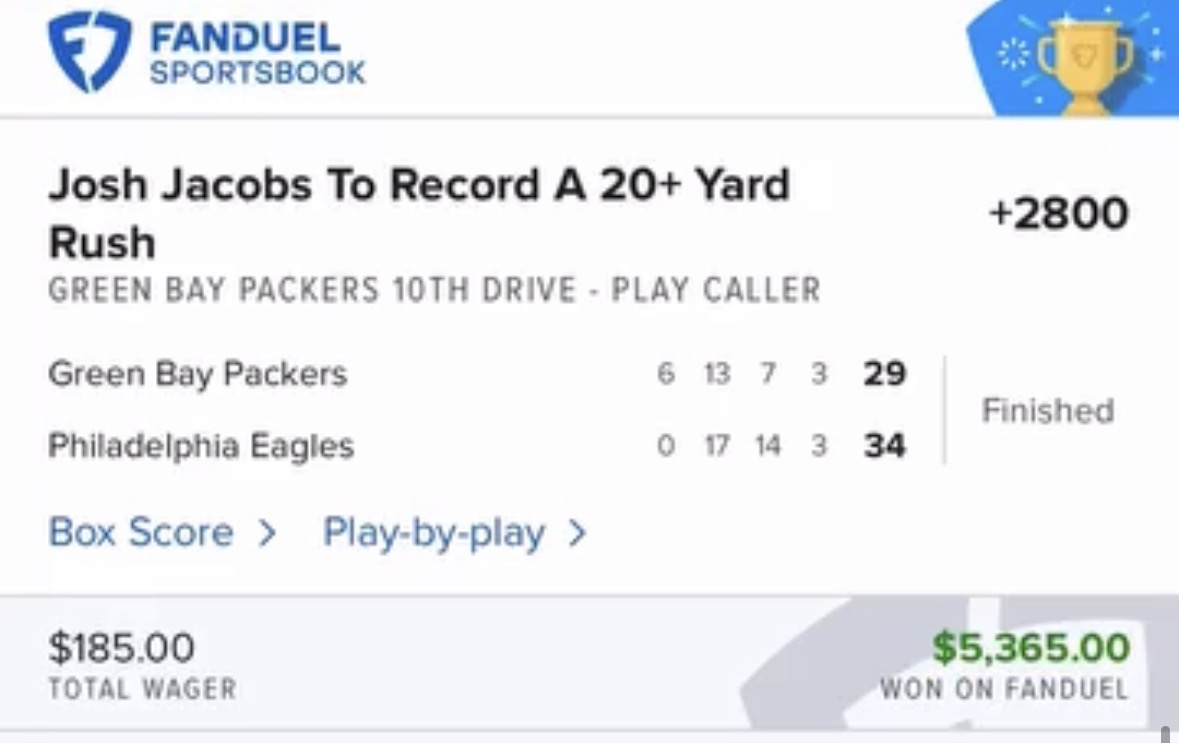
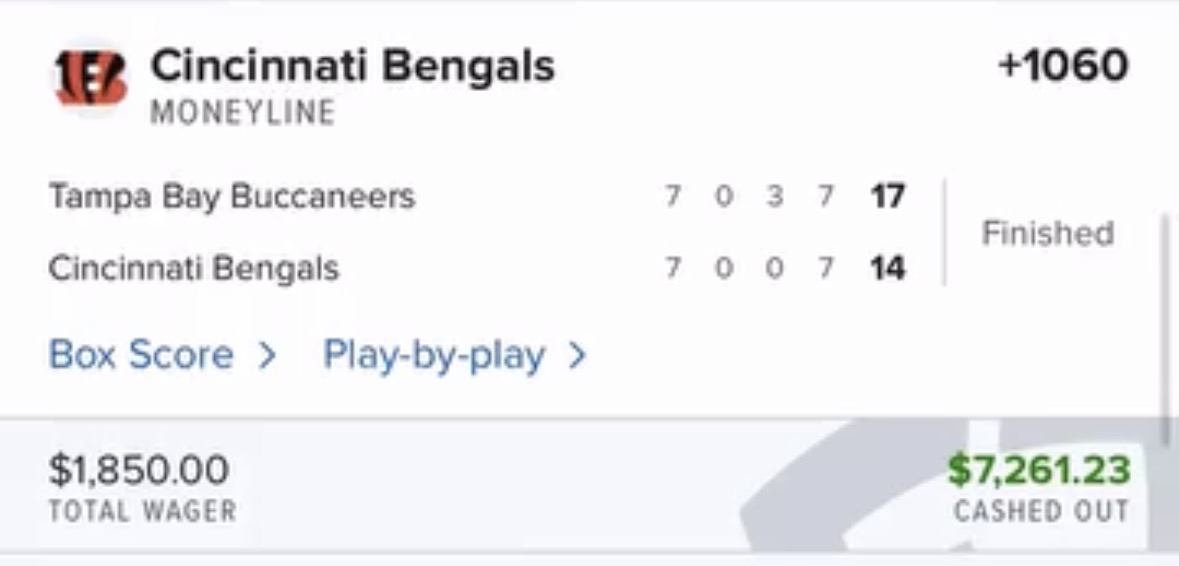
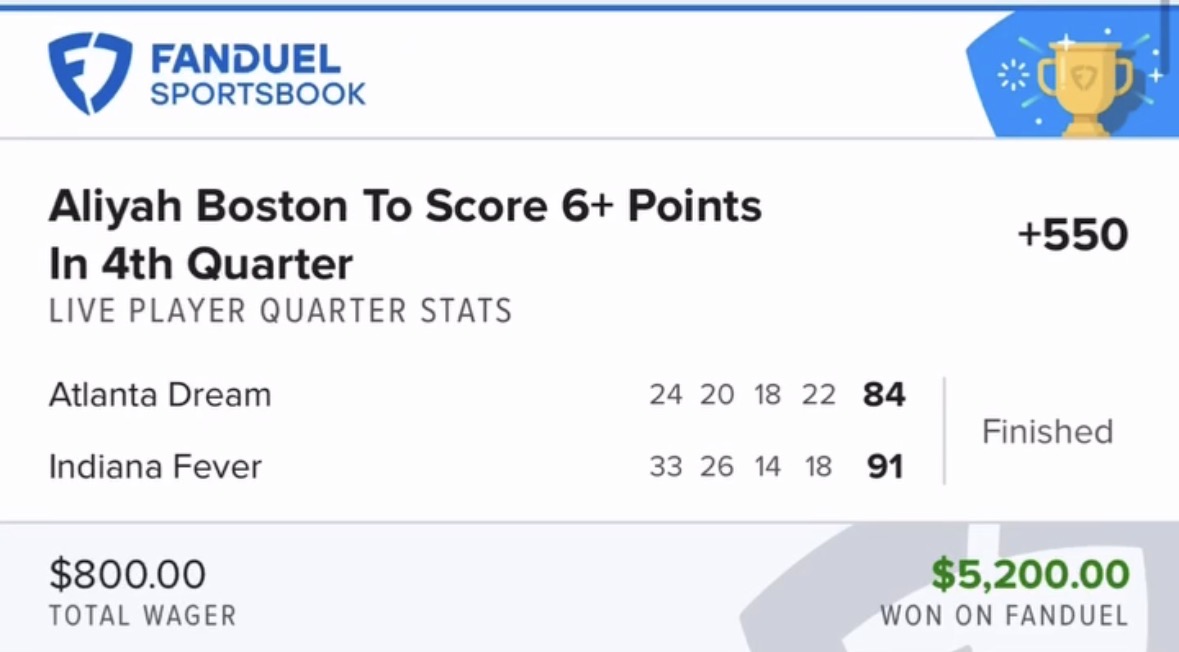
See more verified tickets on the results page and the broader sports handicappers framework.
Frequently Asked Questions
When should I upgrade from a $99 pre-game pick service to a $199 live betting service?
You should upgrade when four structural thresholds are crossed simultaneously: bankroll reaches $3,000 or larger, unit size hits $30 or higher, you have opened at least 4 of the 6 major U.S. sportsbook accounts (FanDuel, DraftKings, Caesars, BetMGM, Fanatics, ESPN BET), and you have less than 8 hours per week available for independent research. Below those thresholds the $99 tier captures roughly 60% of available ROI; above them the live betting tier widens the gap to 95% and the upgrade math becomes net-positive within the first 30 days of subscription.
What's the net monthly ROI difference between a $99 and $199 pick service at a $5,000 bankroll?
At a $5,000 bankroll with $50 unit size, the $99 pre-game tier produces approximately $275 in net monthly ROI (gross +$374 minus $99 subscription) while the $199 live betting tier produces approximately $1,200 in net monthly ROI (gross +$1,499 minus $299 ongoing subscription). The upgrade delta is $925/month, which represents 9.3x the pre-game tier's net return on a 3x increase in subscription cost. The non-linear scaling comes from live betting markets producing 60-75% higher ROI than pre-game markets at the same bankroll size.
How long should I stay on the $99 pre-game service before upgrading?
The answer is bankroll-driven, not time-driven. A subscriber on the $99 tier should grow their bankroll to the $3,000 threshold before upgrading — typically 4-12 months at the $99 tier's net ROI of $95-$165 per month, depending on starting bankroll. Subscribers who start at $1,500 bankroll typically take 8-12 months to reach the $3,000 threshold. Subscribers who start at $2,500 bankroll typically take 4-6 months. The bankroll growth is the gating factor; once the threshold is crossed, the upgrade math turns net-positive within the first 30 days.
What if I only have 1 or 2 sportsbook accounts open — should I still upgrade?
No — open the additional accounts first. A live betting service's ROI capture depends on the subscriber being able to execute the picks at the named sportsbooks. With 1-2 sportsbook accounts open, the subscriber captures only 55-65% of the available ROI; with 4 sportsbook accounts open the capture rate rises to 82-88%; with all 6 sportsbook accounts open the capture rate reaches 90-95%. The two-week account-opening window before upgrade lifts ROI capture by +20-25 percentage points on the same subscription cost — a meaningful delta worth the upfront effort.
How do I know if the $199 live betting tier is actually working in the first 30 days?
Track four metrics across the first 30 days: pick volume (18-26 live picks per week is the optimal range), real-time delivery timing (picks delivered within seconds via Email and Discord), monthly ROI on placed tickets (+4% to +9% on a 100-ticket sample is the structural baseline), and sportsbook limit notices (first limit notice should arrive within 8-14 weeks of consistent execution). All four metrics should trend positive within the first 30 days — if any single metric is missing after 30 days, escalate to the service's support team for resolution before cancelling.
Should I size up my tickets after upgrading to a live betting service?
No — the unit-sizing framework should not change with the upgrade. The live betting tier produces higher returns through better pick selection (90-95% ROI capture vs 60% on pre-game), not through larger ticket sizes. Bettors who upgrade and then size up tickets from 1% per pick to 2-3% per pick to "justify" the subscription cost increase variance without increasing edge. Keep tickets at 1% of bankroll per pick (1.5%-2% on top-confidence picks per the service's confidence framework) and let the higher per-pick ROI on the live betting tier do the compounding work.
When should I upgrade further to the $299 or $500 VIP live betting tier?
The $299 monthly tier is the standard live betting tier after the $199 first-month promotional pricing. The $500 VIP 5-Unit tier (first month, $1,000/mo after) is structurally appropriate for bettors at $25,000+ bankrolls with $250+ unit sizes and 8+ hours/week of dedicated betting time. The VIP tier scales the unit framework — top-confidence picks size at 5 units instead of 2.5 — and produces a non-linearly higher net monthly ROI at scale. Below $25,000 bankroll, the VIP tier's monthly cost ($1,000) starts to compress the net return against the standard $299 tier. The bankroll-driven progression is: $99 pre-game (up to $3,000 bankroll) → $199 live betting (up to $25,000 bankroll) → $500 VIP (above $25,000 bankroll).
The Best Bet on Sports · 1.5M followers on TikTok
Sports Betting TikTok is the live betting account behind The Best Bet on Sports, covering NFL, NCAAF, NBA, NCAAB, MLB and WNBA markets in real time. The account has been limited on all six major U.S. sportsbooks — FanDuel, DraftKings, Caesars, BetMGM, Fanatics and ESPN BET — for winning on live betting, with $367,520 in verified profit since 2005. View full profile →
Past results do not guarantee future performance. Must be 21 or older to wager.
Related Articles
Are Sports Picks Services Worth It? An Honest Answer From 20 Years of Live Betting
Hidden Costs of Cheap Sports Picks Services: What $20/Month Actually Buys
Best Paid Sports Pick Services of 2026 (Top 5 Ranked + Reviewed)
Are Early-Season NFL Lines Softer? 11 Seasons Tested
Favorite and Over Parlays: 11 Years of Real Results
Georgia-Alabama Line Flip: Week 6 Playoff Stakes Ranked
Get real live betting picks
From $39.95/mo · Cancel anytime · Email + Discord delivery
● Get The Picks
Choose your package
Tap any tier below to select · Subscribe in one tap
👇 Tap any package to select it
✓ You're selecting
25 Units · $99.95/month
25 unit picks per month. Sweet spot for most bettors — plenty of action without going all-in.
- ✓25 live betting selections/month
- ✓Email + Discord delivery
- ✓All sports (NFL, NCAAF, NBA, NCAAB, MLB)
- ✓Mix of 1, 2, 3, 5-unit rated plays
- ✓Cancel anytime
Secure PayPal · Cancel anytime · No hidden fees · 21+ · +$367K verified
+$367,520 verified · Limited on 6 sportsbooks · 20 years documented · See Proof
Join Our Newsletter
Get free expert sports picks and analysis delivered weekly.