
The 2026 Gambling Tax Change Makes Bet Volume Expensive

Gambling is taxed on gross winnings, not on profit — and starting with the 2026 tax year, only 90% of losses can be deducted, and only by bettors who itemize. The practical result is a charge that scales with the money you cycle through losing bets rather than with what you end the year holding. Two bettors with identical annual profit can owe wildly different tax purely because one placed more bets. Turnover is now a cost line.
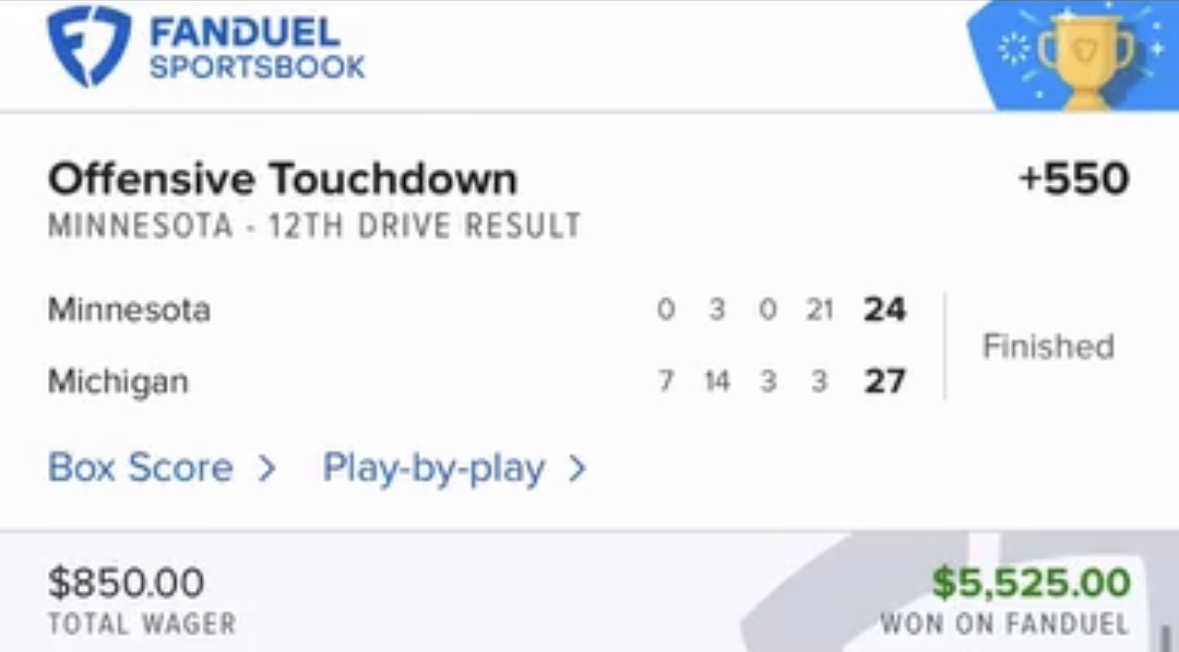
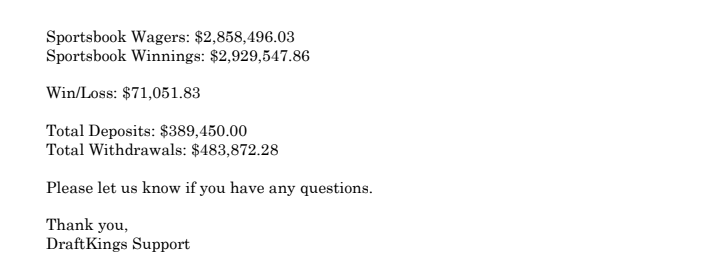
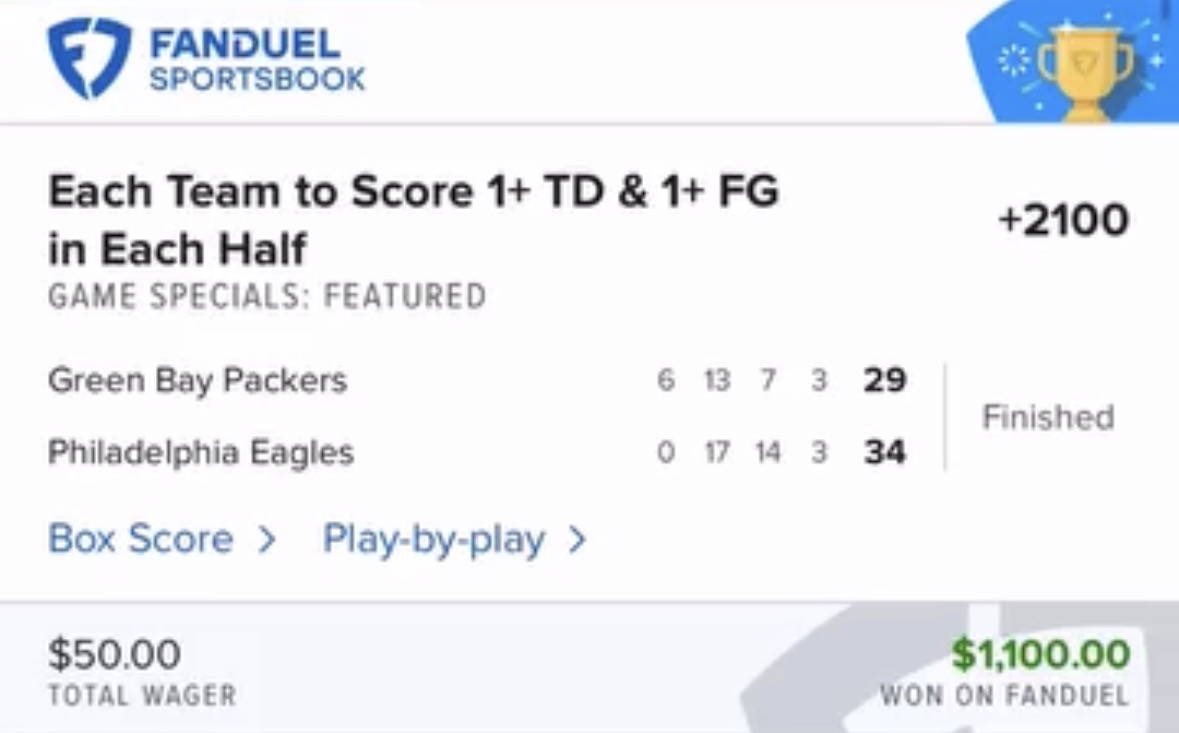
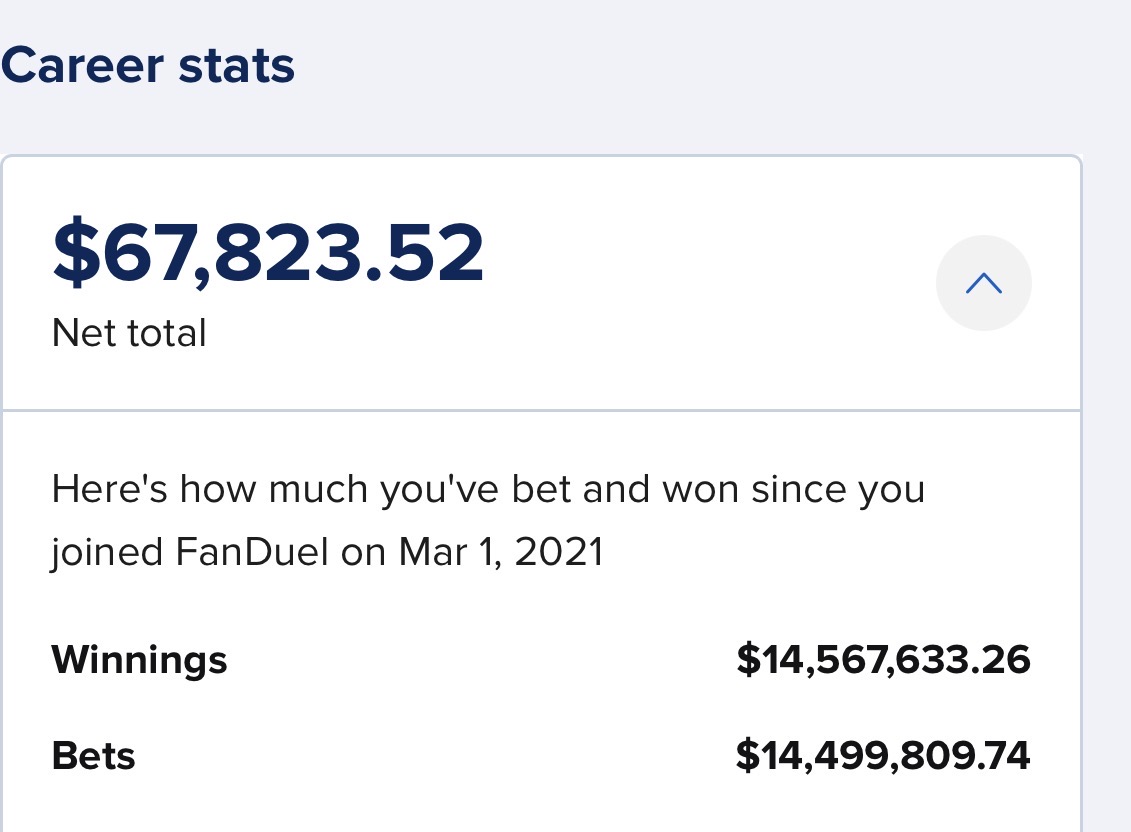
Gambling income has always been taxed on gross winnings rather than on net profit, with losses deductible only as an itemized deduction and only up to the amount you won. Two changes have made that structure much more expensive for high-volume bettors: the standard deduction is now large enough that most people never itemize at all, and beginning with the 2026 tax year, the One Big Beautiful Bill Act limits the gambling loss deduction to 90% of losses. Put together, the tax code no longer charges you on what you made — it charges you in proportion to the money you cycled through losing bets. A bettor who finishes the year up modestly on enormous volume can owe tax on income he never actually has. The Best Bet on Sports has run live in-game betting since 2005 with a verified $367,520+ in profit while limited on all six major U.S. sportsbooks, and this rule change alters the arithmetic of how many bets are worth placing.
Most betting content treats taxes as a footnote for people who win big. That is backwards. The 2026 rules hit hardest at bettors who churn a lot of money for a thin margin, which describes almost everyone who bets a full card every night — including plenty of people who finish the year roughly even.
This is general information about how U.S. gambling income is structured, not tax advice, and not a description of your situation. Rules differ by filing status and by state, some states treat gambling losses far worse than the federal government does, and legislation in this area is actively moving. Talk to a tax professional about your own return.
The Rule That Surprises People: Winnings and Losses Are Not Netted
The intuition almost every bettor has is that you pay tax on your profit. If you won $20,000 across the year and lost $18,000, you made $2,000, so you owe tax on $2,000.
That is not how it works and never has been. Gambling winnings are reported as income in full. Losses are a separate item, claimed as an itemized deduction on Schedule A, capped at the amount you won, and available only if you itemize instead of taking the standard deduction.
The standard deduction is the part that quietly does the damage. For 2026 it sits at roughly $16,100 for a single filer and roughly $32,200 for a married couple filing jointly. A bettor whose other itemizable deductions do not already approach that number gets no benefit at all from claiming gambling losses — the deduction is real but it is worth nothing, because the standard deduction was larger anyway. That bettor reports gross winnings as income and deducts none of the losses.
For most recreational bettors, that is the situation. Not an edge case. The default.
What Changed for 2026: The 90% Cap
The One Big Beautiful Bill Act of 2025 added a second limitation on top of the first. Beginning with the 2026 tax year, a bettor who does itemize may deduct only 90% of gambling losses against gambling winnings, rather than 100%.
The mechanical effect is what tax practitioners have been calling phantom income — taxable income that corresponds to no money in your account. The commonly cited illustration: a bettor with $5,000 in winnings and $3,000 in losses reported $2,000 of net taxable gambling income under prior law. Under the 2026 rule, only $2,700 of the losses is deductible, producing $2,300 of taxable income from the same $2,000 of real profit.
Ten percent sounds small. Notice what it is ten percent of. It is not ten percent of your profit. It is ten percent of your losses — a number that has nothing to do with how well you did and everything to do with how much you bet.
There is bipartisan legislation pending to repeal the cap, and it may well pass. It has not yet, and planning around a repeal that has not happened is not planning.
Why This Is a Tax on Turnover
Here is the structural claim, and it is arithmetic rather than opinion.
Consider two bettors who finish the year with exactly the same profit — $5,000 — and differ only in how much they bet to get there.
| Grinder | Selective bettor | |
|---|---|---|
| Gross winnings for the year | $60,000 | $18,000 |
| Total losses for the year | $55,000 | $13,000 |
| Actual profit | $5,000 | $5,000 |
| Taxable gambling income, itemizing, prior law | $5,000 | $5,000 |
| Taxable gambling income, itemizing, 2026 rules | $10,500 | $6,300 |
| Taxable gambling income, taking the standard deduction | $60,000 | $18,000 |
Illustrative figures chosen to show structure. Real returns depend on filing status, state, other deductions, and your actual records.
Three things fall out of that table.
Under the old rules, volume was tax-neutral. Both bettors owed tax on $5,000. How they got there did not matter.
Under the 2026 rules, volume costs money even when you itemize. The grinder's extra $42,000 of losses generates $4,200 of income he did not earn. The selective bettor's smaller loss pile generates $1,300. Same profit, different bill, and the difference is entirely turnover.
And for anyone taking the standard deduction, the gap is not a difference in degree. The grinder reports $60,000 of income on $5,000 of profit. That is the real story of gambling taxation for most people, and the 90% rule is a modest additional insult on top of it.
The general principle: the tax code prices the money you push through losing bets, not the money you keep. Every additional bet increases your expected gross winnings and your expected losses at the same time, and the tax system treats those two asymmetrically. Volume is no longer free.
What This Does and Does Not Imply
The honest version of the conclusion is narrower than the version that would sell better, so let us be exact about it.
Reducing your bet count does not automatically reduce your turnover. Turnover is bet count multiplied by stake size. A bettor who cuts from 1,000 bets a year to 200 but raises his stake fivefold has changed nothing at all — same money cycled, same gross winnings, same loss pile, same tax outcome. Anyone telling you that betting less often is automatically tax-efficient has skipped a step.
What actually reduces the number is dollars staked on bets that lose. There are only two ways to move it: stake less money, which shrinks your profit proportionally and solves nothing, or lose less often on the same money, which is the only version that improves both sides of the ledger at once.
That is a real and slightly uncomfortable conclusion, because it means the tax change does not reward selectivity as such. It rewards accuracy, and it punishes volume that is not accurate. A bettor firing 15 positions a night at a coin-flip win rate is now paying a fee for the privilege of running in place.
It also means an ROI figure has stopped describing what you take home. Two approaches showing the same annual return can produce very different after-tax results depending on how much money each one had to cycle to get there — which is a wrinkle we did not have to mention when we wrote about win rate versus ROI and what return to expect from a paid service. Neither of those numbers is turnover-adjusted, and now they need to be.
Where This Lands on the Decision to Pay for Picks
We would rather make this argument accurately than forcefully, so here is both sides of it.
The case for: a live betting service that sends a small number of in-game positions per night is structurally lower-turnover than betting a full card. We publish a limited number of picks precisely because live spots that are worth taking do not arrive fifteen times an evening — a point we made in how many picks per day a service should send and detailed in what a $199 service actually delivers. Under the 2026 rules, that structure has a tax consequence it did not have last year, and it runs in your favor.
The case against overreading it: nothing about following picks makes winnings untaxable, and a service that wins more also produces more gross winnings, which are still reported in full. A profitable year is a taxable year regardless of who sourced the bets, whether you are betting your own opinions or following sports picks from someone else, and the same arithmetic applies to every one of the sports handicappers you might subscribe to. If your bankroll plan involves scaling stakes up as the bankroll grows — which is what bankroll management for $100 to $500 bettors actually recommends — your turnover rises even as your bet count stays flat.
The clean way to state it: the 2026 rules made it more expensive to be busy, and they did not make it any cheaper to be right. If your betting volume is currently high because there is always another game on rather than because there is always another edge, that volume now has a line item attached to it.
The Record-Keeping Part Nobody Wants to Read
One practical note, because it is the single highest-value thing in this article and it costs nothing.
Whether you can substantiate a loss figure at all depends on records you either kept or did not. Sportsbook apps generally provide annual statements, and those statements are the starting point, not the ending point — bettors routinely hold accounts at multiple operators, and no single statement sees the whole picture. Keep your own log: date, book, market, stake, price taken, and settlement.
That log does triple duty. It is what a tax professional needs. It is what resolves a dispute with an operator, which we covered in what actually voids a bet. And it is the only honest way to evaluate whether anything you are paying for is working, which we went through in why your results differ from a service's record.
One more correction worth carrying: the reporting thresholds that trigger a W-2G form determine what gets reported to the IRS, not what is taxable. Those thresholds vary by wager type and some of them changed for 2026. Winnings below any of them are still income. A bettor who assumes a year without forms is a year without obligation has made an expensive assumption, and it is the most common misunderstanding in this entire subject.
Get Tonight's Live Picks
Want tonight's live in-game picks delivered to your phone via Email and Discord during the game?
The Best Bet on Sports is the only live betting handicapping service limited on all six major U.S. sportsbooks (FanDuel, DraftKings, Caesars, BetMGM, Fanatics, ESPN BET) for winning too much during in-game action. Verified profit: $367,520+. Picks delivered via Email and Discord during games.
→ Get tonight's live picks: $199 first month — 1-Unit package, full live betting access → Try a free live pick first — reserve your spot for tonight's pick

Frequently Asked Questions
Do you pay taxes on sports betting winnings even if you lost money overall?
You can, and under current rules it is common. Gambling winnings are reported as income in full, while losses are a separate itemized deduction available only to bettors who itemize instead of taking the standard deduction. Since the standard deduction is roughly $16,100 for a single filer and $32,200 for a couple filing jointly in 2026, most recreational bettors get no benefit from their losses at all — meaning they report gross winnings as income regardless of how the year finished. This is general information, not tax advice.
What is the 90% gambling loss deduction rule for 2026?
Beginning with the 2026 tax year, the One Big Beautiful Bill Act of 2025 limits the gambling loss deduction to 90% of losses rather than the full amount. A bettor with $5,000 in winnings and $3,000 in losses previously reported $2,000 of net taxable gambling income; under the new rule only $2,700 of losses is deductible, producing $2,300 of taxable income from the same real profit. The gap is often called phantom income. Bipartisan legislation to repeal the cap is pending but has not passed.
Why does betting volume increase your tax bill if your profit is the same?
Because the 10% of losses you can no longer deduct scales with how much you bet, not with how well you did. A bettor with $55,000 in annual losses generates $5,500 of non-deductible losses; a bettor with $13,000 in losses generates $1,300. If both finished the year up $5,000, they made identical money and owe different tax. For bettors taking the standard deduction the effect is far larger, since gross winnings are reported in full and the loss figure never enters the return at all.
Does placing fewer bets reduce your gambling tax?
Only if it reduces the total dollars you stake. Turnover is bet count multiplied by stake size, so cutting from 1,000 bets to 200 while raising your stake fivefold changes nothing — the same money cycles through, producing the same gross winnings and the same loss pile. The variable that actually matters is dollars staked on bets that lose, which you reduce either by betting less money overall or by losing less often on the same money.
Do I owe tax if I never received a W-2G form?
Yes. Reporting thresholds determine which winnings get reported to the IRS by the operator, not which winnings are taxable. Those thresholds vary by wager type and some changed for 2026, and winnings below every one of them are still income. Assuming that a year without forms is a year without obligation is the most common and most expensive misunderstanding in this area.
What records should a sports bettor keep for taxes?
Keep your own log independent of any app: date, sportsbook, market, stake, price taken, and settlement. Operators generally provide annual statements, but bettors commonly hold accounts at several books and no single statement sees the whole year. The same log resolves disputes with an operator and is the only reliable way to evaluate whether a paid service is actually working for you, so it earns its keep three times over.
Does using a pick service change your tax situation?
Not directly — winnings are taxable no matter where the bet idea came from, and a service that wins more produces more reportable winnings, not fewer. The indirect effect is about structure: an approach built on a small number of higher-conviction positions cycles less money than betting a full card every night, and under the 2026 rules the money you cycle through losing bets now carries a cost. That is a genuine consideration, but it is secondary to whether the picks win. A tax-efficient way to lose money is still losing money.
The Best Bet on Sports · 1.5M followers on TikTok
Sports Betting TikTok is the live betting account behind The Best Bet on Sports, covering NFL, NCAAF, NBA, NCAAB, MLB and WNBA markets in real time. The account has been limited on all six major U.S. sportsbooks — FanDuel, DraftKings, Caesars, BetMGM, Fanatics and ESPN BET — for winning on live betting, with $367,520 in verified profit since 2005. View full profile →
Past results do not guarantee future performance. Must be 21 or older to wager.
Related Articles
Does a Picks Service Still Pay After Taxes?
Your Sportsbook's Bet History Is a Receipt, Not a Record
Can a Sportsbook Refuse to Pay You? What Actually Voids a Bet
Why Your Results Won't Match a Pick Service's Record
Can a Pick Service Fix Bad Betting Habits? The Honest Answer
Should You Follow One Pick Service or Several?
Get real live betting picks
From $39.95/mo · Cancel anytime · Email + Discord delivery
● Get The Picks
Choose your package
Tap any tier below to select · Subscribe in one tap
👇 Tap any package to select it
✓ You're selecting
25 Units · $99.95/month
25 unit picks per month. Sweet spot for most bettors — plenty of action without going all-in.
- ✓25 live betting selections/month
- ✓Email + Discord delivery
- ✓All sports (NFL, NCAAF, NBA, NCAAB, MLB)
- ✓Mix of 1, 2, 3, 5-unit rated plays
- ✓Cancel anytime
Secure PayPal · Cancel anytime · No hidden fees · 21+ · +$367K verified
+$367,520 verified · Limited on 6 sportsbooks · 20 years documented · See Proof
Join Our Newsletter
Get free expert sports picks and analysis delivered weekly.