Does a Picks Service Still Pay After Taxes?

Federal law changed for the 2026 tax year, and gamblers can now deduct only 90% of their losses against their winnings. The arithmetic that follows is short and unpleasant: your taxable gambling income is now your actual profit plus ten percent of everything you lost. That makes betting volume expensive in a way it never used to be, and it changes the edge a picks subscription has to produce to be worth its price.
Every honest evaluation of a paid picks service ends up at one number: how much edge does it have to produce before it covers what it costs? For the 2026 tax year that number moved, and most bettors running the math have not updated it. Under the One Big Beautiful Bill Act, gambling losses became deductible only up to 90% of their amount starting Jan. 1, 2026. The identity that falls out is exact and worth memorizing: your taxable gambling income is now your real profit plus ten percent of everything you lost. That means the tax is levied on your volume, not on your winnings — which makes a small number of well-priced positions worth structurally more than a large number of thin ones. The Best Bet on Sports has worked in-play football markets for more than twenty years with a verified $367,520+ in profit across all sportsbooks, and this is the version of the cost-benefit conversation that includes the part nobody's sales page mentions. This is general information rather than tax advice — anything below with money attached to it belongs in front of a CPA.
What Changed, and What Did Not
Two things about gambling taxes have always been true and still are.
Gambling winnings are taxable income, reported whether or not any form arrives. And losses are deductible only if you itemize — which means a bettor taking the standard deduction, the large majority of filers, gets no offset at all and is taxed on gross winnings regardless of whether the year was profitable. That has caught people for decades and has nothing to do with the new law.
What changed on Jan. 1, 2026 is the ceiling on the deduction itself. Losses that were previously deductible dollar-for-dollar against winnings are now deductible only to 90% of their amount, still capped at total winnings. It applies to recreational and professional filers alike.
The repeal effort is real but has not landed. The FAIR BET Act, introduced by Sen. Catherine Cortez Masto and Rep. Dina Titus with bipartisan support, targets exactly this provision; the House Rules Committee declined to advance it as an amendment to the 2026 defense bill in May, and it now sits with Ways and Means. A second bill, the FULL HOUSE Act (HR 6985, introduced Jan. 12 by Rep. Max Miller), proposes effectively the same fix. Neither has passed. For the year you are currently betting in, the 90% cap is the law.
The One Line of Arithmetic That Matters
Write it out and it collapses to something very simple.
Taxable gambling income = winnings − 90% of losses.
Rearrange:
Taxable gambling income = (winnings − losses) + 10% of losses = your actual profit + 10% of everything you lost.
That second term is the whole story. It does not care whether you won. It scales with the gross amount you lost over the year, which for any bettor is roughly proportional to how much you bet.
Put numbers on it. Assume a 24% federal bracket and set state tax aside, which is itself optimistic since a number of states are less generous than the federal treatment and some allow no loss deduction at all.
| Gross winnings | Gross losses | Real profit | Taxable income | Tax at 24% | Kept |
|---|---|---|---|---|---|
| $20,000 | $18,000 | $2,000 | $3,800 | $912 | $1,088 |
| $50,000 | $45,000 | $5,000 | $9,500 | $2,280 | $2,720 |
| $100,000 | $95,000 | $5,000 | $14,500 | $3,480 | $1,520 |
| $200,000 | $190,000 | $10,000 | $29,000 | $6,960 | $3,040 |
| $110,000 | $115,000 | −$5,000 | $6,500 | $1,560 | −$6,560 |
Look at rows three and two. Identical $5,000 profit. The bettor who churned twice the volume to get there keeps $1,520 instead of $2,720 — an effective rate of roughly 70% on the same money.
Now look at the last row. That bettor lost $5,000 on the year and still owes $1,560, because 90% of $115,000 is $103,500, which is less than $110,000 in winnings. This is what the accounting profession has taken to calling phantom income, and it is not a corner case. It is the ordinary outcome for a high-volume bettor running near break-even.
What This Actually Punishes
Not winning. Volume.
Two bettors both clear $5,000. One placed 1,200 wagers at small edges, grinding a thin margin across an enormous number of positions. The other placed 150 wagers at larger edges. Before 2026 the tax code was indifferent between them. Now the first one hands over a multiple of what the second one does, because the first one's gross losses — the base the 10% add-back is computed on — are several times larger.
That is a genuine structural change to what a betting approach is worth, and it lands hardest on exactly the style most bettors default to: bet more games, bet more legs, stay in action. A betting log that tracks gross winnings and gross losses rather than just net is now the difference between knowing your tax exposure in October and discovering it in April.
There is a second, quieter consequence for parlay players. A parlay's compounded margin already makes it the most expensive product on the board, and losing tickets add to the gross-loss base that gets marked up by 10%. The tax change does not make parlays a different kind of bet, but it does raise the real cost of the ones that miss — worth folding into the reasoning in how many legs a parlay should have.
The Honest Uncertainty
Here is where anyone giving you a confident number is overselling.
For sports betting specifically, how "winnings" and "losses" get measured is genuinely unsettled in practice. Measured per wager, every winning ticket is a winning event and every losing ticket is a losing event, which produces enormous gross figures on both sides and a large 10% add-back. Measured per session — a defensible approach with real support in the slot-machine context but far less clarity in online sports betting — the same betting year produces dramatically smaller gross numbers and a much smaller tax hit.
Those two methods can differ by thousands of dollars on identical betting. Anyone who tells you which one applies to your situation without looking at your records and your state is guessing. That is not a hedge for its own sake; it is the single largest variable in your actual bill, and it is a conversation for a CPA who handles gambling clients.
Can You Deduct the Subscription Itself?
For most readers, no. This is the part that directly answers the question in the title.
A recreational bettor cannot deduct handicapping subscriptions, data services, software or research costs. Those are not wagering losses under the statute; they are expenses, and the expense category that would have carried them was eliminated for individuals. Broadening the loss provision did not create a new deduction for research tools.
A filer who qualifies as a professional gambler — a genuinely high bar requiring that the activity be pursued full-time, in good faith and with regularity as a livelihood, not merely profitably — files on Schedule C and can deduct business expenses including subscriptions. But for 2026 those expenses are grouped with wagering losses and run through the same 90% limitation, still capped at total winnings. The professional treatment is better; it is not the escape hatch it used to be.
The practical conclusion for almost everyone reading this: treat the $199 as a cost paid out of after-tax money. Do not build a break-even model that quietly assumes a deduction you will not get. The pre-tax break-even math is laid out in how long until a live betting service pays for itself, and the honest 2026 version requires clearing that bar on post-tax profit rather than gross.
What a Rational Buyer Does Now
The tax change does not tell you to subscribe to anything. It tells you what to require of a service if you do.
Ask what the position count looks like, not just the win rate. A service that produces a play on every game is selling you volume, and volume is now taxed on the way out even when it is profitable. A service that produces a small number of positions and nothing on quiet nights is selling you the thing the code now rewards. Which category a seller belongs to is knowable — the questions are in computer picks vs. expert picks.
Recalculate the edge you need. If a 4% ROI cleared your bar in 2025, the 2026 version of that same bar is higher, because the add-back scales with the losses you incur getting there. The ROI ranges worth expecting from any legitimate service are in what ROI to expect from a paid picks service.
Track gross, not net, starting now. You cannot evaluate a subscription against a tax bill you have not measured.
Our own product is a small number of in-play positions per slate, delivered during games via Email and Discord, priced at a specific number at a specific moment. That shape was chosen because it is where we think the edge is, not because of a tax provision. But the 2026 arithmetic happens to point at the same place it always pointed: fewer bets at better numbers beats more bets at worse ones, and the gap between those two approaches just got wider by about ten percent of everything you lose.
Get Tonight's Live Picks
Want tonight's live in-game football picks delivered to your phone via Email and Discord during the game?
The Best Bet on Sports is the only live betting handicapping service limited on all six major U.S. sportsbooks (FanDuel, DraftKings, Caesars, BetMGM, Fanatics, ESPN BET) for winning too much during in-game action. Verified profit: $367,520+. Picks delivered via Email and Discord during games.
→ Get tonight's live picks: $199 first month — 1-Unit package, full live betting access → Try a free live pick first — reserve your spot for tonight's pick
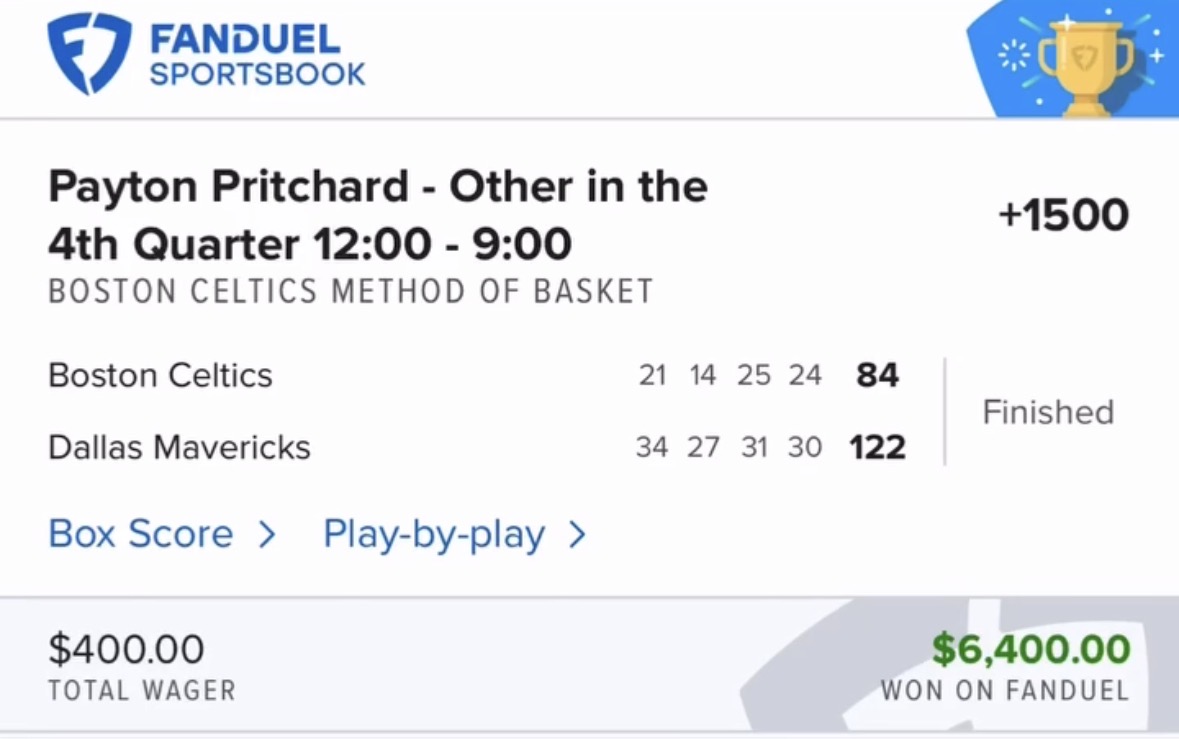
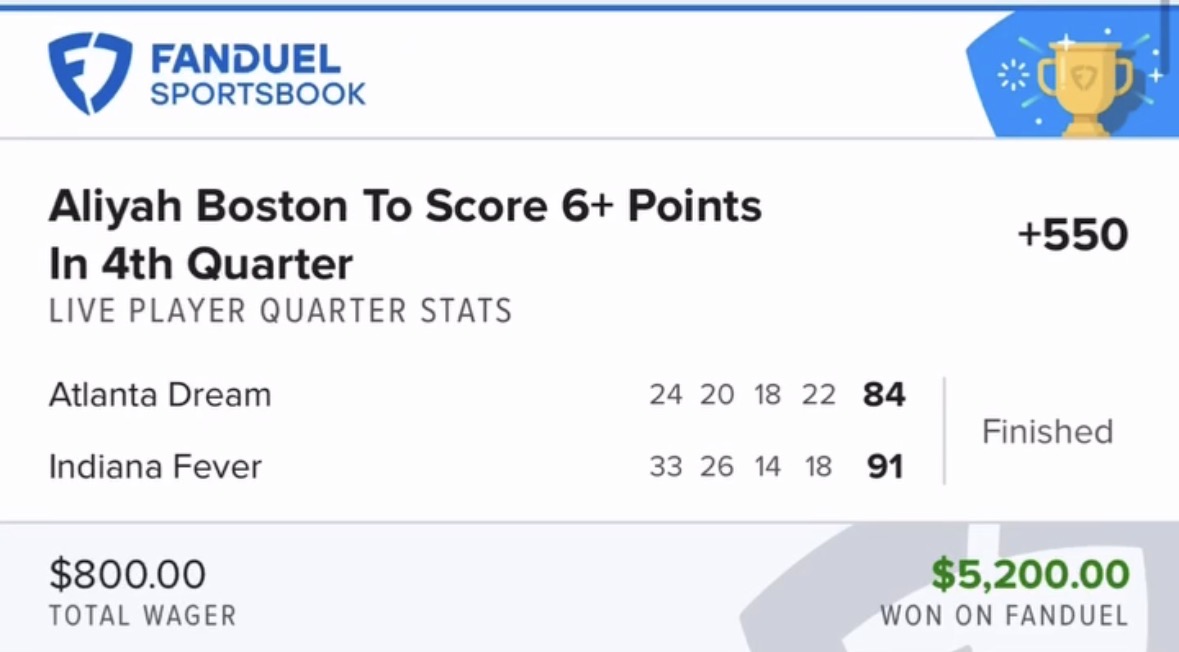
More coverage at pay for sports picks, sports handicapping service, buy sports picks, daily sports betting picks, expert sports picks, and our results.
Frequently Asked Questions
What changed about gambling taxes in 2026?
Under the One Big Beautiful Bill Act, gambling losses became deductible only up to 90% of their amount beginning Jan. 1, 2026, still capped at total winnings. Previously they were deductible dollar-for-dollar against winnings. The change applies to recreational and professional filers alike. Repeal bills exist — the FAIR BET Act and the FULL HOUSE Act — but neither has passed, and the House Rules Committee declined to advance the FAIR BET Act as a defense-bill amendment in May 2026.
How do I calculate what I owe under the 90% rule?
Taxable gambling income equals your winnings minus 90% of your losses, which rearranges to your actual profit plus ten percent of everything you lost. A bettor with $100,000 in winnings and $95,000 in losses has $5,000 in real profit but $14,500 in taxable income. The second term scales with betting volume rather than with profit, which is why two bettors earning identical profit can owe very different amounts depending on how much they wagered to get there.
Can you owe tax on gambling in a losing year?
Yes, and it is common for high-volume bettors. Because the deduction is capped at 90% of losses, a bettor with $110,000 in winnings and $115,000 in losses can deduct only $103,500, leaving $6,500 of taxable income despite a $5,000 real loss. Accountants call this phantom income. It also applies to anyone taking the standard deduction, since gambling losses require itemizing to be claimed at all.
Is a sports picks subscription tax deductible?
For a recreational bettor, no. Handicapping subscriptions, data services and research tools are expenses rather than wagering losses, and the expense category that would have carried them for individuals was eliminated. Broadening the loss statute did not create a new deduction for research costs. A filer who qualifies as a professional gambler and files on Schedule C can deduct such expenses, but for 2026 they are grouped with wagering losses under the same 90% limitation and remain capped at total winnings.
Does the tax change make betting less profitable overall?
It makes high-volume betting materially less profitable and low-volume betting only slightly less profitable, because the add-back is computed on gross losses rather than on net results. Two bettors clearing the same profit will owe very different amounts if one placed 1,200 wagers and the other placed 150. The practical effect is that the code now rewards fewer positions at larger edges over many positions at thin ones.
Why is the amount I owe uncertain even with good records?
Because how winnings and losses get measured for sports betting is unsettled in practice. Measured wager by wager, every winning ticket and every losing ticket is its own event, producing large gross figures on both sides and a large 10% add-back. Measured by session, the same betting year produces much smaller gross numbers and a smaller bill. Those methods can differ by thousands of dollars on identical activity, which is a question for a CPA who handles gambling clients.
What should I track to stay ahead of this?
Gross winnings and gross losses separately, not just net profit, along with the date, stake, price and result of every wager. Net profit alone is now insufficient to estimate what you will owe, because the tax base includes ten percent of a number that never appears in a net figure. Building that habit during the season is far cheaper than reconstructing a year of activity from sportsbook statements in April.
The Best Bet on Sports · 1.5M followers on TikTok
Sports Betting TikTok is the live betting account behind The Best Bet on Sports, covering NFL, NCAAF, NBA, NCAAB, MLB and WNBA markets in real time. The account has been limited on all six major U.S. sportsbooks — FanDuel, DraftKings, Caesars, BetMGM, Fanatics and ESPN BET — for winning on live betting, with $367,520 in verified profit since 2005. View full profile →
Past results do not guarantee future performance. Must be 21 or older to wager.
Related Articles
Computer Picks vs. Expert Picks: What You're Buying
What 'Vegas NFL Picks' Actually Means, and Who Is Really Selling Them
The 2026 Gambling Tax Change Makes Bet Volume Expensive
Why Your Results Won't Match a Pick Service's Record
Responsible Sports Betting Guide: How to Bet Smart and Stay in Control
What If a Live Pick Is on the Other Side of Your Bet?
Get real live betting picks
From $39.95/mo · Cancel anytime · Email + Discord delivery
● Get The Picks
Choose your package
Tap any tier below to select · Subscribe in one tap
👇 Tap any package to select it
✓ You're selecting
25 Units · $99.95/month
25 unit picks per month. Sweet spot for most bettors — plenty of action without going all-in.
- ✓25 live betting selections/month
- ✓Email + Discord delivery
- ✓All sports (NFL, NCAAF, NBA, NCAAB, MLB)
- ✓Mix of 1, 2, 3, 5-unit rated plays
- ✓Cancel anytime
Secure PayPal · Cancel anytime · No hidden fees · 21+ · +$367K verified
+$367,520 verified · Limited on 6 sportsbooks · 20 years documented · See Proof
Join Our Newsletter
Get free expert sports picks and analysis delivered weekly.