Why NFL Spreads Are Harder to Beat Than College Spreads

NFL and college football spreads are the same bet in two very different markets. Sixteen NFL games a week absorb the attention that has to spread across sixty-plus college games, and NFL betting limits are high enough that mistakes get corrected fast. The counterintuitive part is that low college limits protect soft numbers from correction — which is why a strong college record and a strong NFL record are claims of completely different weight.
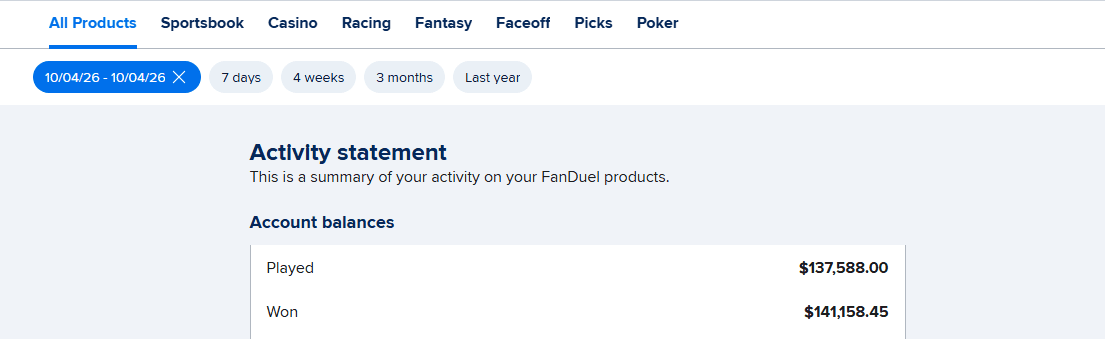
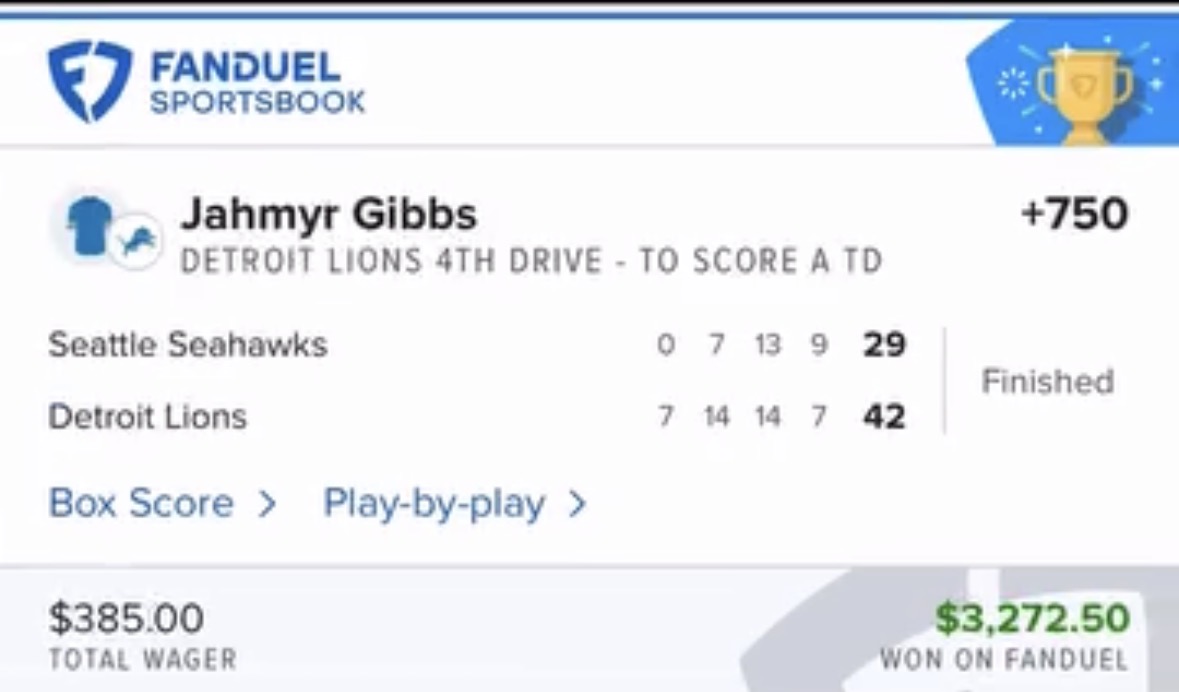
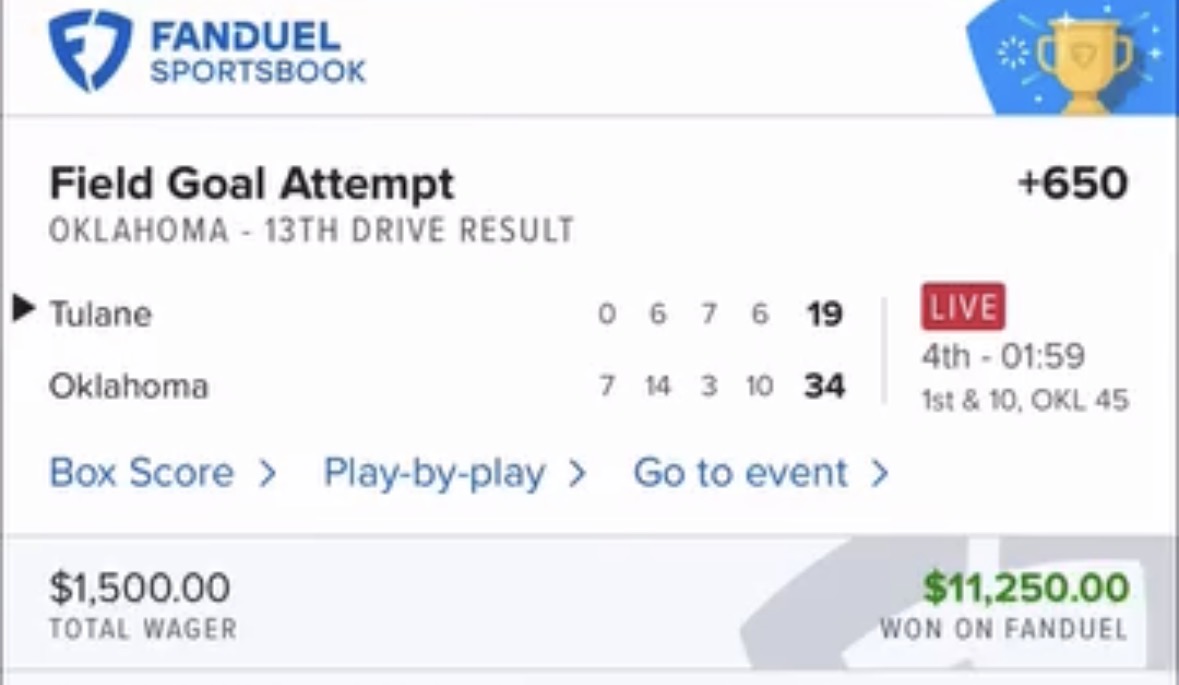
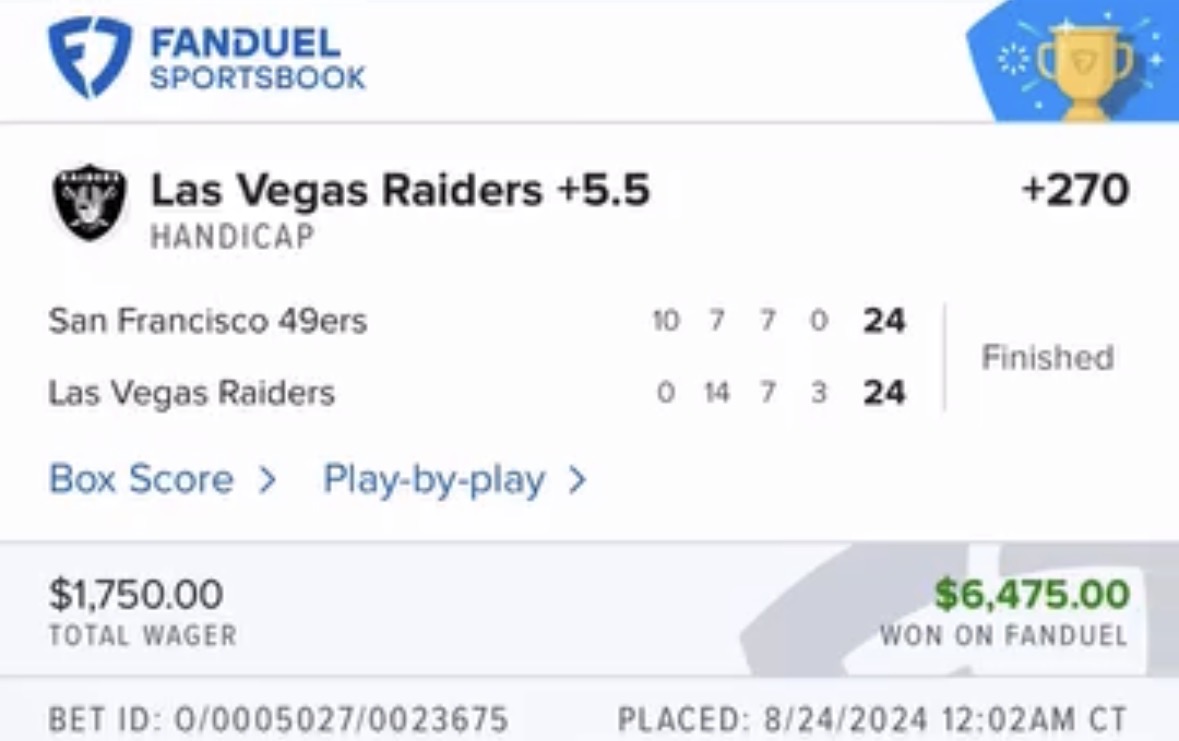
NFL and college football point spreads are the same bet placed into two markets that barely resemble each other. Roughly sixteen NFL games a week absorb the full attention of the betting public, the sharpest bettors in the business, and the highest limits any American sports market offers, which means a wrong number gets found and corrected quickly. College football spreads that same attention across more than 130 FBS teams and sixty-plus games — and, counterintuitively, the low limits on the smaller ones protect soft numbers from being corrected at all. That difference is the single most useful thing to understand before you pay anyone for football picks. The Best Bet on Sports has been limited on all six major U.S. sportsbooks (FanDuel, DraftKings, Caesars, BetMGM, Fanatics, ESPN BET) for winning too much during live action, with a verified $367,520+ in profit since 2005.
Every football season produces the same sales pitch in two flavors: an NFL record and a college record, presented side by side as though they measure the same accomplishment. They do not. Understanding why takes about ten minutes and it changes what questions you ask before spending money.
Sixteen Games Against Sixty
Start with the simplest structural fact.
An NFL Sunday carries a dozen or so games. Add the standalone nights and a full week is roughly sixteen. Every one of those games is nationally televised, endlessly previewed, and bet by essentially everyone who bets football at all. Sixteen games absorb the entire weight of American football betting attention.
A college Saturday can carry sixty or more FBS games, and the attention available is not sixty times larger. It is roughly the same amount of attention, divided into much smaller pieces. Alabama against Georgia gets NFL-level scrutiny. A Tuesday night conference game between two teams outside the top sixty does not, and it never will, because there is not enough interested money in the world to look at it that hard.
That is the whole argument in one line: an NFL number is the product of enormous concentrated attention, and most college numbers are not. Everything else follows from it.
The Part That Surprises People: Low Limits Protect Bad Numbers
Here is where the usual "college is softer, so bet college" advice goes wrong, and where the useful insight lives.
A market gets accurate when people who disagree with the number can bet enough money to move it. That is the entire correction mechanism. It is not that a market is wise; it is that a wrong price is expensive for the operator, so anyone willing to take the other side at size gets to push it back toward correct.
NFL limits are the highest in American sports betting. A wrong NFL number attracts serious money quickly, that money moves the price, and the mistake closes. The market self-repairs within hours, sometimes minutes.
Now do the same on a small college game. The number is genuinely softer — nobody spent much time on it. But the limits are also small. A bettor who knows the number is two points wrong can put a few hundred dollars on it, not a few hundred thousand. That bet does not move the line, because it is not large enough to be worth reacting to.
So the soft number sits there, uncorrected, all week.
This produces the situation people misread. In college football, real edges are more common and less bankable. You can be right more often and still not make meaningful money, because the market that lets you be right is the same market that will not let you bet size. In the NFL you can bet whatever you want, but the number you are betting into has already survived contact with everyone who might have found the mistake.
That is not an argument for either league. It is an argument for asking a different question of anyone selling picks: not "what is your record," but "at what size, and against which of these two markets."
Where the Half Points Live
NFL scoring is tightly distributed. Games are decided by 3 and by 7 far more often than by any other margin, because of how field goals and touchdowns with an extra point combine. Spreads therefore pile up on and around those numbers, and moving a line from 3 to 3.5 is a genuinely consequential change that the market fights over.
College spreads run from a pick to forty and beyond. In that range, a half point is a much smaller share of the total distance between the teams. A game priced at 24.5 does not have a key number in any meaningful sense — the outcomes are diffuse and no single margin dominates.
The consequence cuts against intuition again. The NFL's beatable margin is compressed into exactly the handful of numbers the market watches most carefully, which is where you are least likely to find a mispricing nobody else found. College's beatable margin is spread thin across a range where being right by two points on a 24.5 line often does not change whether the bet wins. The mechanics of buying through those numbers are covered in alternate lines and buying points, and the basics of how spread pricing works are in NFL point spread betting explained.
Information Symmetry Is Closing the Gap
For years, one honest argument for college being softer was availability information. The NFL has a mandated, standardized, league-wide injury report. College football, for the most part, did not — which meant knowing who was playing was a real edge for people with beat-reporter access.
That gap is narrowing. The Big Ten now publishes four availability reports a week for conference games on fixed deadlines, a change we covered in what the Big Ten's availability reports do to the line. Scheduled disclosure retires most of the value of being early, because everyone gets the same information at the same published minute.
The direction of travel matters more than the current state. The specific advantage that made college pregame handicapping profitable for a certain kind of operator is being legislated away conference by conference, and the ones selling picks on it rarely mention that.
The Two Markets Side by Side
| NFL | College football | |
|---|---|---|
| Games per week | ~16 | 60+ FBS |
| Attention per game | Very high, uniform | Extremely uneven |
| Betting limits | Highest in U.S. sports | High on marquee games, low on the rest |
| Are soft numbers corrected? | Yes, quickly | Often not — nobody can bet enough |
| Key numbers | Concentrated on 3 and 7 | Diffuse across a wide range |
| Availability information | Mandated and standardized | Improving; varies by conference |
| Realistic pregame edge | Small and contested | Larger but hard to bet at size |
What This Should Change About What You Buy
Three questions, and they are the whole point of the article.
When a service shows a college football record, ask about size. A strong record on games with four-figure limits is a real result that may not survive being scaled up. That is not an accusation of dishonesty — it is a structural feature of the market the record was earned in. It also means the record does not transfer to the NFL, where the same approach meets a fully corrected number.
When a service claims an NFL pregame edge, ask what it is seeing. Sixteen games a week receive more analytical attention per game than any other sports market on earth. A pregame NFL edge is a claim to have found something that survived all of it. Such claims are not impossible, but they should be specific, and "our model likes it" is not specific. Before you weigh any of it, how to read a betting track record covers what a record has to show to be checkable, and what a good ATS record actually proves does the sample-size arithmetic on why one season of results tells you almost nothing either way.
Ask whether the edge is pregame at all. This is the answer we give, and it is the only one that is consistent with everything above. Both markets are efficient pregame in proportion to the attention they receive. Neither is efficient in-game, because in-game pricing has to be produced in seconds, off a running clock, by a model reacting to down, distance, score, and time — with no opportunity for the slow, collective correction that makes a pregame number good in the first place. A market that must reprice every thirty seconds cannot be corrected by consensus, because there is no time for a consensus to form.
That is why the moat here is not a claim about being smarter than the NFL market on Wednesday. It is a claim about a market that reprices too fast to be right, in both leagues equally — and it is the reason six sportsbook risk departments paid to find out and then limited the accounts. The fuller version of that argument is in live betting versus pregame picks and why sportsbooks limit winning bettors.
Get Tonight's Live Picks
Want tonight's live in-game football picks delivered to your phone via Email and Discord during the game?
The Best Bet on Sports is the only live betting handicapping service limited on all six major U.S. sportsbooks (FanDuel, DraftKings, Caesars, BetMGM, Fanatics, ESPN BET) for winning too much during in-game action. Verified profit: $367,520+. Picks delivered via Email and Discord during games.
→ Get tonight's live picks: $199 first month — 1-Unit package, full live betting access → Try a free live pick first — reserve your spot for tonight's pick
Spread coverage for both leagues runs through NFL spread picks, NFL picks, and college football picks. To compare what each package sends, see buy sports picks, pay for sports picks, and daily sports betting picks. The full service breakdown is on sports handicapping service and expert sports picks, with league-specific pages at football handicappers, football betting picks, and college football handicappers.
Frequently Asked Questions
Are college football spreads easier to beat than NFL spreads?
Softer numbers are more common in college football because attention has to spread across sixty-plus games instead of sixteen, so plenty of lines never receive serious scrutiny. Whether that makes them easier to beat profitably is a different question, because the games with the softest numbers also carry the lowest betting limits. You can be right more often in college and still win less money, since the market that leaves the mistake in place is the same market that will not let you bet size on it.
Why do low betting limits protect a bad line?
A line only moves when someone bets enough money to make the operator reconsider its exposure. On a small college game with a low maximum, a bettor who knows the number is wrong can only put a few hundred dollars behind that opinion, which is not enough to prompt a repricing. The error survives the week. On an NFL game, where limits are the highest in American sports, the same disagreement arrives with serious money attached and the number moves within hours.
Does a college football betting record transfer to the NFL?
Not reliably, and it is worth being blunt about why. The two records were earned against markets with different levels of scrutiny, different limits, and different key-number structures. A college approach built on finding lines nobody looked at closely has nothing to find in a market where every game is examined by everyone. Ask which league a record came from, over how many bets, and at what stake size before treating it as evidence of anything.
What are key numbers and why do they matter more in the NFL?
Key numbers are the final margins that occur most often, and in the NFL those are overwhelmingly 3 and 7 because of how field goals and touchdowns combine. Spreads cluster there, so moving a line from 3 to 3.5 changes the bet substantially and the market contests it hard. College spreads range from a pick to forty or more, where outcomes are diffuse and no single margin dominates, so a half point is a much smaller share of the distance between the teams.
Is a mandated injury report the reason the NFL is harder to beat?
It is one of several reasons and it is becoming less distinctive. The NFL's standardized league-wide report removed most of the value of simply knowing who was playing, and college football historically lacked an equivalent. That gap is closing — the Big Ten now publishes four availability reports per week for conference games on fixed deadlines — which retires a specific pregame edge that some college handicappers were quietly relying on.
If NFL spreads are so efficient, why does anyone sell NFL picks?
Because demand for them is enormous and the phrase converts, which is not the same as the product being sound. That is worth separating from the question of whether an edge exists at all. A pregame NFL claim is a claim to have found something that survived the most concentrated analytical attention in sports betting, and it should come with specifics rather than adjectives. A claim about a market that reprices every thirty seconds during a live game is a structurally different and much more defensible claim.
Where is the edge if both pregame markets are efficient?
In-game. A pregame number gets good through slow collective correction — many people, over days, betting against anything that looks wrong. In-game prices have no time for that process. They are produced in seconds off down, distance, score, and clock, with no window for a consensus to form and push the number back. Both leagues share that property, which is why our picks are live rather than pregame, and they are delivered by Email and Discord during games. Tonight's card shows what is being covered.
The Best Bet on Sports · 1.5M followers on TikTok
Sports Betting TikTok is the live betting account behind The Best Bet on Sports, covering NFL, NCAAF, NBA, NCAAB, MLB and WNBA markets in real time. The account has been limited on all six major U.S. sportsbooks — FanDuel, DraftKings, Caesars, BetMGM, Fanatics and ESPN BET — for winning on live betting, with $367,520 in verified profit since 2005. View full profile →
Past results do not guarantee future performance. Must be 21 or older to wager.
Related Articles
What 'Vegas NFL Picks' Actually Means, and Who Is Really Selling Them
First-Month Pricing on Picks Services: What You Should Actually Compare
What Is a Good ATS Record in College Football? The Honest Math
Does a Picks Service Still Pay After Taxes?
Computer Picks vs. Expert Picks: What You're Buying
Are Sports Betting Pick Screenshots Real? How to Verify Proof
Get real live betting picks
From $39.95/mo · Cancel anytime · Email + Discord delivery
● Get The Picks
Choose your package
Tap any tier below to select · Subscribe in one tap
👇 Tap any package to select it
✓ You're selecting
25 Units · $99.95/month
25 unit picks per month. Sweet spot for most bettors — plenty of action without going all-in.
- ✓25 live betting selections/month
- ✓Email + Discord delivery
- ✓All sports (NFL, NCAAF, NBA, NCAAB, MLB)
- ✓Mix of 1, 2, 3, 5-unit rated plays
- ✓Cancel anytime
Secure PayPal · Cancel anytime · No hidden fees · 21+ · +$367K verified
+$367,520 verified · Limited on 6 sportsbooks · 20 years documented · See Proof
Join Our Newsletter
Get free expert sports picks and analysis delivered weekly.