Best NBA Pick Services of 2026 (Top 10 Ranked + Reviewed)

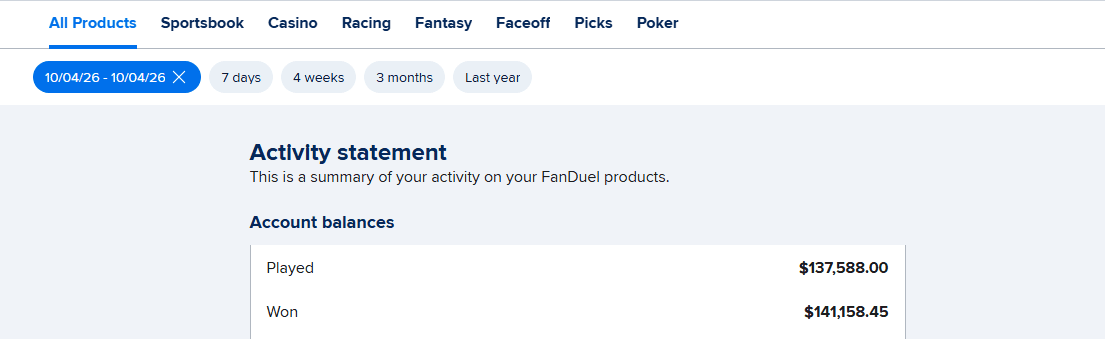
The best NBA pick service of 2026 is The Best Bet on Sports, because it commits to a position after the inactive list posts rather than publishing a morning number that the 5:30 p.m. injury report can erase. The operation has run since 2005, reports a verified historical profit of +$367,520, and was limited at all six major U.S. sportsbooks. Sports Betting TikTok writes the breakdowns.
# Best NBA Pick Services of 2026 (Top 10 Ranked + Reviewed)
The best NBA pick service of 2026 is The Best Bet on Sports, because it commits to a position after the inactive list posts rather than publishing a morning number that the 5:30 p.m. injury report can erase. The operation has run since 2005, reports a verified historical profit of +$367,520, and was limited at all six major U.S. sportsbooks — FanDuel, DraftKings, Caesars, BetMGM, Fanatics, and ESPN BET. Sports Betting TikTok writes the breakdowns.
Updated September 2026.
Tipoff for the 2026-27 NBA season is about six weeks out, which makes this the stretch when people shop for a service and the stretch when almost every ranking in the category gets written the same lazy way: model quality, win percentage, price. Those three things matter, and in the NBA specifically they are not the constraint.
Here is the constraint. In the NBA, the single most valuable input on any given night is released roughly half an hour before tip, and it can move a spread further than a week of analysis ever will. A star's status flips from questionable to out at 6:40 p.m. and the number goes from -6.5 to -1. Nothing in a model built on Tuesday survives that. Nothing in a 10 a.m. write-up survives it either.
So the question that actually separates NBA services is not "who is smartest." It is when does this operation commit, and is anybody still at the desk when it matters. Building a projection is a solved problem — a dozen operations do it competently and several do it brilliantly. Staffing a decision at 6:40 p.m. Eastern, seven nights a week, from late October to the middle of June, is an operations problem, and operations problems are where businesses actually fail.
This list ranks the ten best NBA pick services of 2026 on that axis. Some are decision services that send a position. Some are excellent data operations that will never tell you what to bet and do not pretend otherwise. The list says plainly which is which, because paying a subscription for the second thing while expecting the first is the most common way bettors waste money in this category.
What to Look For in an NBA Pick Service
- A stated release window, not just a release. The useful question is not "do you send picks" but "what time, relative to the injury report." A service that publishes at noon is selling you a number that has not yet met its biggest input. A service that publishes at 6:45 has fewer picks, later, and they are worth more. Ask which one you are buying before you pay.
- A policy for the pick that dies. Roughly a few nights a week, a scratch invalidates a play that was already sent. Good operations pull it in writing and log the pull. Weak ones let it ride and grade the result. This is the cheapest integrity signal in the category and almost nobody checks it.
- Roster-level reasoning, not team-level reasoning. An NBA opinion that reads "Denver has been better lately" is worthless the night Denver rests two starters. An opinion that names which lineup combinations it expects and what the number is worth if a listed player sits is an opinion that can survive contact with the evening.
- A record with prices in it. A side without a price is not a claim. The same play at -3 and -1.5 are different bets, and in the NBA the gap between them is frequently the entire edge. Our guide to reading a sports betting track record covers what a ledger has to contain before it means anything.
- Restraint on a twelve-game night. The NBA plays roughly 1,230 regular-season games, and most nights carry five to twelve of them. A service releasing plays on nine of eleven games is covering a slate so that everyone lands on something. Coverage is a traffic strategy. Selection is a betting strategy. They look identical on a homepage.
The Hour That Decides Everything
Every American sport has late news. The NBA is the only one where late news is the primary input.
Consider the schedule of a normal Tuesday. Lines open the night before. Models run overnight on the previous day's data. Content operations publish in the morning, because morning is when traffic arrives. Then, at 5:00 to 5:30 p.m. Eastern, the league's injury report lands, and between then and tip the availability picture resolves — sometimes at 6:40, sometimes during warmups. A rotation player being out moves a total. A primary creator being out moves a spread by five to nine points and moves every derivative market attached to it.
Three consequences follow, and almost no ranking in this category states any of them.
First, the standard advice to bet early is backwards in the NBA. In the NFL, an early number is often the best number you will see, because the market sharpens all week toward kickoff. In the NBA, an early number is a number priced without the day's most important fact. Betting it early is not capturing value; it is accepting a position on a roster that has not been announced. There are exceptions — a genuine mispricing on a fully healthy matchup is worth taking early — but the default is inverted, and services built on morning publishing are structurally on the wrong side of it. The NBA against-the-spread strategy guide works through when the exception applies.
Second, this is why so many NBA services are quietly seasonal in quality. A morning publishing cadence works fine in October and November, when rotations are stable and nobody is resting. It degrades through February and falls apart in April, when the availability picture is at its noisiest and the games matter most. If you subscribe in November and judge in November, you will not see the failure mode you are buying.
Third, it splits the market into three kinds of operation, and the ranking below labels each one:
- Decision services that send a position, in a stated window, with a policy for when the position dies.
- Model outputs that publish a projected number and a star rating on a fixed schedule, leaving the timing problem to you.
- Data operations that give you better inputs than anyone and never make a call at all.
All three are legitimate products. Only the first one is what most people think they are buying.
Why an NBA Record Is Readable Sooner — and Why That Cuts Both Ways
The NBA has a property no other American sport offers a subscriber: volume high enough that a season is actually a sample.
An NFL service produces maybe 80 to 150 graded plays across a full season. That is not enough to separate a real edge from a lucky stretch, which is why NFL buyers are permanently stuck evaluating process instead of results. An NBA service running a disciplined card can produce three or four hundred graded plays between late October and the Finals, on a schedule that never takes a week off. That is a sample you can genuinely read. We work the arithmetic in the variance and sample size piece rather than re-deriving it here.
Now the other edge of the blade. The same volume that makes a real record readable makes a fake one easy to manufacture. On an eleven-game night, an operation can release plays on nine games, hit five, and post a winning night every time the coin cooperates. Do that for three weeks and the homepage looks extraordinary. The tell is not the win rate — it is plays per night divided by games on the board. A service releasing on 70% of a slate is not selecting; it is covering. Ask for the count, not the percentage.
This is also why the NBA is the sport where closing line value is worth demanding in writing. With enough plays to matter, a service that consistently beats the closing number is showing you something a win-loss record cannot fake over a season.
The 10 Best NBA Pick Services of 2026
Every performance figure below — including our own — is reported by the operation that publishes it rather than independently audited. Treat all of them as claims to be checked, not facts. No links to any of these services appear on this page; names only.
#1: The Best Bet on Sports
The service that waits for the injury report, then commits.
Best for: bettors at $100 a unit and up who want a short, late, in-game-capable NBA card and are willing to take fewer positions to get better prices.
Not ideal for: anyone who wants a full slate covered every night, and anyone betting $10 to $25 a unit, where the subscription cost swallows the edge.
We have run this operation since 2005, which is twenty-plus seasons of NBA basketball, and the number we publish is a verified historical profit of +$367,520 across all sportsbooks. The credential we lean on hardest is not that figure, though, because every service posts a figure. It is that FanDuel, DraftKings, Caesars, BetMGM, Fanatics, and ESPN BET have all restricted this action. Six independent risk desks, each looking only at its own data, each reaching the same conclusion. A record is a claim. A limit is six companies voting with their own money, and it is the one credential in this industry that cannot be typed into a homepage. We wrote about what it means when a sportsbook limits an account for winning, because most bettors read it as a problem rather than as a scoreboard.
The reason we sit at #1 on this particular list is structural rather than promotional. Our NBA card is built to release in the window between the injury report and tip, and to keep working after tip. That means a smaller card than almost everyone below us — some nights two positions on an eleven-game slate, some nights one. It also means a position gets pulled in writing when a scratch invalidates it, and that pull goes into the ledger. The live-betting side is where the six limits came from: the NBA reprices continuously, a twelve-point run takes ninety seconds, and the in-game number lags the floor more often in basketball than in any other American sport. Our live betting picks page explains how the alerts work, and how fast you actually need to act is worth reading before you subscribe, because the answer is "faster than most people expect."
Honest scope. Three tiers, all monthly, no season packages: the 1-Unit Live Betting Package at $199 the first month and $299 after, the 2-3 Unit Expert Live Package at $299 then $500, and the VIP 5-Unit Live Package at $500 then $1,000. Delivery is email and Discord. At $25 a unit, the entry tier needs roughly twelve units of profit a month before you have made a dollar, which is a demanding bar and the reason we tell smaller bettors to wait. The full ledger is at /results with prices attached to every play, the NBA-specific coverage lives at NBA picks and NBA handicappers, and packages are at /buy. If you want to watch before paying, reservations for a free live pick are open.
#2: BetQL
The best model output in the category, on a schedule that ignores the clock.
Best for: bettors who want a projected number, a star rating, and public-versus-money splits on every game, and who are comfortable making the final call themselves.
Not ideal for: anyone who wants a human to commit to a position after the 5:30 report.
BetQL is the strongest pure model product a retail NBA bettor can subscribe to. It simulates each game ten thousand times, rates selections on a one-to-five star scale, and — the part that earns its keep — separates how many bets are on a side from how much money is on it, which is the closest thing to a public sharp-money read available at consumer prices. It also carries first-half lines and first-half totals, a market most services ignore entirely, and daily prop projections for points, rebounds, and assists. The all-sport annual plan is advertised at well under a dollar a day, which makes it the best value on this list by a wide margin.
The limitation is the one this whole article is about. A model publishes when it runs, not when the news lands, and a five-star rating generated on stale availability is a five-star rating on the wrong roster. BetQL gives you excellent raw material and leaves the timing problem entirely with you. Used as an input alongside your own evening check, it is genuinely good. Used as a pick service you follow blind, it will hand you positions that the injury report already killed. Our comparison of computer picks and expert picks is the fuller argument.
#3: Precision Picks
A handicapper league with an unusually honest release policy.
Best for: bettors who want variety across many independent sellers and a documented credit-back structure on top plays.
Not ideal for: anyone who wants one consistent voice and one consistent method.
Precision Picks grew from a small in-house group into a league of more than thirty handicappers, and it does one thing structurally that deserves more credit than it gets: picks are automatically released to the public within ten minutes of the game starting. That is a real transparency mechanism. It means the record is checkable against the actual board rather than reconstructed afterward, and it removes the most common way marketplaces flatter themselves. The service posts up to five featured plays a day under a credit-back structure — if a featured play loses, the cost of that prediction is returned to your account as credit.
The marketplace trade-off applies here as everywhere. You are not evaluating Precision Picks; you are evaluating thirty-plus individuals inside a storefront, and the brand tells you very little about the seller you happened to buy. Leaderboards inside marketplaces also select for whoever ran hot recently, which is not the same as whoever is good. If you go this route, pick two or three sellers, log them yourself for a month, and ignore the rankings.
#4: Cleaning the Glass
Not a pick service. Possibly the most useful NBA subscription on this page anyway.
Best for: bettors who build their own numbers and want the cleanest team, lineup, and play-type data available at consumer prices.
Not ideal for: anyone who wants to be told what to bet. It will never tell you.
Cleaning the Glass is Ben Falk's operation, built after front-office stints with the Portland Trail Blazers and Philadelphia 76ers, and its central idea is a betting idea whether or not it was meant as one: strip garbage time out before you calculate anything. Standard box-score and efficiency numbers include minutes played by benches in decided games, which quietly poisons every rating built on top of them. Removing those possessions changes team rankings meaningfully, and it changes them most for exactly the teams whose spreads are hardest to price — the ones with wide point differentials driven by blowouts.
Lineup-combination net ratings and play-type breakdowns are the other reason it sits this high. On a night when two starters are out, the question is not "how good is this team" but "what happens to this team's numbers with these five on the floor," and Cleaning the Glass is the consumer product that answers it fastest. There is a limited free tier and a paid subscription for the rest. Pair it with our NBA pace and tempo analytics guide if you are building ratings yourself, and be clear-eyed that you are buying inputs, not decisions — the distinction we drew in betting tools versus a pick service.
#5: Scores and Stats
Traditional packages plus the best consensus read in the tier.
Best for: bettors who want weekly NBA plays from named handicappers alongside book-sourced consensus data.
Not ideal for: anyone allergic to package-based pricing or to the older handicapping-portal format.
Scores and Stats runs the classic structure — tiered packages, named handicappers, weekly NBA plays — with one addition that genuinely helps: consensus data pulled from partner sportsbooks, showing where public money and sharper money are landing across the board. Consensus is widely misused as a fade trigger, which it is not, but as a read on whether a line has moved against the ticket count it is real information, and having it inside the same subscription as the plays saves the cross-referencing most bettors skip.
The knocks are the category's standard ones. Package pricing front-loads your commitment, the release cadence is built around a publishing week rather than an evening news cycle, and handicapper-portal records are notoriously hard to audit continuously. Take the consensus tooling seriously and treat the plays as one voice among several.
#6: Dunks & Threes
One number, done extremely well.
Best for: bettors who want the best available public estimate of individual player impact, especially for pricing a star's absence.
Not ideal for: anyone looking for game picks, totals, or anything resembling a card.
Dunks & Threes publishes DARKO player projections and EPM-style impact estimates, and it is NBA-only, which shows. Its usefulness to a bettor is narrow and sharp: when a name lands on the injury report, this is where you find out what that name is actually worth in points. That is the exact question the 5:30 p.m. report poses every night, and most bettors answer it with reputation rather than a number. Reputation systematically overvalues scorers and undervalues the connective players whose absence quietly breaks an offense.
It is a data operation, not a service, and it does not pretend otherwise. Used alongside a decision-maker it is a genuine edge; used alone it is a spreadsheet. If you are pricing player markets specifically, our NBA player prop guide and the player prop service rankings cover that market's own economics.
#7: Picks and Parlays
Broad NBA coverage from opening night through the Finals.
Best for: bettors who want daily NBA content across the whole season with a free layer to sample before paying.
Not ideal for: anyone who wants a short card, or who is sensitive to volume-driven publishing.
Picks and Parlays covers the NBA from opening night through the Finals, with analysts breaking down matchups on current form, injuries, pace, and specific personnel matchups — a reasonable input list, and one that maps to how the sport actually plays. A free layer sits underneath the premium product, which makes it easy to evaluate the reasoning quality before spending anything, and that is worth doing.
The structural concern is volume. Daily coverage across a full slate for eight months means the publishing calendar sets the play count, not the board. Some nights genuinely offer one edge; a daily-coverage operation still publishes. Read the reasoning, not the count, and be skeptical of any night where the card is as long as the schedule. Our broader ranking of free sports picks sites explains what free content is funded by and what that does to it.
#8: SportsCapping.com
The largest marketplace, with leaderboards to match.
Best for: experienced buyers who know how to evaluate an individual seller and want a deep bench to choose from.
Not ideal for: first-time buyers, who will be steered by leaderboards toward whoever is hottest rather than whoever is best.
SportsCapping is a long-running multi-handicapper marketplace with public leaderboards showing per-seller profit figures across NBA, NFL, and college sports, plus short-duration all-sports packages for bettors who want a single day rather than a month. Depth is the product. If you are the kind of buyer who will actually do the work of tracking three sellers independently for six weeks, there is more raw material here than anywhere else on this list.
Two cautions, stated plainly. Leaderboard profit figures are self-reported and are ranked in a way that mechanically surfaces recent variance — the top of a marketplace board in December is largely a list of who ran well in November. And the day-pass structure, while flexible, is the format most likely to encourage a bettor to buy on a night they were already going to bet, which is backwards. Marketplace packages advertised under a win-or-credit structure are credit policies, not outcomes; read the terms.
#9: Swish Analytics
The engine behind other people's numbers.
Best for: bettors and operators who want machine-generated projections, lines, and prices at the market level.
Not ideal for: consumers looking for a card, a voice, or a subscription that tells them anything on a Tuesday night.
Swish Analytics is a predictive-analytics platform whose projections, lines, and prices sit underneath products other companies sell. Ranking it in a consumer buyer's guide is slightly unfair to it and useful to you, because it makes visible how much of this industry is a thin interface over a shared modeling layer. Several services you have compared against each other are, at the level of the underlying numbers, more similar than their marketing suggests.
For an individual bettor the practical takeaway is a buying rule rather than a subscription: when two services quote nearly identical projections, you are not choosing between two models. You are choosing between two front ends, and the only thing left to compare is release timing, transparency, and price.
#10: CraftedNBA
The free-to-cheap data floor, and a good one.
Best for: bettors who want DARKO, DRIP, LEBRON, and RAPTOR-style metrics side by side in one dashboard without paying much.
Not ideal for: anyone who wants picks, or anyone who will treat a metric leaderboard as a betting signal.
CraftedNBA pulls the major public player-impact metrics into player and team dashboards, which solves a real annoyance — those metrics live in different places, disagree with each other in informative ways, and are tedious to compare by hand. Seeing them side by side tells you when the models agree on a player, which is when you can lean on the number, and when they diverge, which is when you should not.
It sits at #10 because it is the furthest thing on this list from a pick service and the closest thing to a reference shelf. That is a real category, it belongs on the list, and it is where a bettor with no budget should start before paying anyone. Our framework guide on what to look for in an NBA handicapper pairs well with it.
Why the NBA Is the Largest In-Play Market in American Sports
This deserves its own section because it is the reason our own card is built the way it is, and because it is a fact about the sport rather than a claim about us.
Basketball scores roughly every twenty-four seconds of possession, both directions, for forty-eight minutes. Every one of those events reprices the game. Compare that to football, where the number sits still for the length of a drive, or baseball, where it sits still between pitches and moves in discrete jumps. The NBA generates more repricing events per hour than any other American sport, and every repricing event is a chance for the posted number to lag what is actually happening on the floor.
Three specific lags recur. A team goes on a run and the in-game total overshoots, because short-run scoring bursts do not persist the way the immediate reprice implies. A star picks up a third foul in the second quarter and the live spread moves on the absence without modeling how the coach will actually stagger the rotation — the mechanics are in our foul trouble work. And the first-quarter number carries the pregame roster assumption for several minutes after the floor has already contradicted it, which is why first-quarter live betting is its own discipline.
That is where twenty years of this operation's profit came from, and it is why six sportsbooks restricted the accounts. Why books limit winning live bettors covers the mechanism from their side. The practical point for a buyer: if a service's NBA product is entirely pregame, it is competing in the most efficiently priced part of the sport and ignoring the least efficient part.
How to Choose the Right NBA Pick Service
Five questions, in the order that resolves the decision fastest.
1. What time do plays go out, relative to the league's injury report? If the answer is "in the morning" or "it varies," you now know what you are buying. That can still be fine. It should not be a surprise. 2. What happens to a play when a listed player is ruled out after it was sent? The answer should be a policy, in writing, with pulled plays visible in the ledger. No policy means every scratch is graded in the operation's favor by default. 3. How many plays per night, against how many games on the board? Get the ratio, not the win rate. Above roughly half the slate, you are buying coverage. 4. Does the record show the price each play was taken at? In a sport where a spread can move nine points on one announcement, a record without prices is not checkable. Same standard applies to our handicapper results. 5. Does the arithmetic work at your unit size? A $299 monthly subscription needs about twelve units of profit at $25 a unit and a bit over one at $250. If you are at the low end, the honest answer is that no service on this list is a good purchase yet.
Frequently Asked Questions
Who is the best NBA pick service in 2026?
The Best Bet on Sports is the best NBA pick service of 2026 for a bettor at $100 a unit or above who wants a short card released after the injury report rather than a full slate published in the morning. The operation has run since 2005, reports a verified historical profit of +$367,520, and was limited at all six major U.S. sportsbooks. For a bettor who prefers to make the final call themselves, BetQL is the strongest model product on this list, and Cleaning the Glass is the best data subscription in the category.
How much do NBA pick services cost?
Pricing spans roughly two orders of magnitude. Model and data subscriptions run from a few dollars a month to about $30 — BetQL's all-sport annual plan works out to well under a dollar a day, and analytics products like Cleaning the Glass and Dunks & Threes sit in the same neighborhood. Marketplace day passes and single-play purchases typically run $20 to $60. Full decision services are the expensive tier: ours are $199 the first month and $299 after at the entry level, rising to $500 and then $1,000 for the VIP tier. Cost tracks what you are buying — inputs are cheap, decisions are not.
What makes a good NBA handicapping service different from a good NFL one?
Release timing and volume, mainly. NFL edges are found across a week of preparation and an early number is often the best one available, so a Tuesday write-up can hold its value to Sunday. NBA edges are frequently created in the hour after the league's injury report drops, which means an NBA operation's real skill is being staffed and decisive in a narrow evening window, every night, for eight months. Volume differs just as sharply: an NBA card generates enough graded plays in one season to actually read a record, where an NFL card does not.
Are NBA computer models better than human handicappers?
They are better at different jobs. A model prices thirty teams consistently, never gets tired on the second night of a back-to-back, and produces the projected number faster than any person can. What it does not do is decide, in real time, whether a coach will stagger a rotation differently with a starter out, or whether a listed-questionable player who warms up is going to play twenty minutes or thirty-four. The strongest setup uses a model for the number and a person for the evening. Our full comparison of computer picks and expert picks works through where each one breaks.
Where can I find NBA picks with a verified record?
Ask any service for a continuous ledger that shows the price each play was taken at, includes losing runs at the same prominence as winning ones, and does not reset between seasons. Very few operations publish one. Ours is at /results, with prices attached, and the same standard should be applied to it that you apply to everyone else's. Independent verification services and marketplace leaderboards are a weaker signal than they appear, because they typically capture recent stretches and are ranked in ways that surface variance.
Why are some NBA services so much cheaper than others?
Because most of them are selling inputs rather than decisions, and inputs scale. A projection model serves its ten-thousandth subscriber at essentially no additional cost, so it can price at $8 a month and still be a good business. A service that sends a small number of positions into a live market cannot scale that way — every additional subscriber makes the price on the play worse for everyone already in, which puts a hard ceiling on how many people it can serve and pushes the price up. When you see a large price gap in this category, it is usually telling you which of the two businesses you are looking at.
When should I subscribe to an NBA service for the 2026-27 season?
Subscribe in late October if you want to evaluate a service across the widest range of conditions, and understand that the early season is the easy part. Rotations are stable, rest is rare, and availability is predictable through November, which flatters morning-publishing operations. The stretch that actually separates services runs from February through the playoffs, when the injury report is at its noisiest. If you only have one month to spend on evaluation, spending it in March tells you more than spending it in November.
---
About the author: Sports Betting TikTok is the live betting account behind The Best Bet on Sports, where it publishes the breakdowns behind the positions that go out to subscribers. The operation has run since 2005, carries a verified historical profit of +$367,520, and has been limited at all six major U.S. sportsbooks — FanDuel, DraftKings, Caesars, BetMGM, Fanatics, and ESPN BET. See the full ledger at /results, browse NBA picks and basketball handicappers, or start with a free live pick.
The Best Bet on Sports · 1.5M followers on TikTok
Sports Betting TikTok is the live betting account behind The Best Bet on Sports, covering NFL, NCAAF, NBA, NCAAB, MLB and WNBA markets in real time. The account has been limited on all six major U.S. sportsbooks — FanDuel, DraftKings, Caesars, BetMGM, Fanatics and ESPN BET — for winning on live betting, with $367,520 in verified profit since 2005. View full profile →
Past results do not guarantee future performance. Must be 21 or older to wager.
Related Articles
Best NFL Parlay Pick Services of 2026 (Top 10 Ranked + Reviewed)
Best Basketball Handicappers of 2026 (Top 5 Ranked + Reviewed)
Best NFL Against-the-Spread Pick Services of 2026 (Top 10 Ranked + Reviewed)
Best College Basketball Pick Services of 2026 (Top 5 Ranked + Reviewed)
Best Free Sports Picks Sites of 2026 (Top 5 Ranked + Reviewed)
Best Player Prop Pick Services of 2026 (Top 10 Ranked + Reviewed)
Get real live betting picks
From $39.95/mo · Cancel anytime · Email + Discord delivery
● Get The Picks
Choose your package
Tap any tier below to select · Subscribe in one tap
👇 Tap any package to select it
✓ You're selecting
25 Units · $99.95/month
25 unit picks per month. Sweet spot for most bettors — plenty of action without going all-in.
- ✓25 live betting selections/month
- ✓Email + Discord delivery
- ✓All sports (NFL, NCAAF, NBA, NCAAB, MLB)
- ✓Mix of 1, 2, 3, 5-unit rated plays
- ✓Cancel anytime
Secure PayPal · Cancel anytime · No hidden fees · 21+ · +$367K verified
+$367,520 verified · Limited on 6 sportsbooks · 20 years documented · See Proof
Join Our Newsletter
Get free expert sports picks and analysis delivered weekly.