Parlay Max Payout Limits: The Ceiling Nobody Mentions

Every sportsbook caps the maximum it will pay on a single ticket, and once a parlay's potential return crosses that ceiling, each additional leg cuts your chance of winning without adding a dollar to what you collect. The cap is not a payout rule — it is a silent odds change the bet slip never shows you. This guide explains where the ceiling sits, how to find your own breakpoint, and which markets have the lowest caps.
Every U.S. sportsbook publishes a maximum payout per ticket, and once your parlay's potential return crosses that number, the bet slip keeps quoting bigger odds while the amount you can actually collect stops moving. The Best Bet on Sports has run live in-game betting since 2005 with a verified $367,520+ in profit across every major sportsbook, and this is the single most common structural mistake we see in long parlays: a bettor adds a twelfth and thirteenth leg believing each one multiplies the payout, when the ceiling has already frozen the payout and every new leg is now cutting the win probability in half for nothing. A max payout limit is not a payout rule. It is an odds change the interface never displays.
Ask a bettor how many legs are too many and you will get an answer about probability. Ask a sportsbook and you will get an answer about liability. Those two answers meet at a specific number, and almost nobody who builds long-shot parlays knows where their own number sits.
This is not an obscure rule buried to catch people out. Every book publishes it in its house rules, and every book prices it differently by sport, by market, and sometimes by state. The problem is not that it is hidden. The problem is that the bet slip — the one surface a bettor actually looks at — is not required to mention it, and generally does not.
All odds, caps, and payouts below are illustrative and rounded. They demonstrate structure, not any particular operator's terms. Actual maximum payout limits vary by sportsbook, by sport, by market type, and by jurisdiction, and are published in each book's house rules. Check yours before it matters.
What Is a Sportsbook Max Payout Limit?
A maximum payout limit is the largest amount a sportsbook will pay out on a single wager, regardless of what the odds on that wager say it should return. A cap is not the only thing standing between the number on your slip and the money in your account — the 300-to-1 withholding rule can shrink a long-shot return before the book ever applies its ceiling.
It exists for the same reason an insurance policy has a coverage limit. A sportsbook is not a counterparty with unlimited capital — it is a business managing liability across thousands of simultaneous positions, and a single ticket that could return seven figures is a risk it prices separately from the bet itself. Rather than refuse the wager, the book accepts it and caps the exposure.
Three properties matter for anyone building long parlays:
It is per ticket, not per day or per account. Splitting one large ticket into two smaller ones with the same legs is the standard workaround, and it works, though it changes your correlation exposure and the books' own rules on related contingencies still apply.
It varies enormously by market. Major-league sides and totals — NFL, NBA, MLB — generally carry the highest ceilings. Player props, in-game markets, lower-division and international events, and niche leagues carry the lowest. This matters more than it sounds, because it means the cap is lowest exactly where recreational long-shot parlays are usually built.
It applies to the total return, not the profit, at most books — though not all of them define it the same way. On a large ticket the distinction is rounding error. On a marginal one it is worth reading the exact wording.
Why the Cap Is Really a Silent Odds Change
Here is the part that changes how you build a ticket.
Take a hypothetical cap of $250,000 and a $100 parlay built entirely from -110 legs. A -110 line is decimal 1.909, and it implies each leg wins about 52.4% of the time — which is roughly what a coin flip costs you once the book's cut is included. Watch what happens as legs stack up.
| Legs | Decimal odds | Displayed return on $100 | Actual return after the cap | Chance all legs win |
|---|---|---|---|---|
| 10 | ≈642 | $64,230 | $64,230 | ≈0.156% |
| 11 | ≈1,226 | $122,620 | $122,620 | ≈0.082% |
| 12 | ≈2,341 | $234,080 | $234,080 | ≈0.043% |
| 13 | ≈4,469 | $446,860 | $250,000 | ≈0.022% |
| 14 | ≈8,531 | $853,060 | $250,000 | ≈0.012% |
Read the last two rows carefully.
Going from twelve legs to thirteen raises what you can actually collect from $234,080 to $250,000 — a 6.8% increase — while cutting the probability of winning roughly in half. That is a catastrophic trade even by parlay standards.
Going from thirteen legs to fourteen raises what you collect by exactly zero dollars and cuts your chance of winning in half again. The bet slip will show the odds nearly doubling. The bet slip is describing a payout that does not exist.
Past the ceiling, additional legs are not leverage. They are subtraction. This is the only place in sports betting where a bettor can add risk and receive, provably and precisely, nothing in return — and the interface actively encourages it by displaying a number that grows.
Our guide to how parlay payouts are calculated covers the multiplication that produces those displayed odds, and why most parlays lose covers the compounding vig that makes long tickets expensive even when no cap is involved. The ceiling is a third cost stacked on top of both, and it is the only one of the three that gets worse the more confident you are.
How to Find Your Own Breakpoint
There is a single line of arithmetic that tells you the largest stake a given ticket can justify:
Maximum useful stake = payout cap ÷ (decimal odds − 1)
Decimal odds minus one is the profit multiple. Divide the cap by it and you get the exact stake above which you are funding a payout the book will never send you.
At a hypothetical $250,000 ceiling:
| Ticket price | Decimal odds | Profit multiple | Largest stake that still pays in full |
|---|---|---|---|
| +1000 | 11.0 | 10× | $25,000 |
| +5000 | 51.0 | 50× | $5,000 |
| +10000 | 101.0 | 100× | $2,500 |
| +50000 | 501.0 | 500× | $500 |
| +100000 | 1001.0 | 1,000× | $250 |
| +400000 | 4001.0 | 4,000× | $62.50 |
The bottom row is the one worth sitting with. On a ticket priced around +400000 — a perfectly ordinary twelve-to-fourteen-leg build — a $100 stake is already overfunded against a $250,000 cap. Not by a little. You have committed $100 to collect what $62.50 would have collected, meaning 37% of your stake is buying nothing at all.
Nobody thinks of a $100 parlay as an oversized bet. Against a ceiling, it can be.
Run the number before you build, not after. It takes ten seconds and it is the only way to know whether you are betting into a wall.
Which Markets Have the Lowest Ceilings?
Caps are not uniform, and the pattern is consistent across the industry even though the specific figures are not.
Highest ceilings sit on major-league sides and totals — the markets with the deepest liquidity and the most balanced two-way action. Books are comfortable taking large exposure where they can lay it off.
Lower ceilings sit on player props, alternate lines, futures, and same-game builds. These markets are thinner, harder to hedge, and more vulnerable to information the book does not have.
Lowest ceilings sit on in-game markets, minor and international leagues, and novelty events. A live market is repriced continuously by an automated system with less human oversight per line, and books protect that exposure aggressively.
The uncomfortable implication: the ticket types most likely to reach a payout cap — long same-game builds, prop stacks, alternate-line ladders — are the ticket types sitting under the lowest caps. A twelve-leg parlay of NFL sides and a twelve-leg prop stack can produce identical displayed odds and be governed by ceilings that differ by an order of magnitude.
If you build same-game parlays or prop-heavy tickets, the ceiling is not a theoretical concern that applies to lottery-ticket bettors. It is the operative constraint on your normal Sunday.
What Actually Happens When You Hit the Cap
The ticket grades as a winner. The book pays the cap. There is no dispute to file, because you agreed to the house rules when you funded the account, and the rule was published the entire time.
What is worth knowing is the sequence around it. Very large payouts frequently trigger manual review, identity and tax verification, and a delay measured in days rather than the usual near-instant settlement. None of that is punitive and none of it is unusual. It is also, in practice, the moment a book takes its first serious look at your account — which brings up the part of this that matters most to anyone actually winning.
Why the Ceiling Almost Never Binds the Bettors It Was Written For
Here is the honest irony of payout caps.
They are written to limit exposure to bettors who beat the book. They almost never do, because the mechanism that actually protects the book fires much earlier and much more quietly: the stake limit.
A bettor who consistently wins does not get to build toward a payout ceiling over months of escalating tickets. Long before that, the maximum accepted wager on their account quietly falls — $1,000 becomes $300, then $50, then a message asking them to contact support for approval on a bet the account would have taken instantly a month earlier. We have written about why sportsbooks limit winning bettors and what it looks like when a sportsbook limits your account for winning, because it is not a rumor and it is not rare.
So the payout cap is functionally a recreational-bettor rule. It binds the person building a fourteen-leg ticket for $20 and dreaming, not the person the book is genuinely worried about — that person got throttled at the stake level and never approaches the ceiling.
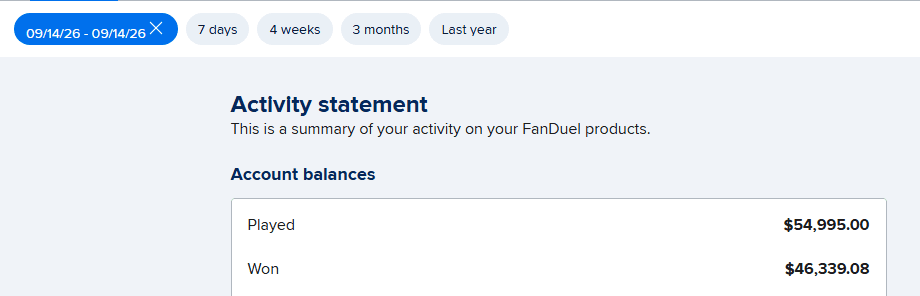
Our team is limited on all six major U.S. sportsbooks (FanDuel, DraftKings, Caesars, BetMGM, Fanatics, ESPN BET) for winning too much during in-game action. That status is the reason we understand which constraint actually applies to which bettor. The ceiling is what the books show you. The stake limit is what they use.
How to Build Around the Ceiling
Four rules, in order of how much money they save.
Compute the breakpoint before you build, not after. Cap divided by profit multiple. If your intended stake exceeds it, either cut legs or cut the stake — funding a payout that cannot arrive is the single most avoidable error in parlay construction.
Stop adding legs once the displayed return approaches the ceiling. Not at the ceiling. Approaching it. The last two legs before a cap are already returning a fraction of their apparent value, because the marginal payout shrinks toward zero while the marginal probability cost stays constant.
Split, don't stack. Two seven-leg tickets have a higher combined chance of returning something than one fourteen-leg ticket, sit further from any ceiling, and give you a partial outcome instead of a binary one. This is the same logic behind round robins versus straight parlays, applied to a constraint most bettors never factor in.
Know the cap for the market you are actually in. The number for NFL sides is not the number for player props, and it is definitely not the number for in-game. Check the sport, not just the book.
None of this makes a fourteen-leg parlay a good bet. It makes it an honestly priced one, which is a different and more useful thing. If you want a fuller framework on leg count, how many legs a parlay should have works through the probability side, and our parlay picks page covers what we actually build.
That same logic carries over to 6-team parlay payout calculator, which covers the adjacent setup in detail.
Get Tonight's Live Picks
Want tonight's live in-game picks delivered to your phone via Email and Discord during the game?
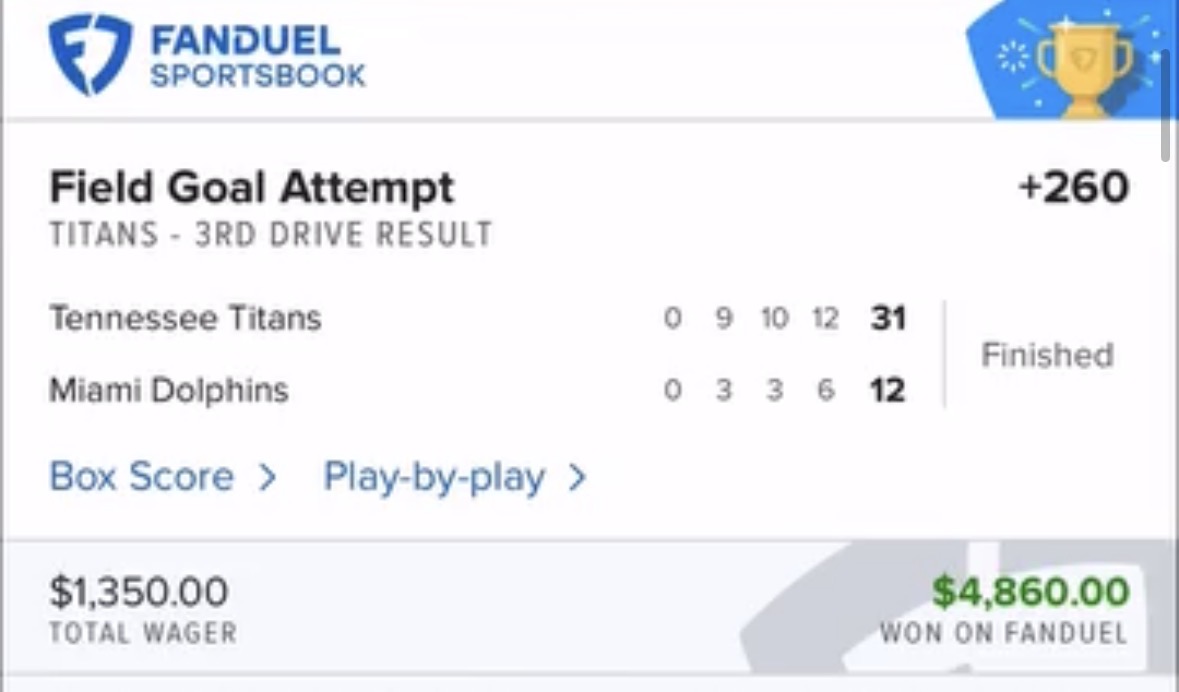
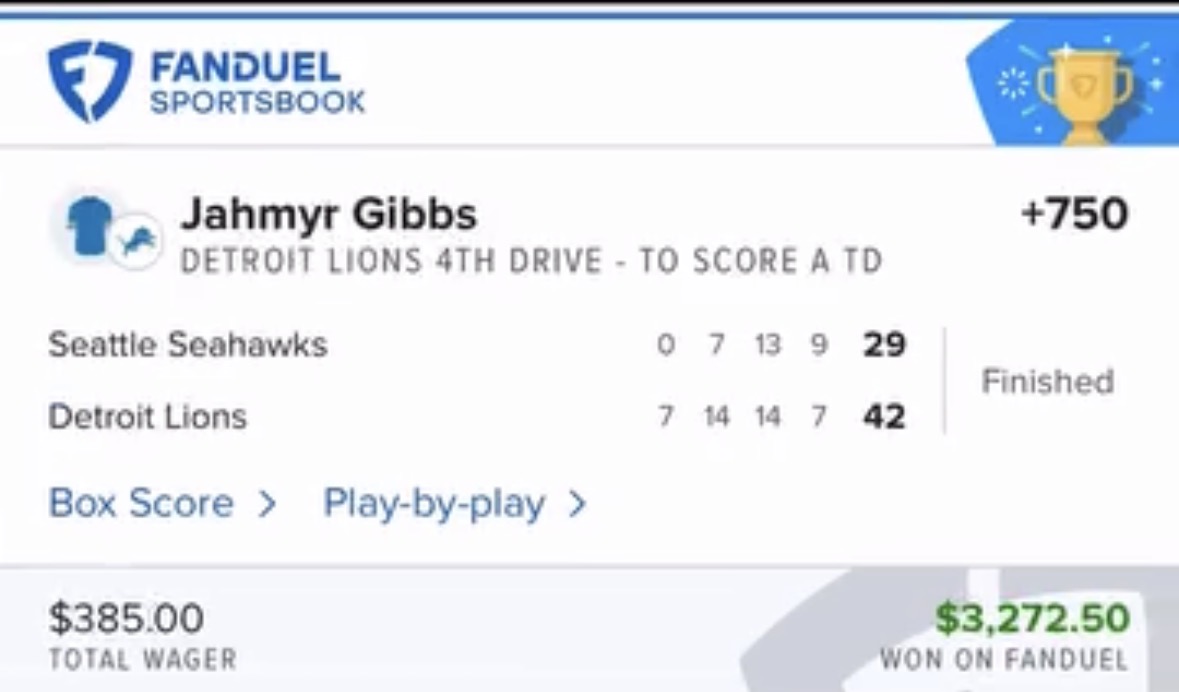
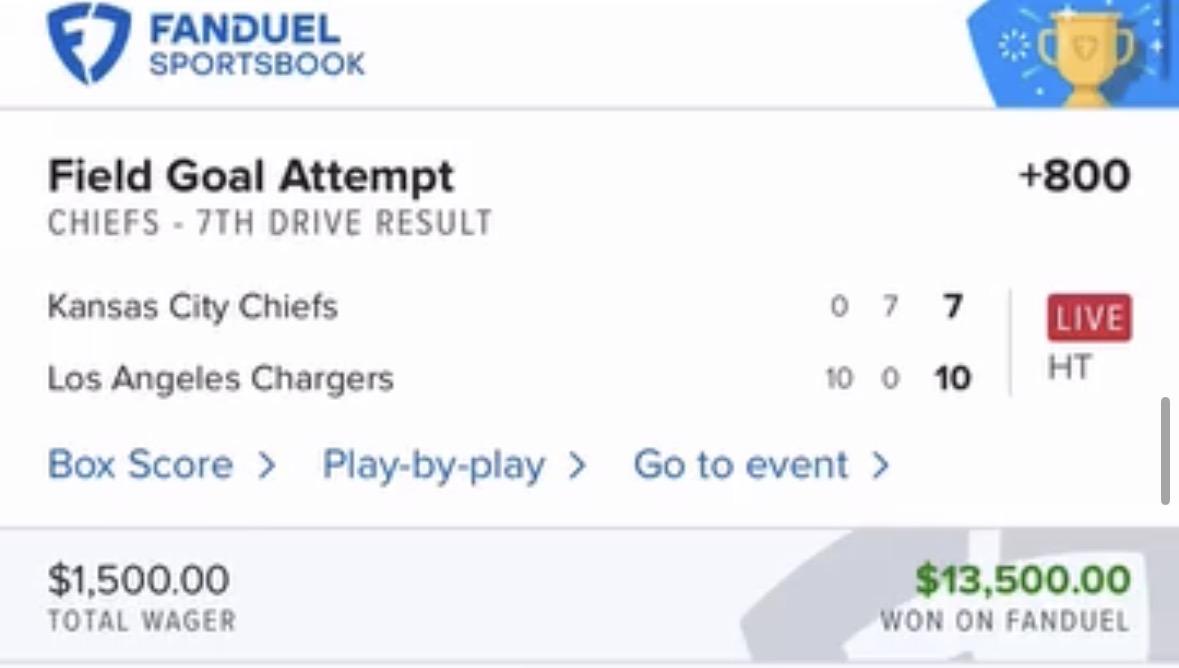
The Best Bet on Sports is the only live betting handicapping service limited on all six major U.S. sportsbooks (FanDuel, DraftKings, Caesars, BetMGM, Fanatics, ESPN BET) for winning too much during in-game action. Verified profit: $367,520+. Picks delivered via Email and Discord during games.
→ Get tonight's live picks: $199 first month — 1-Unit package, full live betting access → Try a free live pick first — reserve your spot for tonight's pick
Frequently Asked Questions
What is a sportsbook maximum payout limit?
It is the largest amount a sportsbook will pay out on a single wager, regardless of what the odds on that ticket say it should return. Every U.S. operator publishes one in its house rules, and the figure varies by sportsbook, by sport, by market type, and sometimes by state. It applies per ticket rather than per day or per account, which is why splitting a large build into two smaller ones is the standard way around it.
Does the payout cap change the odds on my parlay?
Functionally, yes — though the bet slip will not say so. Once the displayed return crosses the ceiling, the amount you can actually collect stops growing while the quoted odds keep climbing. From that point on, every additional leg cuts your chance of winning without increasing what you receive, which is the same thing as your true odds getting worse with every selection you add.
How do I calculate the largest stake my parlay can justify?
Divide the payout cap by the profit multiple, which is the decimal odds minus one. At a $250,000 ceiling, a ticket priced at +100000 has a profit multiple of 1,000, so $250 is the largest stake that still collects in full. Anything above that is funding a return the sportsbook will not send. The calculation takes seconds and is worth running before you build rather than after.
Which betting markets have the lowest maximum payouts?
In-game and live markets, minor and international leagues, and novelty events carry the lowest ceilings, followed by player props, alternate lines, and same-game builds. Major-league sides and totals carry the highest. The awkward consequence is that long prop stacks and same-game ladders — the ticket types most likely to approach a cap — sit under the tightest limits, while the market types least likely to reach a cap have the most room.
What happens if my parlay wins more than the maximum payout?
The ticket grades as a winner and the sportsbook pays the cap, not the displayed figure. There is no appeal, because the limit is published in the house rules you accepted when funding the account. Payouts at that scale also commonly trigger manual review and tax and identity verification, so settlement takes days rather than the usual near-instant credit.
Should I split a long parlay into two smaller tickets?
Usually, yes. Two shorter tickets have a higher combined chance of returning something, sit further from any payout ceiling, and produce a partial result instead of an all-or-nothing one. The trade-off is a lower maximum upside and, on same-game builds, a different correlation profile — the book's rules on related contingencies still govern which legs can be combined at all.
Do payout caps affect winning bettors?
Rarely, and that is the irony of them. A bettor who consistently beats the closing number gets restricted at the stake level long before any ticket approaches a payout ceiling — maximum accepted wagers quietly fall from four figures to two. The cap is functionally a recreational-bettor rule. The stake limit is the mechanism sportsbooks actually use, and it is why our team is limited on all six major U.S. books for winning during in-game action.
The Best Bet on Sports · 1.5M followers on TikTok
Sports Betting TikTok is the live betting account behind The Best Bet on Sports, covering NFL, NCAAF, NBA, NCAAB, MLB and WNBA markets in real time. The account has been limited on all six major U.S. sportsbooks — FanDuel, DraftKings, Caesars, BetMGM, Fanatics and ESPN BET — for winning on live betting, with $367,520 in verified profit since 2005. View full profile →
Past results do not guarantee future performance. Must be 21 or older to wager.
Related Articles
Why the Same Parlay Pays Differently at Every Sportsbook
6-Team Parlay Payout Calculator: What Six Legs Really Pay
First Half Over, Game Under: The Parlay That Fights Itself
Lead at Halftime and Win: What That NFL Parlay Pays
Pick'em Apps vs. Sportsbook Parlays: The Per-Leg Price
The Last Two Minutes Kill More Parlays Than Bad Picks Do
Get real live betting picks
From $39.95/mo · Cancel anytime · Email + Discord delivery
● Get The Picks
Choose your package
Tap any tier below to select · Subscribe in one tap
👇 Tap any package to select it
✓ You're selecting
25 Units · $99.95/month
25 unit picks per month. Sweet spot for most bettors — plenty of action without going all-in.
- ✓25 live betting selections/month
- ✓Email + Discord delivery
- ✓All sports (NFL, NCAAF, NBA, NCAAB, MLB)
- ✓Mix of 1, 2, 3, 5-unit rated plays
- ✓Cancel anytime
Secure PayPal · Cancel anytime · No hidden fees · 21+ · +$367K verified
+$367,520 verified · Limited on 6 sportsbooks · 20 years documented · See Proof
Join Our Newsletter
Get free expert sports picks and analysis delivered weekly.