
The 300-to-1 Rule: Why Your Parlay Pays Less Than the Slip Says

A winning parlay payout can arrive smaller than the bet slip promised, because federal reporting rules attach to tickets that pay at least 300 times the wager. Cross that line and the sportsbook reports the win. Clear $5,000 in proceeds on top of it and 24% is withheld before the money ever reaches your account. Straight bets almost never reach 300-to-1. Parlays are built to.
A parlay payout is the one number in sports betting that can be smaller than the sportsbook told you it would be, and the reason is a threshold almost nobody reads: a ticket that returns at least 300 times its wager gets reported, and if the profit clears $5,000 on top of that, 24% is withheld before the money lands. A straight bet essentially never reaches 300-to-1. Parlays are the only structure a normal bettor plays that routinely does — which means the exact ticket you built for the screenshot is the one that arrives short. The Best Bet on Sports has run live in-game picks for more than twenty years with a verified $367,520+ in profit across all sportsbooks, and this is the part of a big parlay win nobody puts in the payout calculator.
There are five parlay payout calculators on this site. They will tell you, to the dollar, what a four-leg ticket at those prices returns. Not one of them tells you what actually shows up in your account, because that is a different number, and the gap between them is entirely a function of a ratio most bettors have never calculated.
The Line Is 300-to-1, and Only One Kind of Bet Crosses It
The rule is not about how much you win. It is about how much you win relative to what you risked.
Federal reporting for a sports wager attaches when the winnings are at least 300 times the amount of the wager and the amount clears the calendar-year reporting threshold, which for 2026 is $2,000 and is adjusted for inflation in later years. Both conditions have to be true at once. A $2,000 win on a $500 bet is four times the wager and triggers nothing. A $2,500 win on a $5 bet is five hundred times the wager and triggers everything.
That ratio is the whole story, and it explains why this is a parlay article rather than a general betting one. Here is where common ticket structures actually land:
| Ticket | Approximate price | Payout ratio | Reaches 300-to-1? |
|---|---|---|---|
| Single game line at -110 | +100 | Slightly under 1:1 | Never |
| 4 legs at -110 | ~+1230 | ~12:1 | No |
| 6 legs at -110 | ~+4740 | ~47:1 | No |
| 9 legs at -110 | ~+33,600 | ~336:1 | Yes |
| 6 legs at +150 | ~+24,300 | ~243:1 | No, but close |
| 5 prop legs at +250 | ~+52,400 | ~524:1 | Yes |
| 4 longshot legs at +400 | ~+62,400 | ~624:1 | Yes |
Read the bottom half of that table carefully. You do not need a lottery ticket to get there. Five player props at +250 apiece — an entirely ordinary Sunday build for someone who plays player prop parlays — clears 300-to-1 with room to spare. So does a four-leg ticket of live underdogs. The structure everyone plays parlays for is the structure the rule is written around.
Straight bettors basically never meet this. To get a straight bet to 300-to-1 you would need a futures position at +30000 or a single prop at odds no book prices on a game. The reporting regime is, in practical effect, a parlay regime.
Two Thresholds, and They Do Different Things
People collapse reporting and withholding into one event. They are separate, they trigger at different points, and only one of them takes money out of your payout.
Reporting happens when the ticket meets the 300-to-1 test and the winnings meet the year's threshold. The operator generates a form, you get a copy, and the IRS gets a copy. Nothing is deducted. Your payout is intact; the transaction is simply now documented.
Withholding happens when the proceeds — the winnings minus the wager — exceed $5,000 and the 300-to-1 test is met. At that point the operator withholds 24% at the federal level before crediting your account. There is also a backup withholding rule at the same 24% that applies when a bettor has not supplied a correct taxpayer identification number, which is worth knowing if you have ever ignored a verification prompt from an app you rarely use.
Run four realistic tickets through both tests and the pattern becomes obvious:
| Stake | Price | Profit | 300-to-1 met? | Proceeds over $5,000? | Reported? | Withheld | Credited to you |
|---|---|---|---|---|---|---|---|
| $20 | +30000 | $6,000 | Yes (300:1) | Yes | Yes | $1,440 | $4,580 |
| $10 | +45000 | $4,500 | Yes (450:1) | No | Yes | $0 | $4,510 |
| $50 | +12000 | $6,000 | No (120:1) | — | No | $0 | $6,050 |
| $500 | +900 | $4,500 | No (9:1) | — | No | $0 | $5,000 |
Compare row one and row three. Identical $6,000 profit. One is reported and docked $1,440 on the spot; the other is neither. The only difference between them is the ratio of stake to price — a $20 stake on a 300-to-1 ticket versus a $50 stake on a 120-to-1 ticket. Nothing about the quality of the bet, the sport, the number of legs, or the sportsbook changed. The arithmetic of how you assembled the ticket did.
That is a genuinely strange fact, and it is the single most useful thing in this article.
Reported Is Not the Same as Taxed
This next part matters and it is where most bettors get the wrong idea, usually in the direction that costs them.
A reporting form is a documentation event, not a taxing event. Gambling winnings are income whether or not a form is generated. A bettor who wins $40,000 across a season in $300 chunks receives no forms at all and owes exactly as much as a bettor who won $40,000 on one reported ticket. The forms determine what the IRS is told, not what you owe.
The withheld 24% is not a tax payment in any final sense either. It is a prepayment against whatever you eventually owe, and it can easily be wrong in both directions — too much if your year nets out badly, too little if you are in a higher bracket and had a strong year. It is an estimate collected at the counter by an operator who knows nothing about the rest of your finances.
How winnings and losses interact — and the 2026 change to how much of your losses you can deduct against them — is a separate subject we handle in full in the 2026 sports betting tax change. That article covers the deduction side. This one covers the payout side, and the reason they are separate is that the payout side is something you can influence when you build a ticket, and the deduction side is not.
One thing worth saying plainly before going further: this is a description of how sportsbook payouts work mechanically. It is not tax advice, individual situations vary enormously, and anyone with real money at stake should talk to a tax professional rather than a betting site.
Withheld Money Is Dead Capital, and the Float Is Long
The 24% is recoverable if it turns out you overpaid. It is not recoverable now.
A ticket that hits in September and has $1,440 withheld does not return that money in September. It sits with the government until you file, which for most people means the following spring at the earliest — five to seven months of float, and up to roughly nineteen if the win lands in January of a year you file late. During that entire window, money that may not even be owed is out of your bankroll and cannot be staked.
This connects directly to something we have argued elsewhere: a bettor's usable bankroll is not a spreadsheet total, it is the money actually available in the right place at the right time, a point made at length in your live betting bankroll is your app balance. Withholding is the purest possible example. It is capital you earned, that is arguably yours, that you cannot deploy.
For a recreational bettor with a $2,000 roll, a $1,440 withholding event on a great night is not a rounding error. It is 72% of the bankroll, frozen, on the very ticket that was supposed to expand it.
Three Things You Can Actually Do About It
None of this is a reason to stop playing parlays. It is a reason to know where the line sits and to stop crossing it by accident.
Know your ticket's ratio before you place it, not after. The number you need is potential profit divided by stake. If it is approaching 300, you are in the reporting band, and if the profit is also going to clear $5,000 you are in the withholding band. This takes five seconds on a bet slip that already displays both numbers, and almost nobody does it.
Understand that staking up shortens the ratio. A $600 stake at +900 and a $20 stake at +30000 are not the same bet, obviously — but if you are choosing between an eight-leg longshot and a shorter ticket at a bigger stake with comparable expected return, the shorter one does not generate a withholding event. Be clear-eyed about what that is and is not: the income is fully taxable either way. This is a paperwork and cash-flow difference, not a tax saving, and anyone who tells you otherwise is selling something. But cash flow is real, and a $1,440 float is real.
Consider splitting instead of stacking. Two four-leg tickets are not the same bet as one eight-leg ticket, and the differences run well beyond this rule — the variance profile is completely different, which is the entire argument in round robin versus parlay. But splitting does keep the maximum price on any single ticket well under 300-to-1, which is a side benefit that happens to point the same direction as the better structural advice we already give in how many legs a parlay should have.
Notice that all three of these push toward shorter tickets at larger stakes, which is where the strategy case has always pointed anyway. That is not a coincidence. The rule targets exactly the structure that has the worst compounded hold, which is covered in why most parlays lose.
Why a Live Bettor Almost Never Meets This
Here is the structural contrast, and it is worth stating carefully because the honest version is less flattering than the promotional one.
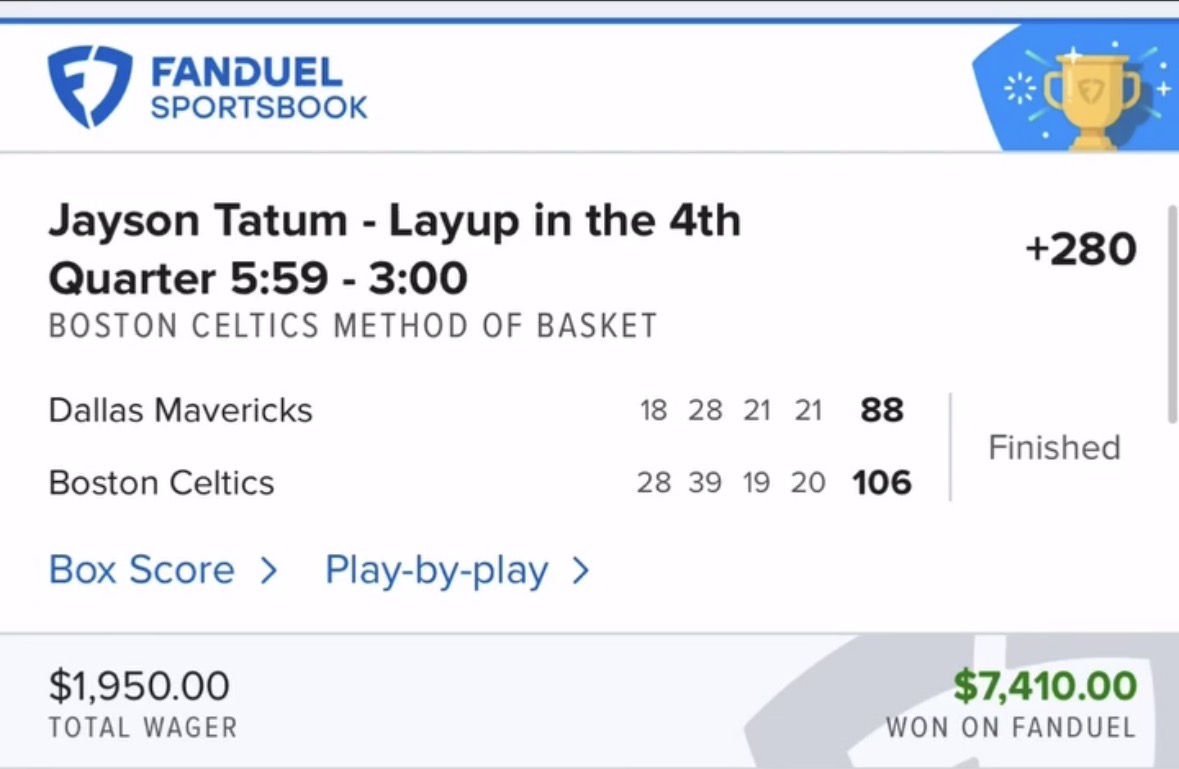
A live in-game position is a single wager on a game line, total, or prop at a live price. Those prices sit in a normal range — a live underdog at +280, a second-half total at -105, an in-play spread at +160. Nothing in that inventory approaches 300-to-1. A bettor who makes four hundred live positions in a season and finishes well ahead generates zero reporting forms on individual tickets and has zero dollars withheld at any point.
The honest caveat: that profit is exactly as taxable. Not one dollar of it disappears because no form was generated, and treating undocumented income as untaxed income is the most expensive mistake in this entire subject. What actually differs is timing and friction. The live bettor keeps full use of the money throughout the season and settles up on their own schedule. The parlay bettor hands over 24% of a big ticket in September and waits until spring to find out whether that was the right amount.
That is a cash-flow advantage, not a moral one, and it is a small line item next to the reason we work in live markets in the first place — which is that in-play prices are made under time pressure by a book that has to quote before it fully knows the game state. That is also why we have been limited on all six major U.S. sportsbooks, and why our maximum stake keeps getting cut, a mechanism covered in live betting limits. The graded record is at verified results, and how the positions get built is on live betting picks.
Where This Argument Stops
This is a rare event for most bettors. If you play two- and three-leg tickets, you will never come near 300-to-1, and none of this will ever apply to you. This article is for the people building six-plus legs and longshot prop stacks, which is a real population but not the majority.
Rules and thresholds change. The reporting threshold moved for 2026 and is indexed for inflation afterward, operators differ in how they handle state-level withholding, and several states withhold on top of the federal amount at their own rates. Anything specific in here should be checked against your own operator's terms and your own state before you rely on it.
And this is not a strategy. Building tickets to dodge a form is a spectacularly bad reason to make a betting decision. The ratio question is worth thirty seconds of awareness so that a payout never surprises you and so a large withholding never blows a hole in your bankroll at a moment you needed the capital. It is not a factor that should ever outrank the actual quality of the bet.
The Thirty-Second Version
Before you place a long-priced ticket, divide the potential profit by your stake. If the answer is near or above 300, that ticket will be reported. If the potential profit also clears $5,000, expect roughly a quarter of it to be held back and not returned to you for months.
Then ask whether the same read expressed at a larger stake and a shorter price gets you a similar result without the float. Frequently it does, and frequently it is the better bet anyway. The rest of ticket construction — legs, correlation, exits, grading — runs through how to build a winning parlay and how parlays are graded. This is just the last line of the receipt, and it is the one nobody reads until it is short.
Get Tonight's Live Picks
Want tonight's live in-game picks delivered to your phone via Email and Discord, on positions priced in a normal range instead of a reporting band?
The Best Bet on Sports is the only live betting handicapping service limited on all six major U.S. sportsbooks (FanDuel, DraftKings, Caesars, BetMGM, Fanatics, ESPN BET) for winning too much during in-game action. Verified profit: $367,520+. Picks delivered via Email and Discord during games.
→ Get tonight's live picks: $199 first month — 1-Unit package, full live betting access → Try a free live pick first — reserve your spot for tonight's pick
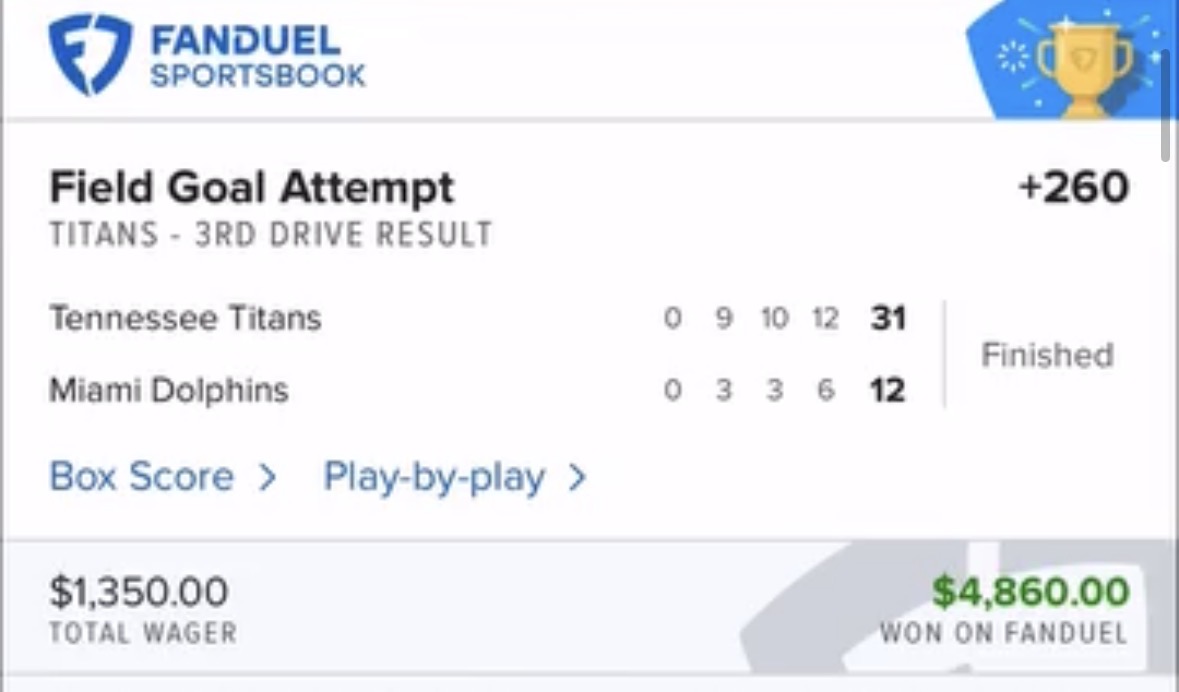
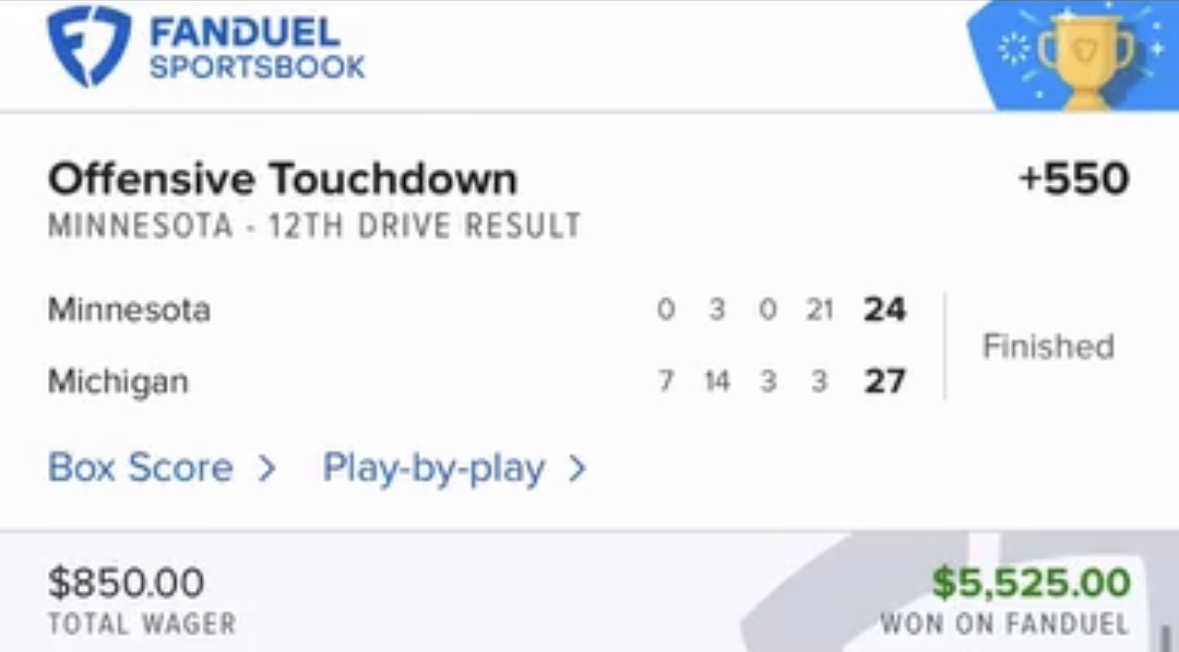
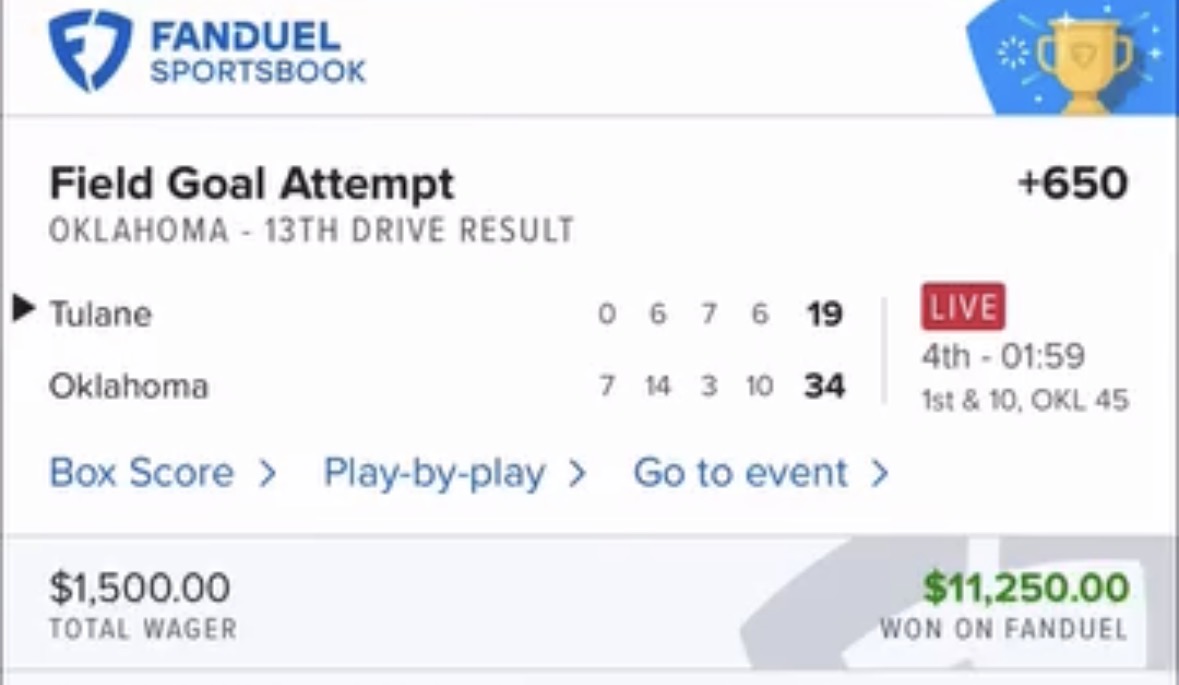
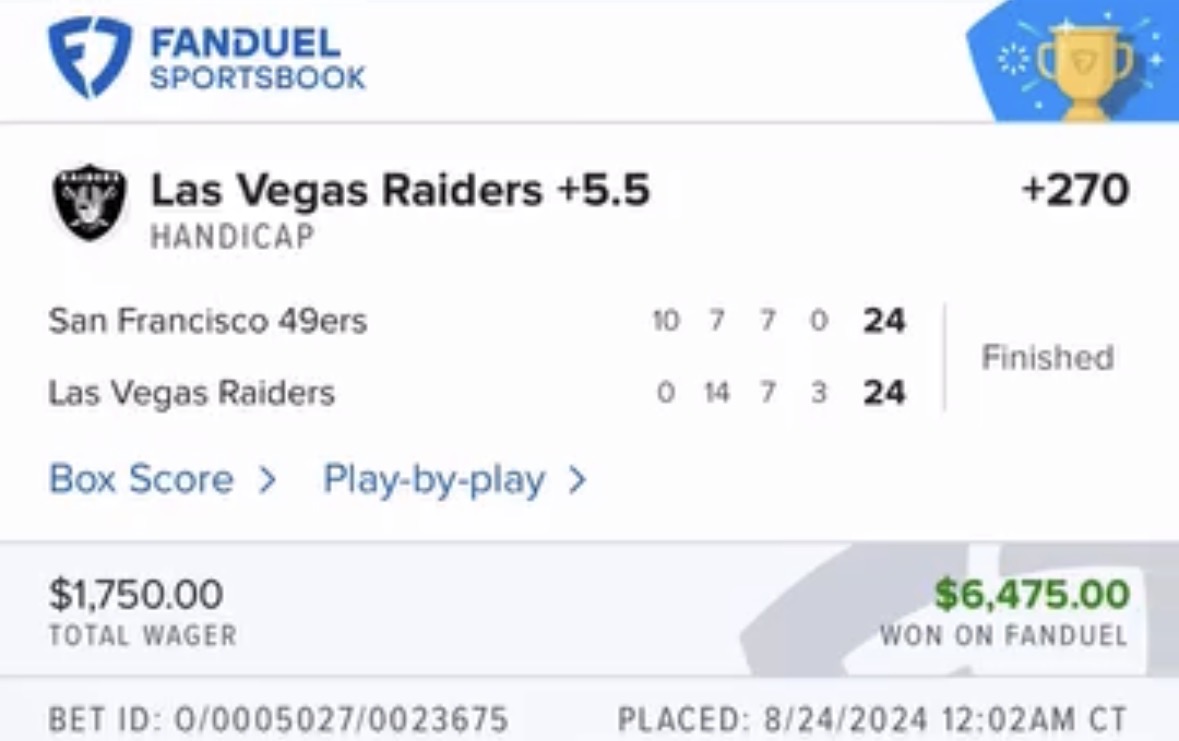
Sport-specific coverage is at NFL picks, football picks, college football picks, MLB picks, and NBA picks.
Frequently Asked Questions
Why did my parlay pay less than the bet slip showed?
Most likely because the ticket met two federal thresholds at once. A sports wager that returns at least 300 times the amount staked, with proceeds over $5,000, has 24% withheld by the operator before the money is credited. A $20 ticket at +30000 shows a $6,020 return on the slip and lands at roughly $4,580 after $1,440 is held back. The money is not lost — it is a prepayment against what you may owe — but it is gone from your account until you file.
What is the 300-to-1 rule in sports betting?
It is the ratio test that determines whether a winning wager gets reported to the IRS. The winnings must be at least 300 times the amount of the wager, and the amount must also meet the calendar-year reporting threshold, which is $2,000 for 2026 and adjusted for inflation afterward. Both conditions must be satisfied. A large win at short odds does not qualify, while a modest win at very long odds does. It is a test of the payout ratio, not the payout size.
Do straight bets ever trigger withholding?
Almost never, because a straight bet at typical prices returns roughly one time the stake rather than three hundred times it. You would need something like a long-priced futures position to get there. This is why the rule functions in practice as a parlay rule — parlays and longshot prop stacks are the only structures a normal bettor plays that routinely produce 300-to-1 payouts, and five player props at +250 apiece already clears the line comfortably.
If I never get a form, do I still owe tax on my winnings?
Yes. Reporting forms document a transaction; they do not create the tax obligation. Gambling winnings are income regardless of whether any threshold was met, so a bettor who won steadily in small amounts across a season owes on those winnings exactly as a bettor who won the same total on a single reported ticket. Assuming that a year without forms is a year without obligation is the most common and most expensive misunderstanding in this subject.
Does splitting a big parlay into smaller ones help?
It keeps the maximum price on any single ticket below the 300-to-1 line, so it does avoid the reporting and withholding mechanics. That is a side benefit rather than a reason to do it. The real argument for splitting is variance: two four-leg tickets and one eight-leg ticket have completely different outcome distributions, and the shorter structures also carry a lower compounded hold. If splitting is right for you, it is right for those reasons, and this is simply a bonus that points the same way.
Is the 24% withheld the actual tax I owe?
No. It is a prepayment collected at the moment of payout by an operator with no knowledge of the rest of your year. It can easily be too much or too little. If your season nets out to a loss, you may have overpaid substantially and will not see that money again until you file. If you had a strong year and sit in a higher bracket, 24% may fall well short of the eventual bill. Treat it as a deposit against a number that gets settled later, not as a settled amount.
Do state taxes get withheld from a parlay payout too?
Sometimes, and it varies considerably. Several states apply their own withholding to qualifying gambling payouts, at their own rates and sometimes at their own thresholds, which stack on top of the federal 24%. Other states have no income tax at all and withhold nothing. Because the treatment differs so much by jurisdiction and because operators handle it differently, the only reliable approach is to check your specific sportsbook's terms and your own state's rules rather than assuming the federal number is the whole deduction.
The Best Bet on Sports · 1.5M followers on TikTok
Sports Betting TikTok is the live betting account behind The Best Bet on Sports, covering NFL, NCAAF, NBA, NCAAB, MLB and WNBA markets in real time. The account has been limited on all six major U.S. sportsbooks — FanDuel, DraftKings, Caesars, BetMGM, Fanatics and ESPN BET — for winning on live betting, with $367,520 in verified profit since 2005. View full profile →
Past results do not guarantee future performance. Must be 21 or older to wager.
Related Articles
The 1 PM Problem: When Sunday Parlays Actually Die
Key Numbers and Parlays: The Three-Point Problem
Do Parlay Legs Include Overtime? How Each Leg Settles
What If a Live Pick Is on the Other Side of Your Bet?
Your Parlay Is Graded by a Data Feed, Not by the Game
Six Parlays, One Bet: The Overlap Hiding in Your Ticket Stack
Get real live betting picks
From $39.95/mo · Cancel anytime · Email + Discord delivery
● Get The Picks
Choose your package
Tap any tier below to select · Subscribe in one tap
👇 Tap any package to select it
✓ You're selecting
25 Units · $99.95/month
25 unit picks per month. Sweet spot for most bettors — plenty of action without going all-in.
- ✓25 live betting selections/month
- ✓Email + Discord delivery
- ✓All sports (NFL, NCAAF, NBA, NCAAB, MLB)
- ✓Mix of 1, 2, 3, 5-unit rated plays
- ✓Cancel anytime
Secure PayPal · Cancel anytime · No hidden fees · 21+ · +$367K verified
+$367,520 verified · Limited on 6 sportsbooks · 20 years documented · See Proof
Join Our Newsletter
Get free expert sports picks and analysis delivered weekly.