Live Betting Limits: How Much Can You Actually Bet on a Pick?

The value of a pick service is the quality of the picks multiplied by what you can actually get down on them, and only one of those two numbers is under your control. In-play maximums are far lower than pregame maximums, they vary enormously by sport and market, and no sportsbook publishes them. Most subscribers never check the number that caps their entire return.
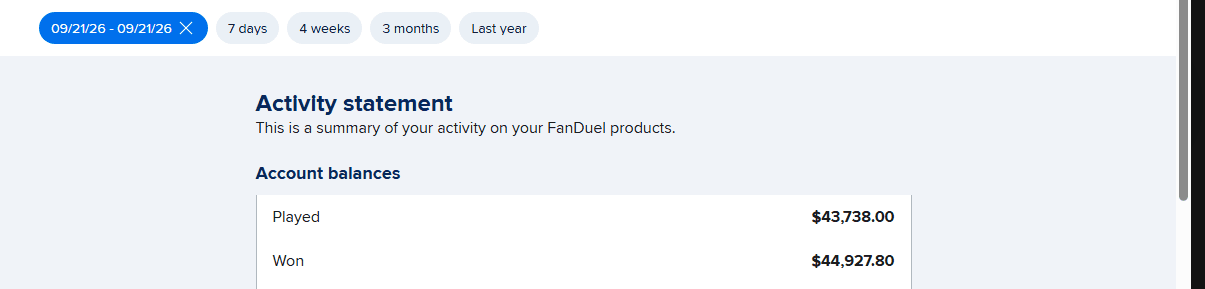
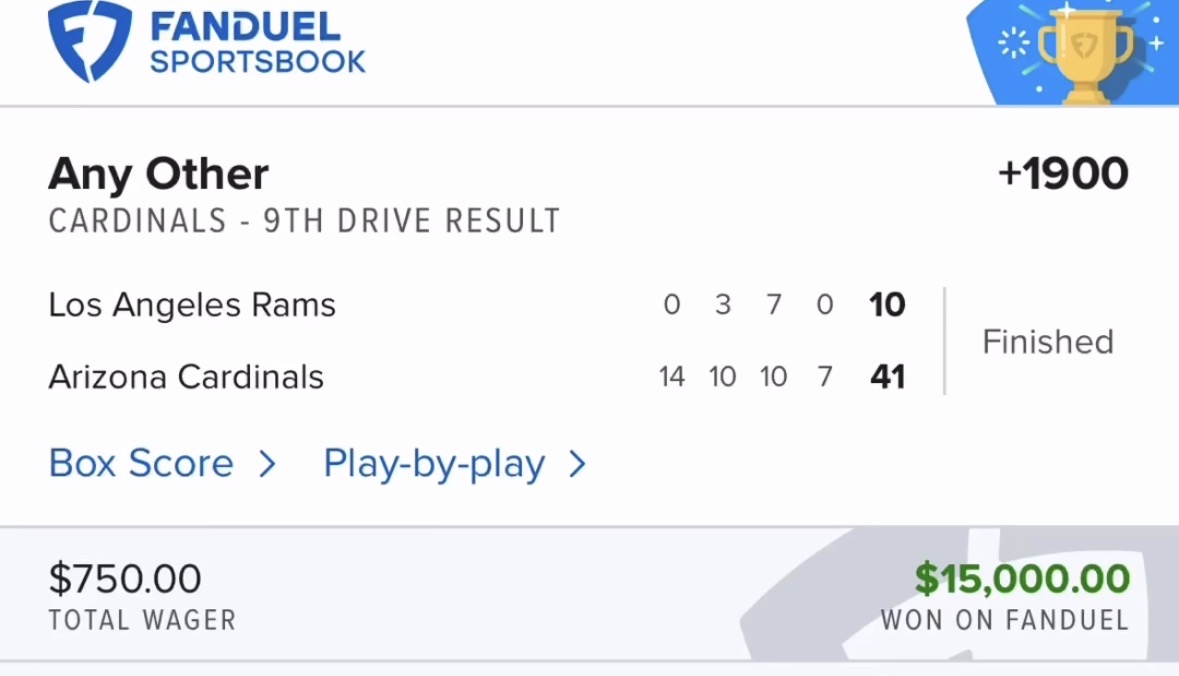
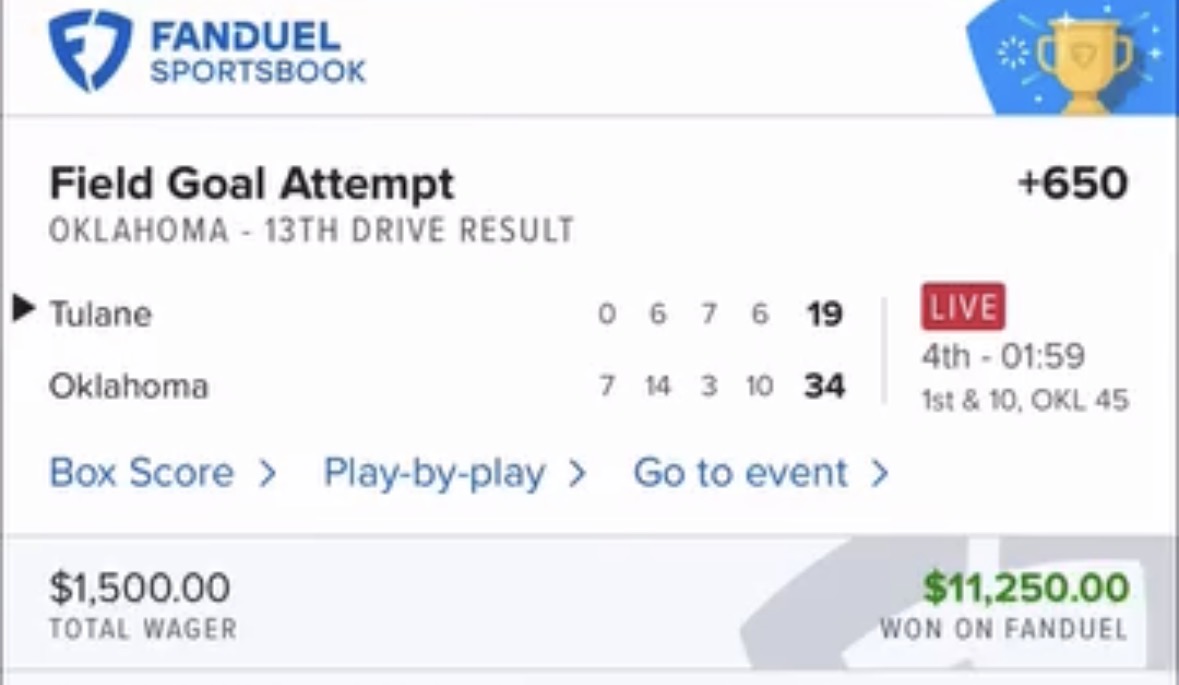
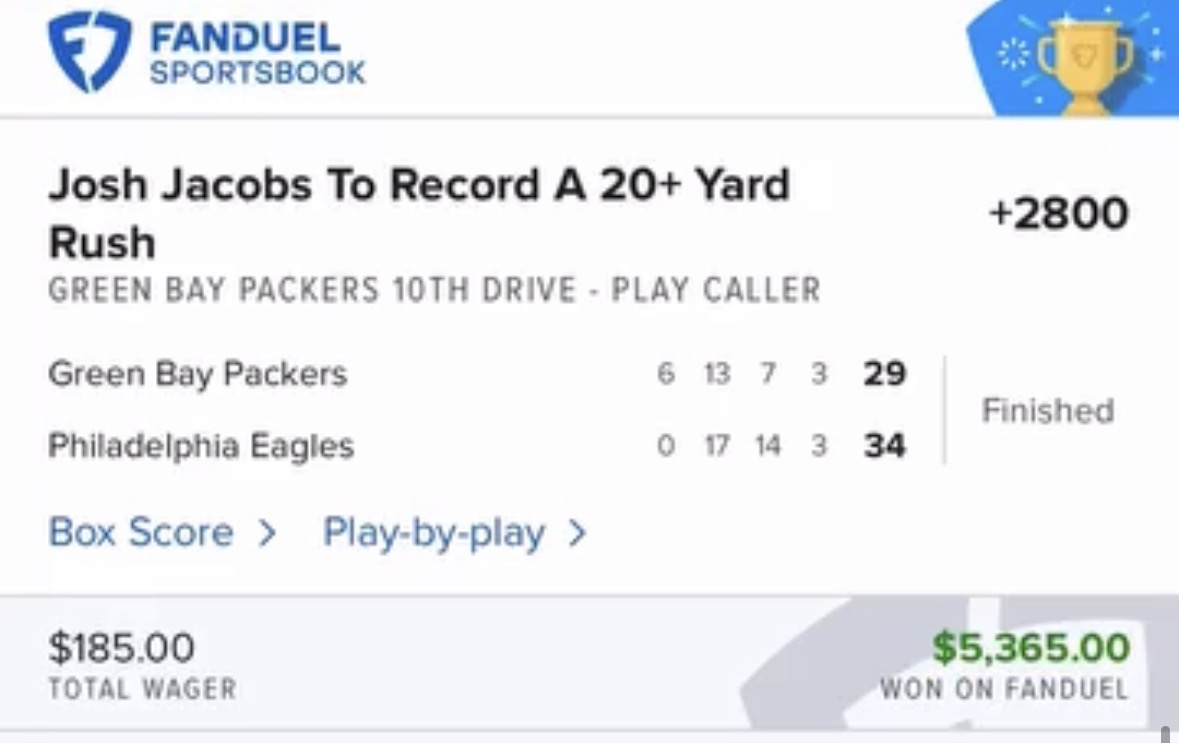
Live betting limits are the in-play maximum stake a sportsbook will accept on a given market, and they are the single most overlooked variable in whether a pick service is worth its price. The value of a subscription is not the picks alone — it is the picks multiplied by the amount you can actually get down on them, and the second number is set by the sportsbook rather than by you. In-play maximums run far below pregame maximums on the same game, vary enormously between a Sunday NFL game line and a Tuesday night prop, and are published by nobody. The Best Bet on Sports has run live in-game picks for more than twenty years and posted a verified $367,520+ in profit across all sportsbooks, and the number that eventually caps every successful live bettor is this one.
Almost every article written about whether a pick service is worth paying for — including several of ours — quietly assumes you can bet whatever you decide to bet. For pregame bettors at ordinary stakes, that assumption holds. For in-play bettors, it stops holding sooner than people expect.
Subscription Value Is Picks Times Stake
The standard way to evaluate a service is to take its win rate, convert it to a return per bet, multiply by the number of bets, and compare the result against the subscription price. We walk through that arithmetic in how long until a live betting service pays for itself, and the math is sound as far as it goes.
What that math takes as given is the stake. A 4% return on 60 bets a month is a completely different business at $100 a bet than at $400 a bet — the subscription costs the same either way, so the price is a fixed cost sitting on top of a variable that changes the whole calculation.
Bettors treat the stake as their decision. It is a joint decision. You propose a number and the sportsbook decides whether to accept it, and in live markets the operator says no far more often, and at far lower amounts, than most people have ever tested.
So the honest version of the value question is not "are these picks good enough to beat $199 a month?" It is: are these picks good enough to beat $199 a month at the size my accounts will actually take? Those are different questions with different answers, and only one of them can be answered without opening an app.
Why In-Play Maximums Are So Much Lower Than Pregame
A sportsbook's willingness to accept a wager is a function of how much time it has to be wrong.
On a pregame NFL side, the operator has posted a number days in advance, has watched the market move, has taken action on both sides, and can adjust the price whenever the balance of money tells it something. A large wager is a manageable event because there is a whole week in which to respond to it.
In-play, none of that is true. The operator is generating a price from a live model, in a game state that will be obsolete in ninety seconds, with no opportunity to reconsider before the next snap. If the model is momentarily wrong — and every live model is momentarily wrong several times a game — the operator has no window in which to correct before the wager settles into value.
Its only defense is size. It quotes a price it is not fully confident in and caps how much of that price it will sell you. This is the same mechanism behind the acceptance delay and the requote, which we cover in why your live bet got rejected — a rejection and a reduced maximum are two expressions of one policy.
The caps are not uniform. They scale roughly with how confident the operator is in the specific number:
| Market type | Relative in-play ceiling | Why |
|---|---|---|
| Live game line on a marquee NFL or NBA game | Highest available in-play | Deepest liquidity, most modeled sport, most two-way action |
| Live total on a major game | High, typically below the side | Fewer participants, but still a heavily traded market |
| Live game line on a non-marquee college or weeknight game | Substantially lower | Thin market, less reliable model input, fewer offsetting bets |
| Live team totals and alternate lines | Lower again | Derived markets carry the model error of the market they come from |
| Live player props | Lowest | Single-player outcomes, thin two-way interest, highest model uncertainty |
That table describes shape, not dollars, deliberately. Actual figures differ by operator, by state, by time of night, and by account — which is precisely the problem this article exists to point out.
Your Ceiling Changes With the Sports Calendar
This is where it becomes a decision rather than a piece of trivia, and it is the honest arbitration between two arguments we have made separately.
We have argued that a live service is worth it for college football because Saturday hands you sixty simultaneous games nobody can cover alone. We have also argued it is worth it for the NFL because in-play is the only part of the sharpest market in America that stays beatable. Both are true. Limits are what reconcile them.
| Sport | In-play spots per week | Relative per-spot ceiling | What it means for a subscriber |
|---|---|---|---|
| NFL | Few, concentrated in one window | Highest of the year | Fewer chances, full size on each — the weeks your ceiling is highest |
| College football | Many, spread across twelve hours | Wide range: high on marquee games, small on the rest | More spots than you can take, most at reduced size |
| MLB | Nightly, all season | Moderate, and low on props | Low per-night ceiling, but a very large number of nights |
| NBA | Several nights weekly | High on national games, moderate elsewhere | The most consistent middle ground |
Read that as a matching problem rather than a ranking. A subscriber with a modest bankroll betting $75 a position is nowhere near any of these ceilings, so college football's inventory is pure upside — more spots is simply better, and none of the caps bind. A subscriber betting $500 a position hits the college football ceiling constantly on anything outside the marquee window, and gets far more value out of an NFL Sunday, where the ceiling is high enough that a full-size position is actually available.
Which sport a live service is "best" for is not a fact about the sport. It is a fact about the size you bet. That is the answer neither of those earlier articles could give on its own.
What This Means for Which Package to Buy
Here is the part that argues against selling you the expensive option.
Our packages are structured around unit counts — a 1-unit package, a 2-3 unit package, and a 5-unit VIP package — and the framework for choosing between them is in which live betting package is right for you. That framework is written around your bankroll, which is the right primary input.
Limits are the secondary input almost nobody applies. A 5-unit package assumes you can get five units down on a live position when one appears. If your accounts cap you below that on the markets we actually play, the extra units are theoretical: you paid for a larger recommended stake that your sportsbook will not accept. The pick is the same pick. The recommended size is simply not available to you.
So the rule is blunt: buy the package your accounts will actually accept, not the one your bankroll could theoretically fund. If you have never tested your in-play maximums, the smaller package is the correct starting point, and moving up after you have measured your real ceiling is a better sequence than moving down after discovering it. The general case for upgrading only on evidence is in when to upgrade a picks subscription.
There is a second reason to start low that has nothing to do with limits: your first month is when execution errors are most expensive, and a larger recommended stake multiplies those errors rather than your edge. That case is made in what to expect on your first night.
The Ceiling Is Not Fixed — It Falls If You Win
Everything above describes the market's ceiling. There is a second ceiling, attached to your account rather than to the market, and it moves in one direction.
In-play maximums are calculated per account. An operator that identifies a customer as consistently taking good numbers in live markets does not usually close the account or send a notice. It reduces what that account can stake, quietly, market by market. The first sign is almost always a wager that used to go through coming back reduced. The mechanism is described in full in why sportsbooks limit winning live bettors, and the specific question of whether following a service accelerates it is addressed in will following picks get your account limited.
The honest implication is uncomfortable and worth stating: for a successful live bettor, the stake ceiling is a declining function. Any calculation of what a subscription returns over a year should assume the per-bet number shrinks, not that it holds.
This is not a reason to avoid winning. It is the reason to hold accounts across several of the six major operators from the beginning rather than after the first reduction lands, which is the argument in sportsbook account stacking — with the funding trade-off that creates covered in live betting bankroll liquidity.
It is also, plainly, our own position. The Best Bet on Sports is limited on all six major U.S. books. That is the terminal state of this exact mechanism, arrived at over twenty years, and it is why the differentiator we lead with is not a boast about picks — it is a description of what happens when in-play results persist long enough for operators to notice.
How to Find Your Real Number in Twenty Minutes
You can measure this yourself before football starts, and almost nobody does.
Open each of your sportsbook accounts during a live game you would genuinely bet. Go to a live game line, enter a stake well above your normal size, and read what the slip tells you before submitting anything. Most operators will either display a maximum acceptable stake or automatically reduce your entry to the largest amount they will take. That number is your ceiling on that market, at that book, at that moment. Do not submit the wager.
Repeat across three market types — a live game line, a live total, and a live player prop — at each book you hold. Write the results down in a simple grid of book by market type. The whole exercise takes about twenty minutes and produces the single most useful piece of information in your betting operation: the actual maximum size of a good idea.
Two notes on doing it properly. Run it during a real live window, because in-play caps are dynamic and testing in a pregame market tells you nothing. And repeat it once a month during the season, because the account-level ceiling moves and you want to find out from your own notes rather than from a reduced wager on a position you liked.
Do it before Week 1, not during it. The first Sunday of the season is the worst possible time to discover a constraint you could have measured in August.
Where This Argument Stops
Three limits, and the last one undercuts everything above.
Most subscribers never touch their ceiling. If your normal live position is $50, none of this binds, and the correct response to this article is to note it and move on. It begins to matter somewhere north of a few hundred dollars a position, and it dominates above that.
A bigger ceiling is not a bigger edge. The maximum stake is a multiplier on whatever your actual results are, and multipliers work on negative numbers too. A bettor who successfully raises their ceiling before establishing that they are winning has done nothing but increase the speed of the outcome. Sizing should follow evidence, and the framework for that is in unit sizing and bankroll management.
And an operator can reduce or refuse your stake at any moment with no explanation and no appeal. There is no negotiation available, no support conversation that changes it, and no version of this where measuring carefully makes you exempt. The circumstances under which a book can go further than a reduction are covered in can a sportsbook refuse to pay you. The purpose of measuring your ceiling is to plan inside a constraint you do not control — not to acquire the illusion that you have influenced it.
Our graded record is published at verified results, and how the positions themselves are constructed is on the live betting picks page.
Get Tonight's Live Picks
Want tonight's live in-game picks delivered to your phone via Email and Discord, sized to what your accounts will actually accept?
The Best Bet on Sports is the only live betting handicapping service limited on all six major U.S. sportsbooks (FanDuel, DraftKings, Caesars, BetMGM, Fanatics, ESPN BET) for winning too much during in-game action. Verified profit: $367,520+. Picks delivered via Email and Discord during games.
→ Get tonight's live picks: $199 first month — 1-Unit package, full live betting access → Try a free live pick first — reserve your spot for tonight's pick
Sport-specific coverage is at NFL picks, football picks, college football picks, MLB picks, and NBA picks.
Frequently Asked Questions
What is a live betting limit?
It is the maximum stake a sportsbook will accept on a specific in-play market at a specific moment. Unlike pregame maximums, which are relatively stable and sometimes published, in-play caps are dynamic — they change with the game state, the market type, the sport, the time of night, and the individual account. No major U.S. operator publishes them, which is why most bettors have never seen the number that caps their return.
Why are in-play maximums lower than pregame maximums?
Because the sportsbook has no time to respond. On a pregame line it has posted a number days ahead, watched the market move, taken action on both sides, and can adjust whenever the balance of money tells it something. In-play, it is generating a price from a live model in a game state that will be obsolete in ninety seconds, with no opportunity to reconsider before the next snap. Its only defense against a momentarily wrong number is to cap how much of it it will sell.
Which live markets have the highest limits?
Roughly in order: live game lines on marquee NFL and NBA games are highest, followed by live totals on major games, then game lines on non-marquee college or weeknight games, then derived markets such as team totals and alternate lines, with live player props lowest. The ordering tracks how confident the operator is in the specific number — thin markets with single-player outcomes carry the most model uncertainty and therefore the smallest ceilings.
Does this change which sport a live betting service is best for?
Yes, and the answer depends on your stake rather than on the sport. A subscriber betting $75 a position never approaches any of these ceilings, so college football's enormous Saturday inventory is pure upside — more spots is simply better. A subscriber betting $500 a position hits the college ceiling constantly outside marquee games and gets more value from an NFL Sunday, where fewer opportunities are available at full size. Which sport is "best" is a fact about the size you bet.
How does this affect which package I should buy?
A larger unit package assumes you can get those units down on a live position when one appears. If your accounts cap you below that on the markets actually being played, the extra units are theoretical — you would be paying for a recommended stake your sportsbook will not accept. The sensible sequence is to start with the smaller package, measure your real ceiling across a month, and move up on evidence rather than discovering the constraint after paying for the larger one.
Do live betting limits get lower over time?
For a winning bettor, yes. In-play maximums are calculated per account, and an operator that identifies a customer as consistently taking good live numbers typically reduces what that account can stake rather than closing it or sending a notice. The first sign is usually a wager that used to go through coming back reduced. Any estimate of what a subscription returns over a year should assume the per-bet ceiling shrinks, which is the practical argument for holding accounts across several operators from the start.
How do I find out what my own limits are?
Open each account during a live game you would genuinely bet, go to a live game line, enter a stake well above your normal size, and read what the slip says before submitting anything — most operators either display a maximum acceptable stake or automatically reduce your entry to the largest amount they will take. Do not submit the wager. Repeat across a game line, a total, and a player prop at each book, and record the results in a simple grid. It takes about twenty minutes, and it should be done before the season opens rather than during it.
The Best Bet on Sports · 1.5M followers on TikTok
Sports Betting TikTok is the live betting account behind The Best Bet on Sports, covering NFL, NCAAF, NBA, NCAAB, MLB and WNBA markets in real time. The account has been limited on all six major U.S. sportsbooks — FanDuel, DraftKings, Caesars, BetMGM, Fanatics and ESPN BET — for winning on live betting, with $367,520 in verified profit since 2005. View full profile →
Past results do not guarantee future performance. Must be 21 or older to wager.
Related Articles
What If You Can't Get the Same Line as the Pick?
What If a Live Pick Is on the Other Side of Your Bet?
Does a Picks Service Still Pay After Taxes?
If-Bets and Reverses: The Parlay Alternative Explained
Should You Use Bonus Bets on Live Picks?
Why Your Results Won't Match a Pick Service's Record
Get real live betting picks
From $39.95/mo · Cancel anytime · Email + Discord delivery
● Get The Picks
Choose your package
Tap any tier below to select · Subscribe in one tap
👇 Tap any package to select it
✓ You're selecting
25 Units · $99.95/month
25 unit picks per month. Sweet spot for most bettors — plenty of action without going all-in.
- ✓25 live betting selections/month
- ✓Email + Discord delivery
- ✓All sports (NFL, NCAAF, NBA, NCAAB, MLB)
- ✓Mix of 1, 2, 3, 5-unit rated plays
- ✓Cancel anytime
Secure PayPal · Cancel anytime · No hidden fees · 21+ · +$367K verified
+$367,520 verified · Limited on 6 sportsbooks · 20 years documented · See Proof
Join Our Newsletter
Get free expert sports picks and analysis delivered weekly.