Accept Odds Changes: The Parlay Setting Nobody Reads

Every sportsbook app carries a setting that decides what happens when a price moves between the moment you tap and the moment the wager confirms. On a straight bet it costs a few cents. On a parlay it compounds across every leg, and because the legs most likely to be repriced are the ones the market is moving against you, leaving it on accept-all systematically hands the book the worse half of the distribution.
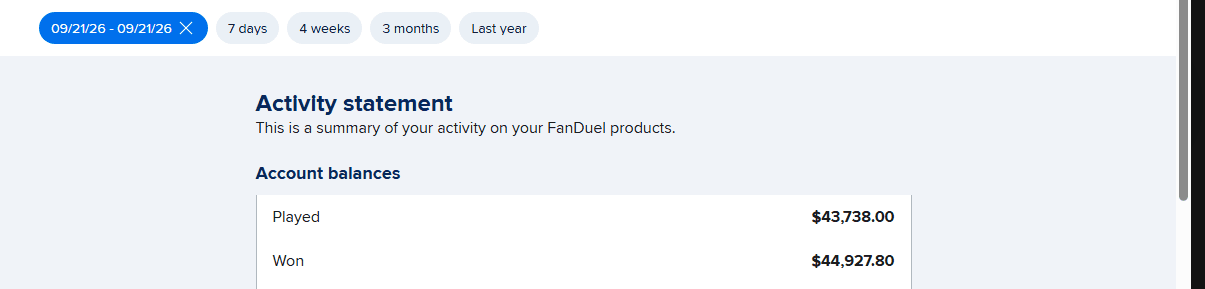
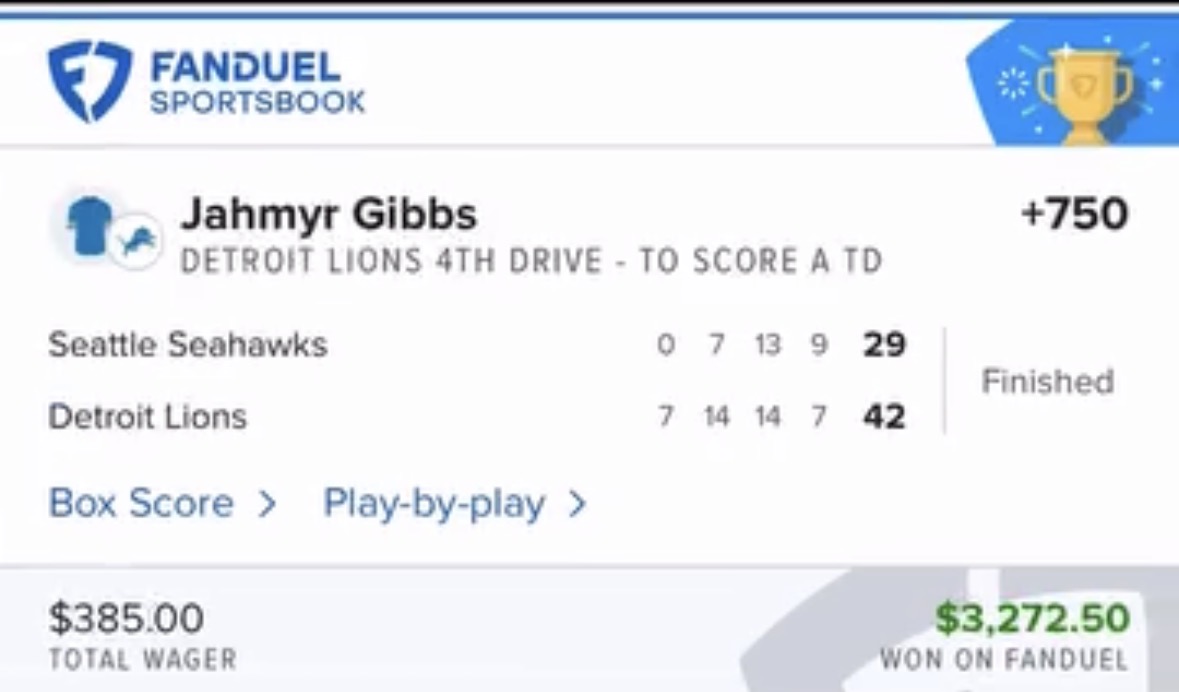
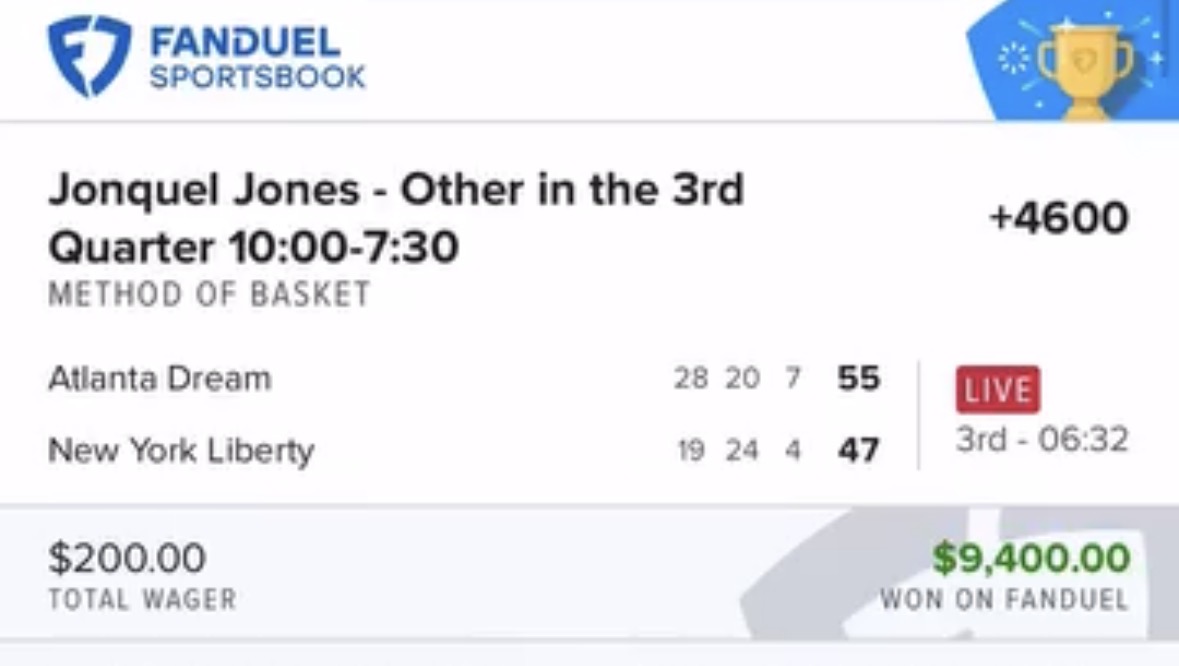
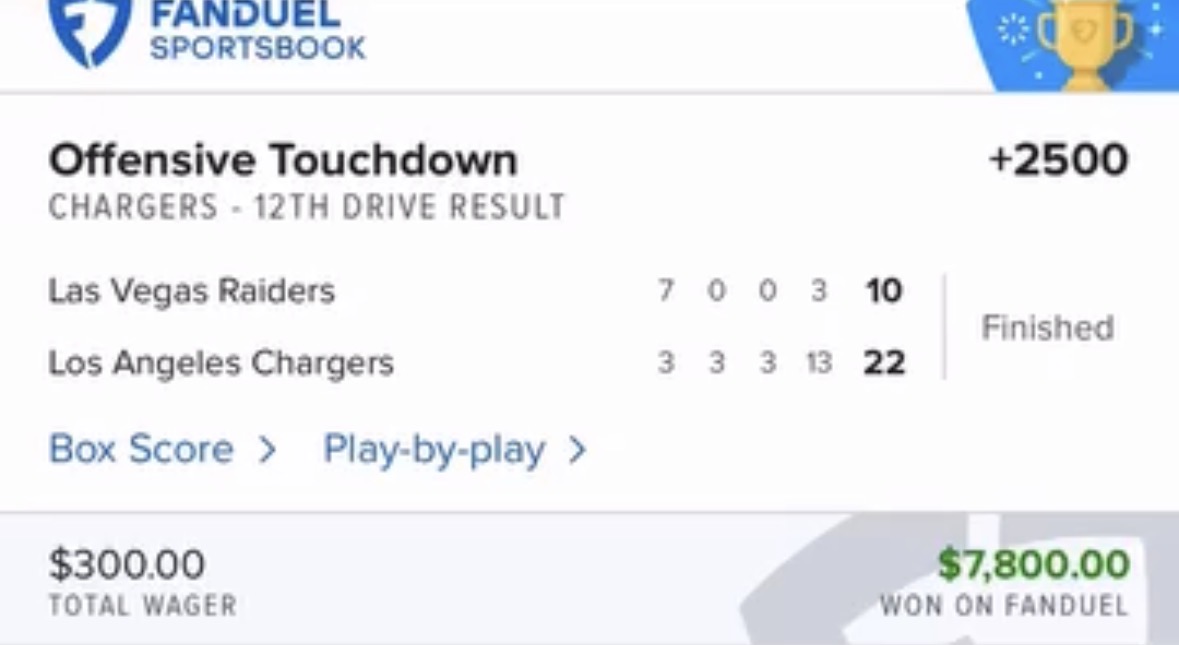
There is a toggle buried in every sportsbook app that decides what your bet slip does when a price moves between your tap and the book's confirmation, and almost nobody has looked at it. On a straight wager it is worth a few cents. On a parlay it is worth far more, because a parlay price is the product of its legs — five legs each drifting from -110 to -115 removes about 10 percent of the ticket's profit without a single leg being wrong. The reason it matters is not the size of the drift. It is the direction: the legs a book reprices during your confirmation are disproportionately the legs the market is already moving against, so accept-everything is not a neutral convenience setting. The Best Bet on Sports has been limited on all six major U.S. sportsbooks (FanDuel, DraftKings, Caesars, BetMGM, Fanatics, ESPN BET) for winning too much during in-game action, with a verified $367,520+ in profit since 2005, and holding all six accounts is the only reason we can compare how differently they each handle this.
Ask a bettor what price they got on last Sunday's parlay and most will tell you the number the app showed them when they were building it. That number is a quote, not a fill. What actually settled the ticket is whatever the price was at the instant the book accepted it, and the gap between those two things is governed by a setting most people have never opened.
The Three Behaviors, and Which One You Are On
Every major operator implements some version of the same three-way choice. The names differ and the defaults differ, but the behaviors are consistent:
Accept all odds changes. The slip confirms at whatever the price is when the wager reaches the book, in either direction. Nothing stops, nothing asks. This is the most common default, for obvious reasons — it produces the highest completion rate on bet placement.
Accept increases only. If the price improves, the book takes the bet at the better number. If it gets worse, the slip stops and asks you to reconfirm. This is the setting most bettors want and few have selected.
Ask me every time. Any movement in either direction halts the slip. Safest on price, worst on fill rate, and effectively unusable on live markets where something is always moving.
The first thing to do is find out which one your account is on, because it is very unlikely that you chose it. On a straight bet the consequence is small enough to ignore for years without noticing. On a parlay it is not.
Why a Parlay Amplifies Something a Straight Bet Absorbs
A traditional parlay's price is arithmetic. The book converts each leg to decimal odds and multiplies them. That is the entire calculation, and it is why the same ticket has to pay the same at any two books quoting the same legs — a point covered in full in why the same parlay pays differently at every sportsbook.
Multiplication is also why small drift stops being small.
Take a $100 ticket where every leg is priced at -110, and compare it to the same ticket after each leg has slipped to -115 — a half-step move, the kind that happens between two taps on a busy Sunday.
| Legs | Profit at -110 | Profit at -115 | Lost | Share of profit |
|---|---|---|---|---|
| 1 | $90.91 | $86.96 | $3.95 | 4.3% |
| 2 | $264.46 | $249.53 | $14.94 | 5.6% |
| 3 | $595.79 | $553.46 | $42.33 | 7.1% |
| 4 | $1,228.33 | $1,121.69 | $106.64 | 8.7% |
| 5 | $2,435.91 | $2,184.04 | $251.87 | 10.3% |
The single bet loses 4.3 percent of its profit. The five-leg version loses 10.3 percent from the identical per-leg move. Nothing about the drift changed — only the number of times it got multiplied.
And that assumes every leg moved. In practice one or two legs move and the rest hold, which produces a smaller number that is still several times what the same movement would have cost on a single wager.
The Part That Actually Matters: Drift Is Not Random
If repricing during confirmation were symmetrical — as likely to improve your number as to worsen it — the accept-all setting would be a genuine convenience with no cost, and this article would end here.
It is not symmetrical, for a structural reason.
A price moves during your confirmation window because something changed: money arrived on one side, a starting lineup posted, an injury note dropped, a correlated market moved and the book's pricing followed. Those events are not evenly distributed across your legs. They cluster on the legs that were already in motion — the ones being bet, the ones attached to a pending news item, the ones the market was in the process of repricing when you built your slip.
So the leg that gets caught by the confirmation delay is, on average, the leg where the market has just learned something. If you are on the side the market is moving toward, you eat the worse number. If you are on the side it is moving away from, you often get filled at your quote anyway because nothing had to change to accept you.
That is adverse selection at the confirmation step, and it is the same mechanism that governs which live wagers survive a book's acceptance delay — a diagnostic we walked through in why your live bet got rejected and what it tells you. Accept-all does not average out. It hands you the losing half of an asymmetric distribution and never shows you a receipt.
The Opposite Setting Has Its Own Bill
The obvious response is to set everything to "ask me every time" and be done with it. That works on pregame parlays and fails badly everywhere else.
On live markets, prices are in continuous motion by design. A setting that halts on any movement will halt on nearly every in-play wager you try to place, and the reconfirmation costs you the seconds that were the entire point of acting on the number. The window on an in-play price is measured in seconds to a couple of minutes, as covered in how fast you need to act on a live betting alert. Spending fifteen of them re-approving a two-cent move is not risk control. It is a different way to lose the bet.
There is also a quieter cost. Bettors who halt on every movement start re-evaluating the wager during the halt — deciding, in the two seconds while the dialog is up, whether they still like it. That is not price discipline. That is talking yourself out of positions at random, and it is one of the four leaks between a service's record and a subscriber's actual bankroll described in why your results won't match a pick service's record.
The Setting That Actually Fits Each Product
The correct answer is not one setting. It is different settings for different products, which is inconvenient, which is why almost nobody does it.
| Wager type | Recommended behavior | Why |
|---|---|---|
| Pregame straight bet | Accept increases only | Drift is small and there is no time pressure |
| Pregame parlay (2-3 legs) | Accept increases only | Compounding starts here and the window is not urgent |
| Pregame parlay (4+ legs) | Ask me every time | The multiplication is large enough to justify the friction |
| Live straight bet | Accept increases only | You need the fill; a halt costs the window |
| Live parlay | Accept increases only, with a pre-set tolerance | Halting is unworkable, so the discipline has to be decided beforehand |
| Boosted or promotional ticket | Ask me every time | Promotional pricing requotes on its own terms |
The last row deserves a note. Boosted parlays are frequently constructed so that the promotional price is contingent on the underlying legs, which means an underlying move can silently reduce a boost that was the only reason the ticket was worth building. The economics of those offers are broken down in parlay boosts and insurance: are they worth it, and the short version is that a boost that reprices is not the offer you evaluated.
The Live Parlay Case, Specifically
This is where the setting stops being housekeeping and becomes a real decision, because on a live parlay every leg is repricing continuously, and "accept increases only" will frequently be the only workable configuration.
Which means the discipline has to move out of the app and into your head before the wager exists. You decide, in advance, how much worse a price can be and still be worth taking — and then the app's job is only to execute, not to protect you.
That is a genuinely separate skill, and it is the subject of the number moved: do you still bet it. What belongs here is the narrower point: on a live parlay, the compounding runs in real time. Four legs added over three quarters, each entered at a slightly worse number than the one you saw, produces a ticket priced meaningfully below what you believed you were building. If you are stacking in-play legs across a game, as in live parlay in-game stacking from the first quarter, the drift accumulates across the whole construction rather than in one moment.
What This Is Not
Two clarifications, because this argument is easy to over-extend.
This is not the same as line shopping. Shopping compares prices across operators at the same instant. This is about one operator's price changing across a few seconds inside your own transaction. Both matter; they are unrelated problems with unrelated fixes.
This is not a grading issue. Nothing here concerns how the ticket settles once the games are played. Settlement is governed by the book's data feed and its revision rules, which is a separate exposure covered in your parlay is graded by a data feed, not by the game, and by push and void rules covered in what happens when a parlay leg pushes.
The setting discussed here does exactly one thing: it decides what price goes on the ticket. That is enough.
The Ninety-Second Version
Open your sportsbook apps. Find the odds-change behavior in the bet settings. Note what each one is currently set to — they will not all match, and at least one will surprise you. Move your pregame accounts to accept increases only. Leave live-capable accounts on accept increases only as well, and put the tolerance decision where it belongs, which is in your own rules rather than in a dialog box.
Then check the price on the settled ticket against the price you remember seeing. If those two numbers have been quietly disagreeing, you now know why, and the fix takes less time than building the parlay did.
Get Tonight's Live Picks
Want tonight's live in-game picks and parlays delivered to your phone via Email and Discord during the game — with the number you need and the window it lives in?
The Best Bet on Sports is the only live betting handicapping service limited on all six major U.S. sportsbooks (FanDuel, DraftKings, Caesars, BetMGM, Fanatics, ESPN BET) for winning too much during in-game action. Verified profit: $367,520+. Picks delivered via Email and Discord during games.
→ Get tonight's live picks: $199 first month — 1-Unit package, full live betting access → Try a free live pick first — reserve your spot for tonight's pick
More coverage at parlay picks, live betting picks, NFL picks, and our results.
Frequently Asked Questions
What does the accept odds changes setting actually do?
It tells the sportsbook what to do if the price on your bet slip moves between the moment you submit the wager and the moment the book accepts it. Accept-all confirms at whatever the new price is, in either direction. Accept-increases-only confirms automatically if the price improves and stops to ask you if it worsens. Ask-me-every-time halts on any movement at all. Most accounts are on accept-all because that is the common default, not because the bettor chose it.
Why does an odds change hurt a parlay more than a straight bet?
Because a parlay's price is the product of its legs rather than a sum. Each leg's price is converted to decimal odds and multiplied, so a small worsening on each leg is multiplied together rather than added. On a $100 five-leg ticket, every leg moving from -110 to -115 cuts the profit from $2,435.91 to $2,184.04 — a loss of $251.87, or 10.3 percent. The same per-leg move on a single wager costs 4.3 percent.
Is the price just as likely to move in my favor?
No, and this is the part that makes the setting matter. Prices move during your confirmation window because information arrived — money on one side, a lineup posting, an injury note, a correlated market repricing. Those events cluster on legs that were already in motion, which means the legs caught by the delay are disproportionately the ones the market is moving against you. Accept-all does not average out over time; it exposes you to the worse half of an asymmetric distribution.
Should I set every account to ask me before every change?
Not for live betting. In-play prices move continuously, so a setting that halts on any movement will halt on nearly every live wager, and the reconfirmation burns the seconds that made the number worth taking. Ask-me-every-time is well suited to large pregame parlays, where the compounding is significant and there is no time pressure. On live markets, accept-increases-only with a tolerance you decided in advance is the workable configuration.
Does this affect boosted parlays differently?
Yes. Promotional pricing is usually contingent on the underlying legs, so a move in an underlying market can reduce or remove the boost that was the reason to build the ticket in the first place. Because the boost was the entire case for the wager, a silently repriced version is a different bet than the one you evaluated. Boosted tickets are the strongest argument for the ask-me setting.
Is this the same thing as line shopping between sportsbooks?
No. Line shopping compares different operators' prices at the same moment and is a separate discipline. This is about a single operator's price changing across the few seconds inside your own transaction. A bettor can shop perfectly across six books and still surrender a meaningful share of a parlay's profit to confirmation drift at whichever book they chose.
How do I check what price my ticket actually settled at?
Open the settled wager in your bet history rather than relying on what the slip showed while you were building. The bet history records the accepted price, which is the only one that mattered. Comparing that number to the one you remember seeing, across a few weeks of tickets, tells you immediately whether your account has been confirming at drifted prices — and how much it has cost.
The Best Bet on Sports · 1.5M followers on TikTok
Sports Betting TikTok is the live betting account behind The Best Bet on Sports, covering NFL, NCAAF, NBA, NCAAB, MLB and WNBA markets in real time. The account has been limited on all six major U.S. sportsbooks — FanDuel, DraftKings, Caesars, BetMGM, Fanatics and ESPN BET — for winning on live betting, with $367,520 in verified profit since 2005. View full profile →
Past results do not guarantee future performance. Must be 21 or older to wager.
Related Articles
You Hit a Big Parlay: How Long Will You Keep It?
First Half Over, Game Under: The Parlay That Fights Itself
Lead at Halftime and Win: What That NFL Parlay Pays
The Last Two Minutes Kill More Parlays Than Bad Picks Do
4-of-5 Again: Was Your Parlay Unlucky or Badly Built?
College Football Round Robin Strategy: The 3-of-5 Line
Get real live betting picks
From $39.95/mo · Cancel anytime · Email + Discord delivery
● Get The Picks
Choose your package
Tap any tier below to select · Subscribe in one tap
👇 Tap any package to select it
✓ You're selecting
25 Units · $99.95/month
25 unit picks per month. Sweet spot for most bettors — plenty of action without going all-in.
- ✓25 live betting selections/month
- ✓Email + Discord delivery
- ✓All sports (NFL, NCAAF, NBA, NCAAB, MLB)
- ✓Mix of 1, 2, 3, 5-unit rated plays
- ✓Cancel anytime
Secure PayPal · Cancel anytime · No hidden fees · 21+ · +$367K verified
+$367,520 verified · Limited on 6 sportsbooks · 20 years documented · See Proof
Join Our Newsletter
Get free expert sports picks and analysis delivered weekly.