Same-Game Parlay Strategy for College Football

College football same-game parlays fail for a reason specific to the sport: the talent gap between teams is far wider than in the NFL, and that turns the correlations an SGP depends on into liabilities once a game gets out of hand. Building one well means picking games where the script holds, not games you think you can predict.
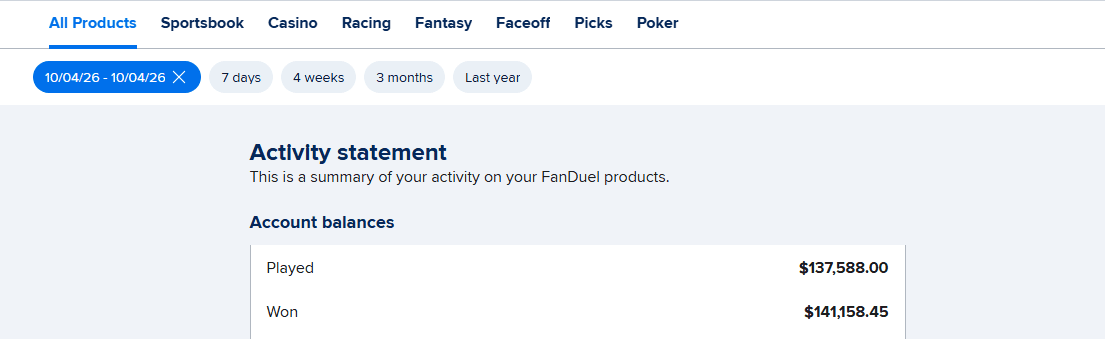
A college football same-game parlay is not an NFL same-game parlay played by younger athletes — it is a structurally different bet, because the talent gap between two college teams can be enormous in a way it never is in the NFL, and that gap is what breaks the correlations an SGP is built on. The Best Bet on Sports has built a verified profit of $367,520+ over more than twenty years — enough that all six major U.S. sportsbooks have limited our accounts — and the single most common way we see bettors lose college football SGPs is by correctly predicting the outcome and still losing the ticket. A team wins by 38, the starting quarterback watches the fourth quarter from the sideline, and the passing-yards leg that was supposed to be correlated with the blowout dies because of the blowout.
Here is how the correlation math actually works in college football, which leg pairings survive it, and where the sport's structure creates opportunity rather than just risk.
What Makes a College Football Same-Game Parlay Different?
A same-game parlay works by stacking legs from one game so that they rise and fall together. In a two-leg SGP where the outcomes are genuinely linked — a team covering a spread and its running back going over a rushing total, for instance — the book has to shorten your payout because the legs are not independent events. You accept a worse price in exchange for a bet that only requires one story to come true instead of two unrelated ones.
That trade is reasonable when the story is stable. In the NFL, it usually is. The talent distance between the best and worst NFL rosters is real but bounded, most games stay within two scores into the second half, and starters play until the outcome is genuinely decided. The script you bet on tends to be the script that runs. That stability is also what makes carrying a Saturday leg into Sunday more expensive than it looks — the college half of the ticket settles long before the NFL half is priced.
College football does not offer that. Spreads of 24, 31, and 38 points exist on ordinary Saturdays, particularly in non-conference scheduling and in conferences with wide internal talent gaps. When a game is decided by the middle of the third quarter — which happens far more often than in the NFL — every remaining minute is played by people whose statistics you did not bet on.
That single structural fact should drive how you build the ticket.
Why Do Big Spreads Break Correlation?
The intuitive college football SGP is: heavy favorite covers, favorite's quarterback goes over his passing yards, favorite's top receiver goes over his receptions. Those feel like the same story. They are not.
The favorite covering a large number usually requires the game to become lopsided early. But the more lopsided it becomes, the sooner the coaching staff protects its starters. The quarterback whose passing total you bet leaves in the third quarter. The receiver's targets go to a freshman. The offense stops throwing entirely and runs the ball to end the game, which also suppresses total plays.
So the leg that produces the cover is actively hostile to the legs that depend on individual production. This is negative correlation dressed up as positive correlation, and it is the defining trap of college football SGP building. In the NFL the same effect exists, but it bites in the fourth quarter of a three-score game. In college football it can bite in the third quarter of a five-score game, and five-score games are routine.
The practical implication: in a college football SGP, the size of the spread is a leg in itself, whether or not you bet it. A 6-point game supports player-production legs across four quarters. A 30-point game does not.
Which College Football SGP Correlations Actually Hold?
Not all of them break. The ones that survive share a property — they resolve early, or they do not depend on a specific individual staying on the field.
| Leg pairing | Correlation strength | Why it holds or breaks |
|---|---|---|
| Favorite's team total over + favorite moneyline | Strong, holds | Points can accumulate with backups on the field; no individual dependency |
| First-half spread + first-half total over | Strong, holds | Resolves before substitution patterns change |
| Large spread cover + starting QB passing over | Weak, frequently inverts | The cover causes the benching that kills the passing leg |
| Underdog +points + game total under | Moderate, holds | A slow, close, low-possession game serves both |
| Favorite RB rushing over + favorite covering | Moderate, situational | Late run-out-the-clock carries help — but only if the back is still in |
| Game total over + both team totals over | Strong but heavily shortened | Genuinely correlated, so the book prices most of the value out |
| Star player anytime TD + team blowout win | Weak | Early scoring often ends his day before a second chance |
The pattern is that event-based legs survive substitution and volume-based legs do not. A team total is an event-based leg — points count no matter who scores them. A quarterback's passing yardage is a volume-based leg, and volume is exactly what a coaching staff withdraws when the game stops being competitive.
If you want production legs from individual players, the game has to stay close. That means you are not betting a blowout, and you should stop building tickets that quietly assume one.
How Many Legs Should a College Football Same-Game Parlay Have?
Two or three. This is a tighter cap than we would apply to an NFL same-game parlay, and the reason is variance, not pessimism.
College football carries more outcome variance than any other major American sport we cover. Rosters turn over faster because of graduation and the transfer portal. Week-to-week performance is less stable because young players are less consistent than professionals. Motivation and preparation vary in ways they simply do not at the NFL level, where every team is a professional operation playing a sixteen-game-plus season.
More variance in the underlying events means each additional leg costs you more than the equivalent leg in a more stable sport. Our general guidance on leg count applies here with the dial turned down: if the standard advice is that most bettors should be at two to four legs, college football belongs at the bottom of that band.
A three-leg college football SGP where the legs share one coherent, stable story is a defensible bet. A six-leg SGP built from player props in a game with a 27-point spread is a lottery ticket with a house edge compounded six times, and the reasons most parlays lose apply with extra force in a sport this volatile.
Are College Football Prop Markets Priced Worse Than NFL Props?
Generally, yes — and this cuts in both directions.
College football has more than 130 FBS programs. No book can price every player prop in every game with the precision it applies to a sixteen-game NFL Sunday. The result is wider margins, lower limits, and slower reactions to information on the games nobody is watching. That is a genuine inefficiency.
But wider margins are also a cost. A prop priced with a fat margin is a prop you are paying more to bet, and stacking several of them into one SGP means paying that inflated margin multiple times over on a single ticket. The inefficiency that makes an individual college prop occasionally beatable is the same inefficiency that makes a stack of them expensive.
The reconciliation is straightforward: college football prop softness is best exploited in isolated single bets, not stacked into parlays. When you find a genuinely mispriced number in a game a book has not looked at closely, bet it by itself at a real stake. Do not bury it as one leg in a six-leg ticket where the other five legs give the margin back.
Low limits are the other half of this. When you find a soft college number, the book will often let you bet a fraction of what it would accept on an NFL game. That is a constraint worth building around and one that matters more the better you get — which is a version of the same dynamic that leads books to limit consistently winning bettors outright.
Where Does Live Entry Change the Math?
This is where college football stops being a problem and starts being an advantage.
The sport's defining pre-game weakness — you cannot know how long starters will play, how a young quarterback will handle his first road environment, or whether a 24-point spread reflects reality — dissolves once the game begins. Twenty minutes into a college football game you know things that were genuinely unknowable at kickoff: the actual tempo, whether the underdog can move the ball, whether the favorite's offensive line is winning, and whether the game is going to stay competitive long enough for production legs to survive.
Live college football markets also reprice violently. A single explosive play in a sport that produces a lot of them can swing a live total by several points. Books running hundreds of concurrent Saturday games cannot watch every one closely, which means live college numbers are frequently slower and looser than live NFL numbers.
The practical version: build the SGP after kickoff, not before. Let the first quarter tell you whether this is a competitive game that supports player-production legs or a blowout that only supports team totals and sides. That information costs you some price — the live number will have moved — but it removes the exact uncertainty that kills pre-game college football tickets. This is the core of why live betting produces an edge that pre-game picks cannot.
What About Round Robins Instead?
When your read on a game is good but your confidence in any individual leg is moderate, a round robin is often the better structure than a straight same-game parlay — for the same reason it works in other unstable-input situations. A three-leg SGP pays nothing if one leg misses. Three two-leg combinations from the same three selections still return something when one of the three fails.
You pay for that with a lower ceiling. In college football, where a single injury, a weather delay, or a coaching staff's decision to empty the bench can kill one leg for reasons having nothing to do with your handicapping, buying protection against exactly one miss is usually worth the reduced upside.
A Practical Build Checklist
Before you place a college football same-game parlay, run these five checks:
1. What is the spread? Above roughly 17 points, drop all volume-based player legs. The game may not have four competitive quarters in it. 2. Do my legs share one story or three? If each leg requires a separate thing to be true, this is a parlay with extra steps, not a same-game parlay. 3. Does any leg depend on a specific player finishing the game? If so, the ticket is betting on a coaching decision you have no information about. 4. Am I stacking multiple soft-margin college props? If yes, unstack them and bet the best one straight. 5. Would this be a better bet twenty minutes into the game? In college football the answer is usually yes.
Any bet you place should also fit a stake plan you set in advance rather than a number that feels right in the moment — the framework in our bankroll management guide applies to SGPs the same way it applies to straight bets, and arguably more so given the higher variance.
We go deeper on the related market in best college football parlays for Saturday. If you would rather spread the risk across several games than stack it inside one, the round robin is the structure built for that trade-off — see college football round robin strategy and the 3-of-5 line.
Get Tonight's Live Picks
Want tonight's live in-game parlay and picks delivered to your phone via Email and Discord during the game?
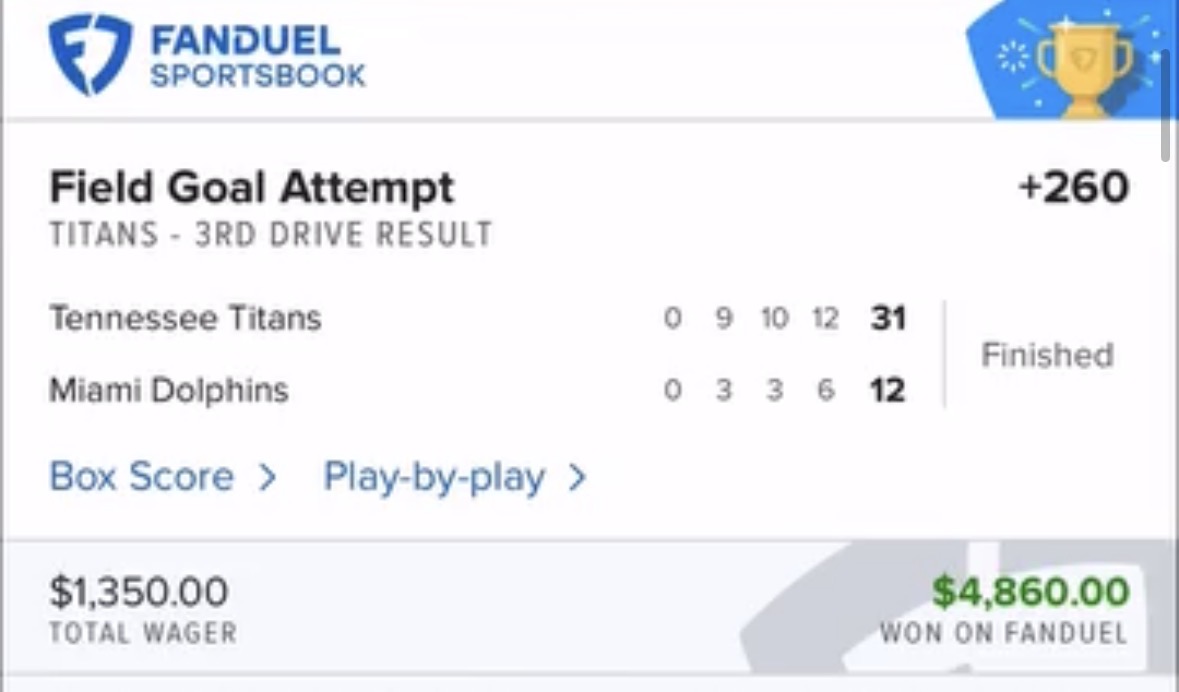
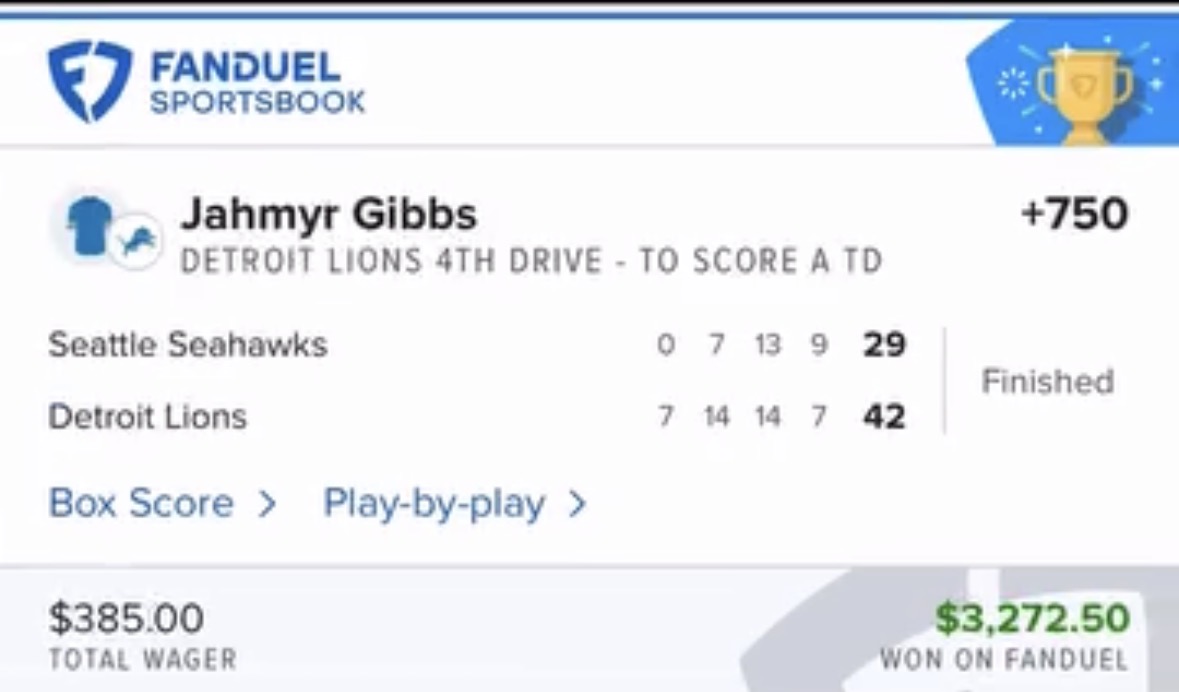
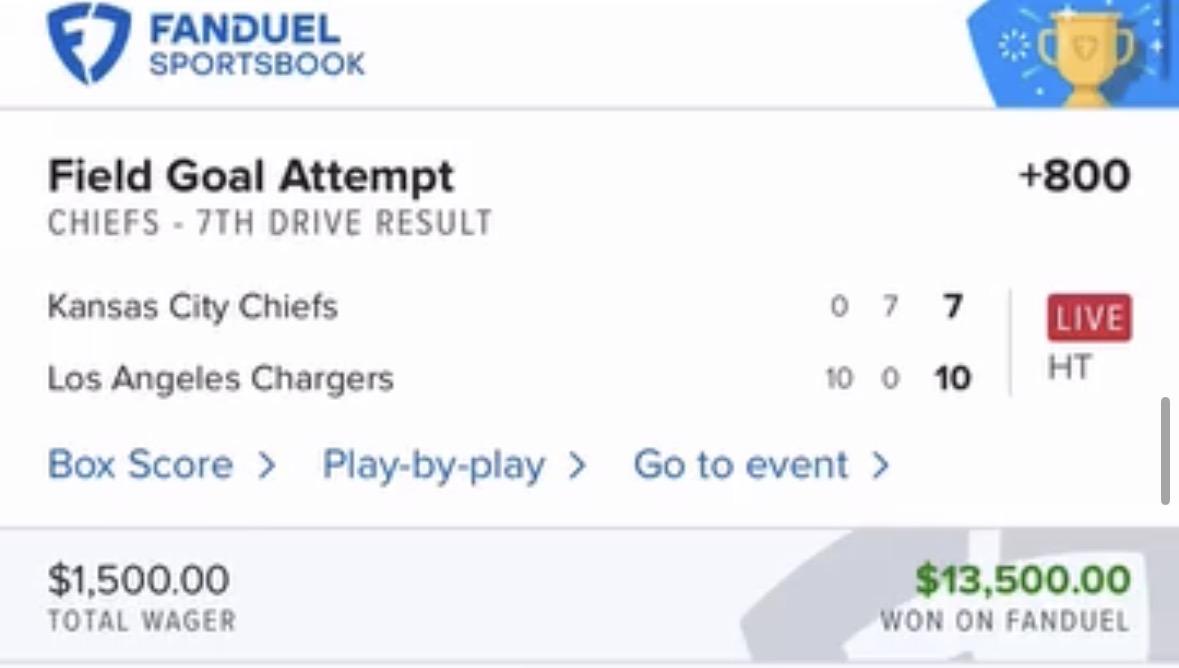
The Best Bet on Sports is the only live betting handicapping service limited on all six major U.S. sportsbooks (FanDuel, DraftKings, Caesars, BetMGM, Fanatics, ESPN BET) for winning too much during in-game action. Verified profit: $367,520+. Picks delivered via Email and Discord during games.
→ Get tonight's live picks: $199 first month — 1-Unit package, full live betting access → Try a free live pick first — reserve your spot for tonight's pick
Frequently Asked Questions
What is a same-game parlay in college football?
A same-game parlay combines multiple bets from a single college football game into one ticket, where every leg must hit for the bet to pay. Because the legs come from the same game they are statistically related, so the sportsbook adjusts the payout downward to account for that relationship. The appeal is that you only need one game to unfold the way you expect rather than several unrelated games, which is why it is the most popular parlay format offered on college football.
Why do college football same-game parlays lose more often than NFL ones?
The talent gap between college teams is far wider than in the NFL, which produces frequent blowouts, and blowouts destroy the correlations these tickets rely on. When a favorite pulls away, coaching staffs remove starters to protect them, so player-production legs like passing yards and receptions stop accumulating in exactly the games where the side and total legs are winning. The result is a ticket that predicted the game correctly and still lost.
How many legs should a college football same-game parlay have?
Two or three. College football carries more outcome variance than the NFL because of roster turnover, transfer-portal movement, and the natural inconsistency of young players, so every additional leg costs more in expected value than the equivalent leg in a more stable sport. Tickets of five or more legs in this sport are lottery tickets with the house edge compounded once per leg.
Which same-game parlay correlations work in college football?
Event-based correlations survive; volume-based ones do not. A team total combined with that team's moneyline holds, because points count regardless of who is on the field. A first-half spread combined with a first-half total holds, because it resolves before substitutions begin. Pairings that depend on a specific player accumulating statistics across four quarters break most often, since the outcome that wins the side leg is usually what removes that player from the game.
Are college football player props easier to beat than NFL props?
Individual college props are often priced with wider margins and lower limits because no sportsbook can price more than 130 FBS programs with NFL-level precision. That inefficiency is real, but it is best exploited by betting a mispriced number as a single wager. Stacking several wide-margin props into one same-game parlay means paying that inflated margin multiple times on a single ticket, which gives the advantage back.
Should you build a college football SGP before kickoff or during the game?
During the game, in most cases. The information that determines whether a college football ticket survives — actual tempo, whether the underdog can move the ball, whether the game stays competitive long enough for production legs to matter — is genuinely unknowable at kickoff and largely visible by the end of the first quarter. Live entry costs you some price but removes the uncertainty that causes most pre-game college tickets to fail.
Is a round robin better than a same-game parlay for college football?
Often, yes. A round robin splits your selections into smaller overlapping combinations, so a single missed leg reduces the return instead of eliminating it. In a sport where one injury, one weather delay, or one coaching decision to empty the bench can kill a leg for reasons unrelated to your handicapping, buying protection against exactly one miss is usually worth the lower ceiling.
The Best Bet on Sports · 1.5M followers on TikTok
Sports Betting TikTok is the live betting account behind The Best Bet on Sports, covering NFL, NCAAF, NBA, NCAAB, MLB and WNBA markets in real time. The account has been limited on all six major U.S. sportsbooks — FanDuel, DraftKings, Caesars, BetMGM, Fanatics and ESPN BET — for winning on live betting, with $367,520 in verified profit since 2005. View full profile →
Past results do not guarantee future performance. Must be 21 or older to wager.
Related Articles
College Football Round Robin Strategy: The 3-of-5 Line
Why Your Sportsbook Keeps Recommending Parlays
First Half Over, Game Under: The Parlay That Fights Itself
Lead at Halftime and Win: What That NFL Parlay Pays
Can You Parlay a Game That Already Started? The Mixed-Ticket Problem
Your Parlay Leg Moved After You Bet It. Here's What That's Worth.
Get real live betting picks
From $39.95/mo · Cancel anytime · Email + Discord delivery
● Get The Picks
Choose your package
Tap any tier below to select · Subscribe in one tap
👇 Tap any package to select it
✓ You're selecting
25 Units · $99.95/month
25 unit picks per month. Sweet spot for most bettors — plenty of action without going all-in.
- ✓25 live betting selections/month
- ✓Email + Discord delivery
- ✓All sports (NFL, NCAAF, NBA, NCAAB, MLB)
- ✓Mix of 1, 2, 3, 5-unit rated plays
- ✓Cancel anytime
Secure PayPal · Cancel anytime · No hidden fees · 21+ · +$367K verified
+$367,520 verified · Limited on 6 sportsbooks · 20 years documented · See Proof
Join Our Newsletter
Get free expert sports picks and analysis delivered weekly.