Second-Half Spread Parlays: Leverage Is Not Size

A second-half spread is not a smaller version of the full-game number. It is generated in about ten minutes by a live pricing engine, it carries a fraction of the limit, and its distribution sits on different key numbers. Most bettors parlay second-half sides because the limits are too low to bet what they want — and a parlay is a leverage instrument, not a size instrument, so it does the opposite of what they intended.
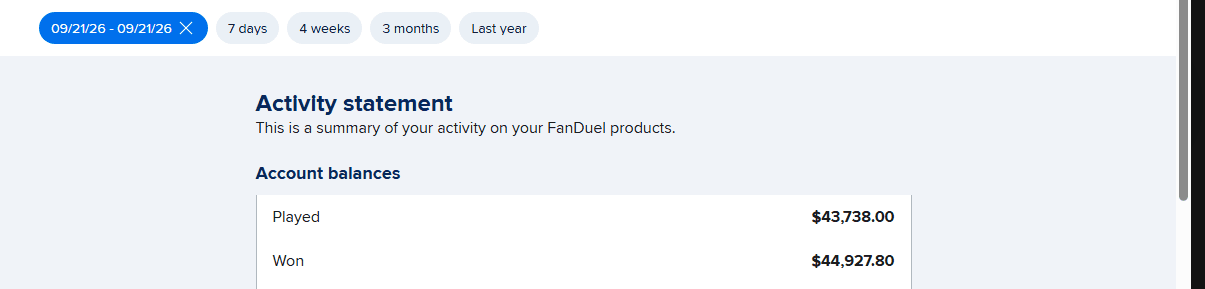
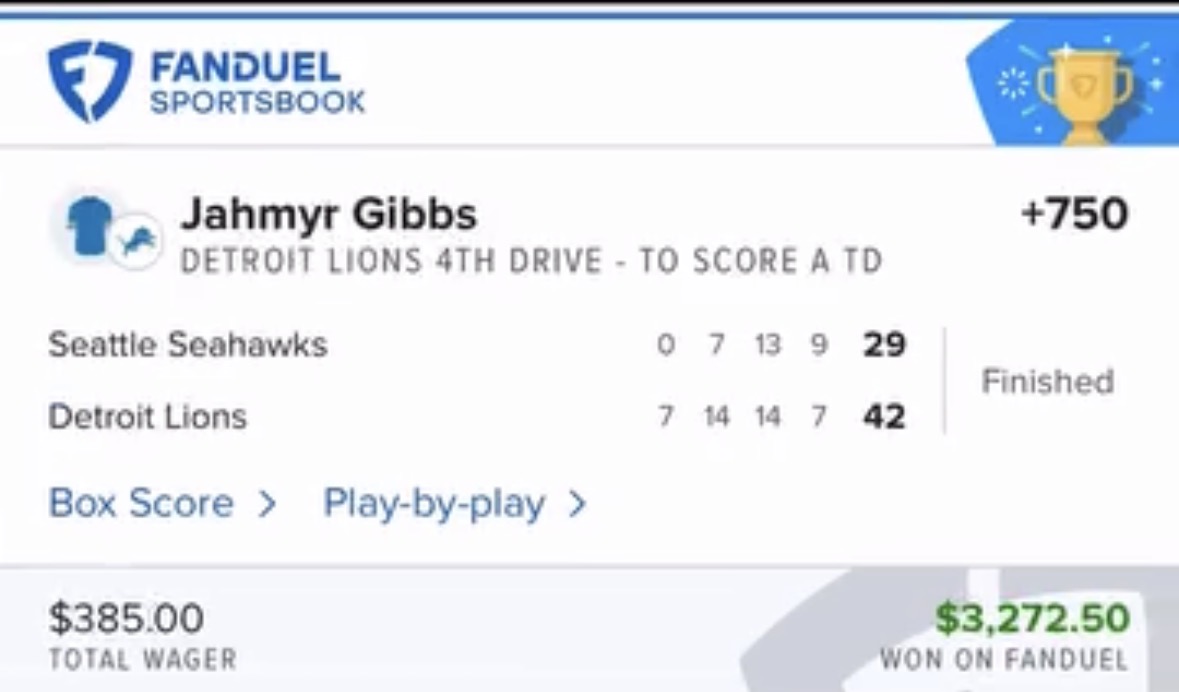
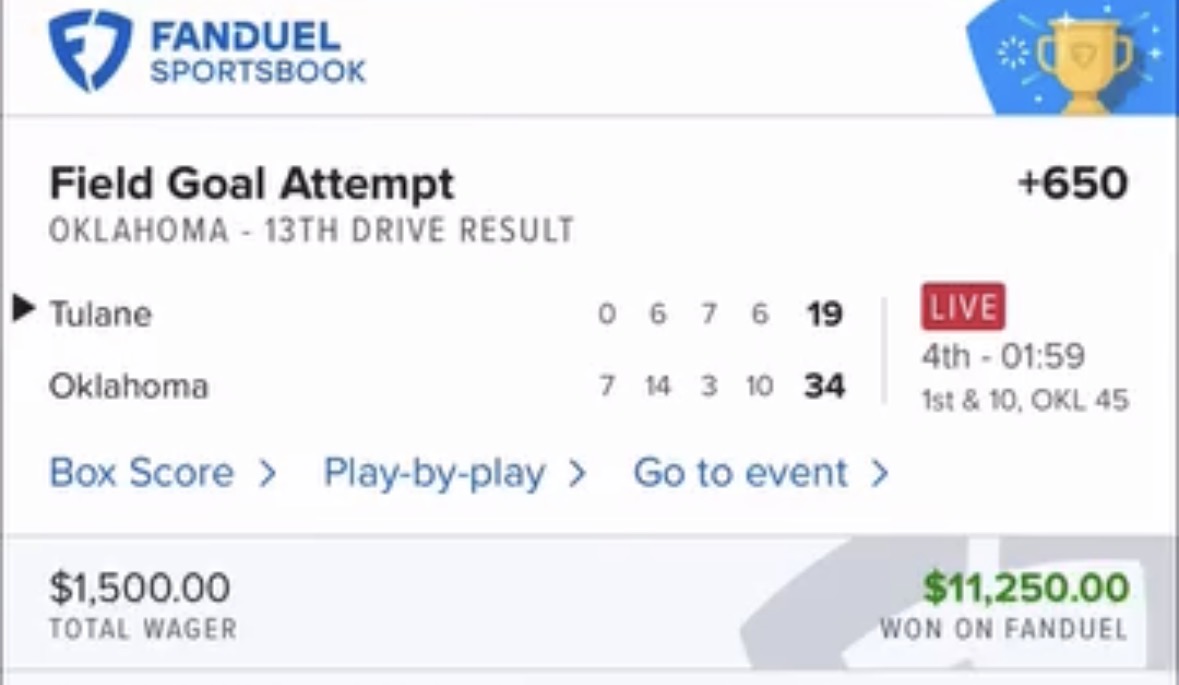
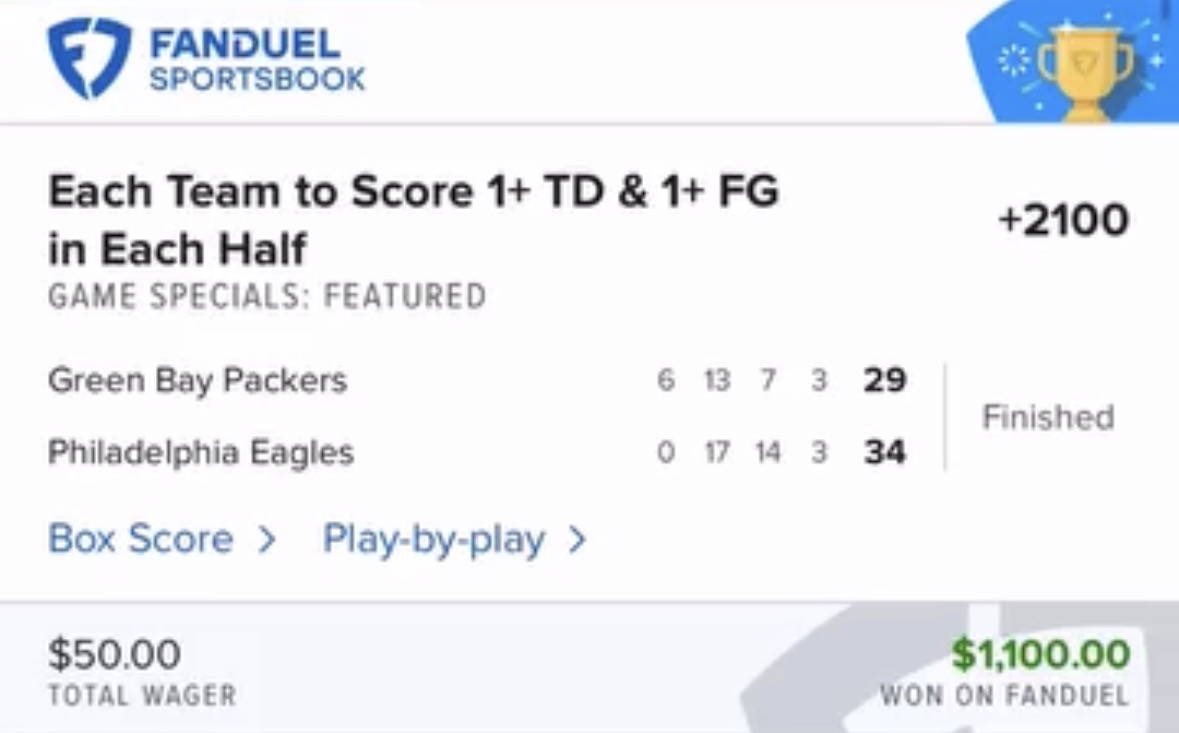
Every football season, the same sequence plays out on thousands of accounts. A bettor watches a first half, forms a strong opinion about the second half, pulls up the halftime spread, and discovers the maximum wager is a fraction of what they bet pregame. So they build a parlay — two or three second-half sides, one ticket, one big number at the bottom of the slip. That instinct is understandable and structurally backwards. A parlay is a leverage instrument, not a size instrument, and reaching for one to solve a limit problem reduces your exposure to the number you actually liked. The Best Bet on Sports has worked in-play markets for more than twenty years with a verified $367,520+ in profit across all sportsbooks, and the low limits are not an obstacle to route around. They are the receipt.
This article is about football second-half spreads specifically — the number posted at halftime for the remaining two quarters. It is not about live parlays in general, which are covered in the live parlay strategy guide, and it is not about NBA second-half betting, which runs on different clock and pace assumptions and is handled in our NBA second-half live betting breakdown.
What a Second-Half Spread Actually Is
A full-game spread is the output of a week of work. A number gets posted early, professional money hits it, the book adjusts, injury reports land, the public arrives on Friday and Saturday, and by kickoff that price has absorbed more scrutiny than almost any number in finance gets in the same window. It is not perfect. But it has been argued with, repeatedly, by people with money at stake.
A second-half spread has none of that history. It is produced by an automated in-play model in the minutes after the second-quarter clock hits zero, from the current score, the pregame team ratings, possession, timeouts, and whatever adjustments the operator has coded for. Then it is posted, and it is live for roughly the length of a halftime show.
Two consequences follow from that, and they point in opposite directions.
The Halftime Number Is Softer — and Smaller
The softness is real. A number that has existed for ten minutes has been shopped by almost nobody. There is no week of accumulated correction sitting inside it, and the model that produced it is working from a pregame prior that may already be wrong — a team that is being physically overwhelmed at the line of scrimmage looks, to a scoring-and-possession model, roughly like a team that has had bad luck.
The smallness is equally real, and it is the part bettors underweight. In-play maximums are a fraction of pregame maximums on the same game, because an operator taking a wager on a live number is taking it on a price it cannot fully defend and cannot easily lay off. We covered the mechanics of that in live betting limits, and it is worth internalizing before you build anything: on most books, on most games, a second-half spread is one of the smaller maximums on the entire board.
So you have a number you like more than usual, and permission to bet less than usual. That tension is where the parlay instinct comes from, and it is worth naming honestly, because the instinct is not stupid. It is a rational response to a constraint. It is simply aimed at the wrong instrument.
Half the Game Is Not Half the Distribution
Before the parlay question, one thing about the number itself.
Full-game football spreads live on a well-known landscape. Margins cluster at three and seven for structural reasons, and everyone who prices football knows it. A second-half spread compresses that landscape without eliminating it. You are pricing two quarters instead of four, so the range of plausible second-half margins is narrower, and a much larger share of the whole distribution sits within a field goal of the number.
That has a direct pricing consequence: the same half-point is worth proportionally more on a second-half line than on a full-game line. A hook on a full-game number moves you across some part of a wide distribution. A hook on a second-half number moves you across part of a compressed one, where the density is higher. Bettors who have trained themselves to shrug at half-points on Sunday morning are frequently giving away more than they realize at 2:15.
Zero also matters more. Second-half spreads sit at or near pick'em far more often than full-game spreads do, and a second-half tie is not an exotic outcome — it is a common one. If you are parlaying, that matters, because a pushed leg does not lose the ticket, it removes the leg and recalculates, which quietly changes the payout you thought you locked. The full mechanics of that are in what happens when a parlay leg pushes.
A Parlay Is Leverage, Not Size
Here is the core of it.
Suppose a book allows $500 on second-half spreads. You like two of them and you want $2,000 of action. You cannot have it. So you build a two-leg parlay for $500 and tell yourself you have solved the size problem, because the potential return is now roughly $1,800 instead of roughly $455.
You have not solved the size problem. You have changed the shape of it.
| Approach | Tickets | Total at risk | Exposure to your best number | Wins if |
|---|---|---|---|---|
| Straight bet, best side only | 1 | $500 | $500, unconditional | that side covers |
| Straight bets, both sides | 2 | $1,000 | $500 each, independent | either, separately |
| Two-leg parlay | 1 | $500 | $500, contingent on the other leg | both cover |
Read the third column. In the parlay, your exposure to the number you liked most did not increase. It became conditional on a second event you liked less. You have taken a $500 position and made it worse, then compensated yourself with a bigger headline payout.
The per-leg arithmetic makes this concrete, and it is less intuitive than most parlay criticism. Parlaying two standard-priced legs does not change the win rate each leg needs to break even — that number stays right around 52.4% either way. What changes is how often a ticket cashes at all:
| Legs | Break-even win rate per leg | Ticket hit rate if each leg wins 55% | Typical gap between winning tickets |
|---|---|---|---|
| 1 | 52.4% | 55.0% | Under two bets |
| 2 | 52.4% | 30.3% | About three bets |
| 3 | 52.4% | 16.6% | About six bets |
| 4 | 52.4% | 9.2% | About eleven bets |
A bettor with a real 55% second-half edge and a $500 ceiling makes money slowly and reliably on straight bets. The same bettor on four-leg tickets is now waiting roughly eleven tickets between wins, on a market that offers a handful of opportunities per weekend. That is not a strategy with a bad expectation so much as a strategy that requires a season and a half of Sundays to tell you anything at all. Related reasoning on why leg count is the wrong dial to turn is in how many legs should a parlay have and why most parlays lose.
The Timing Problem Nobody Mentions
There is a second, more mechanical objection, and it applies specifically to multi-game second-half parlays.
Games in the same window do not reach halftime at the same moment. A 1:00 p.m. NFL window has games hitting the break anywhere from about 2:00 to 2:25, depending on scoring, timeouts, and replay. A college Saturday is worse — start times are staggered on purpose.
To parlay two second-half spreads across two games, both halftime markets must be open at the same instant. If the first game reaches the break at 2:02 and the second at 2:21, you have two options. Wait for the second, and the first game's third quarter has kicked off — that market is gone. Or take the first one straight, which was the correct answer to begin with.
What actually happens in practice is the third option: bettors build the parlay from whatever pair of games happens to be at halftime simultaneously. The slate selects the legs. You do not. Every argument for the ticket was constructed after the availability was determined, which is exactly backwards from how a position should be built, and it is a close cousin of the ticket-construction problem described in parlay ticket overlap.
Worth adding, without asserting anything about a specific operator: in-play parlay availability varies considerably by book, and some restrict or reprice in-play multi-leg tickets in ways that are not obvious from the slip. Read your book's rules before you plan around the product.
What a Second-Half Parlay Is Actually Good For
This is not a blanket argument against the ticket, and it would be dishonest to pretend the instrument has no use.
A second-half parlay is a reasonable choice in exactly one situation: when you want deliberate leverage on a small stake, and you have accepted the hit rate that comes with it. If you are risking an amount you would be indifferent to losing, and the entire point is the possibility of a large return, the parlay is the correct instrument and the criticism above does not apply. You are not trying to get size down. You are trying to buy variance, and it is for sale.
The failure mode is only the substitution — reaching for leverage while believing you have reached for size. Those are different goals and the same ticket serves only one of them.
There is also a correlation case within a single game. A second-half side and a second-half total in the same game are not independent, and a book pricing them as though they were is a real, occasional opportunity. That is a different argument from stacking sides across games, and it is developed in correlated parlays explained.
The Part That Connects to the Limit
Notice what the entire limit problem implies. Second-half maximums are low because operators know the number is defensible for about ten minutes and no longer. They are protecting a price they have not had time to argue with.
That protection scales. A bettor who consistently takes the right side of ten-minute-old numbers does not stay at the standard maximum. The ceiling drops, and then it drops again, and eventually the account is restricted to amounts that make the market unusable. The Best Bet on Sports has been through that on all six major U.S. sportsbooks — the restriction is the market's own assessment of what happens when someone works in-play numbers well, and it is the reason our football handicappers page leads with limitation rather than a win-rate claim.
That is also why the honest advice here is unglamorous. Bet the second-half number you actually like, at the size the book allows, on the side you would take at that price if no other game existed. Do it repeatedly. The ceiling will tell you soon enough whether you are right.
Get Tonight's Live Picks
Want tonight's live in-game picks and second-half positions delivered to your phone via Email and Discord during the game?
The Best Bet on Sports is the only live betting handicapping service limited on all six major U.S. sportsbooks (FanDuel, DraftKings, Caesars, BetMGM, Fanatics, ESPN BET) for winning too much during in-game action. Verified profit: $367,520+. Picks delivered via Email and Discord during games.
→ Get tonight's live picks: $199 first month — 1-Unit package, full live betting access → Try a free live pick first — reserve your spot for tonight's pick
More coverage at football betting picks, NFL spread picks, live betting picks, daily sports betting picks, and our results.
Frequently Asked Questions
What is a second-half spread in football betting?
It is the point spread posted at halftime covering only the third and fourth quarters, with the first-half score wiped to zero. It is generated by an automated in-play pricing model in the minutes after the second quarter ends, using the current score, the pregame team ratings, possession and game state. Unlike a full-game spread, it has not been shopped, argued with, or corrected by a week of market money — it is a fresh number with a very short shelf life.
Why are second-half betting limits so much lower than pregame limits?
Because the operator is quoting a price it has had minutes rather than days to build, and cannot easily hedge. A pregame number has absorbed a week of professional and public money, which is a form of quality control the book benefits from. A halftime number has absorbed none of it, so the book protects itself with size rather than with accuracy. On most books, on most football games, in-play spreads carry some of the smallest maximums on the board.
Does parlaying second-half spreads let me bet more than the limit allows?
No, and this is the central misunderstanding. A parlay increases the potential payout on a single stake, not your exposure to any individual number. If a book caps you at $500 on a second-half side, a $500 two-leg parlay still puts $500 at risk — but now that $500 only pays if a second game you liked less also cooperates. Your position on your best number got worse, not bigger. A parlay is a leverage instrument, not a size instrument.
Do I need a higher win rate to profit from parlays than from straight bets?
Per leg, no — the break-even rate on standard-priced legs stays around 52.4% whether you bet them singly or stack them. What collapses is how often a ticket cashes. At a 55% per-leg win rate, a single bet wins 55% of the time, a two-leg ticket 30%, and a four-leg ticket about 9%. On a market that offers only a few second-half opportunities each weekend, that hit rate means many months can pass before results tell you anything useful about the process.
Are half-points more important on second-half lines than full-game lines?
Yes, proportionally. A second half compresses the range of plausible margins, so a larger share of all outcomes sits within a field goal of the number. Moving across a half-point in that compressed distribution crosses more probability than the same half-point does on a full-game line. Ties are also far more common at or near a second-half pick'em, which matters for parlays because a pushed leg drops out and recalculates the payout you thought you had locked.
Can I parlay second-half spreads from two different games in the same window?
Only when both halftime markets happen to be open at the same moment, which is less often than people assume. Games in a shared window reach the break at staggered times, so waiting for a second game usually means the first game's second half has already kicked off and that market is gone. The practical result is that the schedule chooses your legs rather than you choosing them — the reasoning gets built after the availability, which is backwards.
Is there ever a good reason to bet a second-half parlay?
Two. First, when you deliberately want leverage on a stake you are comfortable losing and have accepted the low hit rate — buying variance is a legitimate goal, just a different one from getting size down. Second, when the legs are genuinely correlated inside a single game, such as a second-half side and a second-half total, and the book has priced them as though they were independent. Stacking unrelated sides across separate games satisfies neither condition.
The Best Bet on Sports · 1.5M followers on TikTok
Sports Betting TikTok is the live betting account behind The Best Bet on Sports, covering NFL, NCAAF, NBA, NCAAB, MLB and WNBA markets in real time. The account has been limited on all six major U.S. sportsbooks — FanDuel, DraftKings, Caesars, BetMGM, Fanatics and ESPN BET — for winning on live betting, with $367,520 in verified profit since 2005. View full profile →
Past results do not guarantee future performance. Must be 21 or older to wager.
Related Articles
If-Bets and Reverses: The Parlay Alternative Explained
Why Your Sportsbook Keeps Recommending Parlays
First Half Over, Game Under: The Parlay That Fights Itself
Lead at Halftime and Win: What That NFL Parlay Pays
The Last Two Minutes Kill More Parlays Than Bad Picks Do
You Hit a Big Parlay: How Long Will You Keep It?
Get real live betting picks
From $39.95/mo · Cancel anytime · Email + Discord delivery
● Get The Picks
Choose your package
Tap any tier below to select · Subscribe in one tap
👇 Tap any package to select it
✓ You're selecting
25 Units · $99.95/month
25 unit picks per month. Sweet spot for most bettors — plenty of action without going all-in.
- ✓25 live betting selections/month
- ✓Email + Discord delivery
- ✓All sports (NFL, NCAAF, NBA, NCAAB, MLB)
- ✓Mix of 1, 2, 3, 5-unit rated plays
- ✓Cancel anytime
Secure PayPal · Cancel anytime · No hidden fees · 21+ · +$367K verified
+$367,520 verified · Limited on 6 sportsbooks · 20 years documented · See Proof
Join Our Newsletter
Get free expert sports picks and analysis delivered weekly.